
Free Shipping in the USA on nearly all items!
Limited phone hours during the Holidays! Call us: 888-611-9305
Free Shipping in the USA on nearly ALL items! Limited phone hours during the Holidays!

For photoperiod cannabis, the standard indoor schedule is 18 hours of light and 6 hours of dark during vegetative growth, then 12 hours of light and 12 hours of dark to trigger and sustain flowering. A professional best-practice guide for LED cultivation describes the same pattern: about 18 hours in veg, 12 hours or less in flower. The timer setting is only half the job. The dark period has to stay completely dark, and the light that fills the canopy during the lit hours decides how much of that schedule turns into yield. This guide covers both, plus when to flip.
Photoperiod plants are short-day plants. They flower when nights get long enough, which outdoors happens as autumn approaches. Indoors, you copy that by shortening the lit period and lengthening the dark one.
The important part is the night, not the day. Purdue Extension’s guide to managing photoperiod explains that the uninterrupted dark period controls these responses, and that plants synchronize with the seasons through day length because temperature is an unreliable seasonal signal. The same guide notes that light at about 10 foot-candles, or 2 µmol·m⁻²·s⁻¹, can interrupt the dark period for floriculture crops. That is a very small amount of light, roughly what a stray indicator light or a gap under a door can deliver.
So think of your timer as doing two jobs. The long dark period is the signal that starts flowering. The lit hours are the energy supply that builds the plant and the flowers.
Vegetative cannabis needs long days. The University of Saskatchewan’s vegetative growth guide says at least 14 hours of light are required, with 18/6 commonly used. For most home growers, 18/6 is the right place to start and stay.
What to set up for veg:
Don’t confuse long veg days with a need for more hours. Going past 18 hours adds heat and power cost, and the schedule is already long enough to keep plants vegetative.
There is no single correct date. The flip is a decision about plant size, space and what you want from the harvest.
| What to check | What it tells you |
|---|---|
| Height versus your space | Flowering plants stretch after the flip, so leave room under the light |
| Number of nodes (branch points) | A plant with several well-developed nodes has the structure to carry flowers |
| Root system and overall health | Vigorous growth and a full root zone support the demands of flowering |
| Training finished | Topping and tying down are easier in veg than in early flower |
| Pre-flowers at the nodes | Small early flower structures show the plant is mature enough |
A common rule of thumb is to flip when the plant is about half the maximum height your space allows. Many growers veg for 4 to 8 weeks to get there. Treat that as a starting range, not a rule: clones that are already rooted and mature can go sooner, while seedlings need time to build structure.
A 2022 meta-analysis in Frontiers in Plant Science pooled 26 peer-reviewed studies. It found floral biomass was highest when long-day lighting was kept to about 14 days. THC potency peaked at about 42 days of long-day lighting, and CBD at about 49 to 50 days. In other words, a shorter veg favors flower weight and a longer veg favors cannabinoid concentration. Your flip date is a choice between those two goals, along with the size of your tent or room.

The 12/12 cycle is standard because it works reliably. A 2019 photobiology review calls reducing the photoperiod to about 12 hours the common industry practice for starting flowering. The same review notes that, unlike crops that use night interruption, shortening the photoperiod can reduce yield, since the plant gets less daily light.
That raises a fair question: is 12 hours the best number, or just the habit? Researchers at the University of Guelph tested it. In a 2023 study, ten cultivars under 12 to 15 hours of light all started flowering at up to 14 hours of light, with delays of up to about 4 days compared with 12 hours. Some flowered at 15 hours, but the flower tissue did not develop further. For some cultivars, the best results on key harvest measures fell between 12 and 13 hours.
A separate 2023 study on medicinal lines, Moving Away from 12:12, tested nine flowering photoperiods. Flower biomass was highest for all three lines starting from 14 hours of light and 10 hours of dark. The effect on cannabinoids differed by line, which shows that the best photoperiod depends on the cultivar and your goal.
What this means for you:
Flowering time is mostly genetics. The University of Saskatchewan’s flowering guide says most commercially available plants finish in 8 to 10 weeks. Indica-type plants can mature in 7 to 8 weeks, and long-flowering sativa-types can take 20 weeks or more. Check the breeder’s stated flowering time for your cultivar and plan your room cycles around it.
A perfect timer does nothing if light gets in at night. The Saskatchewan flowering guide warns that interruptions in the dark period can confuse the plant, cause unwanted vegetative growth and greatly reduce flower and resin production.
A trade publication, Greenhouse Grower, adds that short-day plants exposed to photosynthetically active light, especially red, during the dark period will stop flowering. For female cannabis plants, it says they can also become hermaphroditic and produce seeds. That is why light-tightness matters more than most growers expect.
Walk through your space with the main lights off and your eyes adjusted:
One more practical detail from Purdue: the biological day runs 30 to 40 minutes longer than sunrise to sunset because of twilight. For indoor growers, the lesson is that plants respond to very low light levels, so “almost dark” is not dark enough.
When flowering stalls after the flip, check in this order: timer accuracy, light leaks, then the cultivar itself. Some strains are slower to respond, and stress can also delay flowering. Give it time before changing the schedule again, since repeated changes confuse the plant more than they help.
The schedule sets when the plant flowers. Light intensity and distribution set how much it yields. In a 2021 study from the University of Guelph, dry flower yield rose linearly as canopy-level light increased from 120 to 1,800 µmol·m⁻²·s⁻¹ (PPFD, the amount of usable light reaching the canopy each second). Yield went from 116 to 519 g/m², about 4.5 times higher, with no effect on cannabinoid potency. The plants ran 12/12 in flower under LEDs.
The practical point: for photoperiod plants, the dark period triggers flowering, but the light you deliver during the lit hours decides the harvest. Our guide to PPFD targets at each growth stage gives target ranges, and a separate section covers how to achieve uniform PPFD across your canopy. If you want to convert your numbers to daily totals, see how to convert PPFD to DLI and estimate energy cost.
Here is the connection to the schedule. A longer lit period raises the daily light total. That is why the Guelph team found some cultivars gaining yield at 13 hours. You can also raise the daily total by improving how much light reaches the lower canopy, without touching the timer and without risking the flowering signal.
Autoflowers flower on age rather than day length, so they usually stay on one schedule from seed to harvest and never get a 12/12 flip. Photoperiod plants need the flip described above. If you are unsure which you have, check the seed pack or the breeder’s listing. This guide is written for photoperiod plants, where the schedule matters most.
A good photoperiod schedule needs light that reaches the whole plant. At LED Grow Lights Depot, we carry top lighting for full-canopy coverage and under canopy grow lights for the lower branches that overhead fixtures often miss. Our proprietary proximity systems are designed to improve under-canopy light distribution, and we report yield increases of over 20% and better bud grading with them.

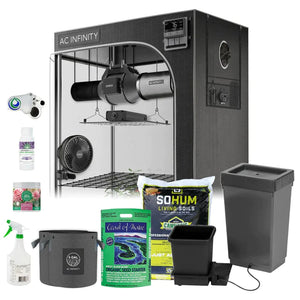
We also sell grow tents and kits, environmental controls and accessories, so you can build a complete setup from one place. Home growers and commercial cultivators can browse the full range at LED Grow Lights Depot, and we ship free on most US orders.
Most schedule problems we hear about are not timer problems. The 18/6 and 12/12 settings are easy. What changes results is what happens during the lit hours.
Overhead light is strongest at the top of the canopy. The lower branches get a fraction of it, and those branches are where a lot of the weight and bud grading is decided. That is the problem our under-canopy systems are built around. Our proprietary proximity systems put light closer to the lower growth, and the result we see in our product data is over 20% more yield and better bud grading.
So our advice is simple. Set the schedule to the standard, protect the dark period, and then spend your effort on light distribution. A top light and an under-canopy light working together give the plant light at every level, on whichever timer you run.
If you are starting out, we can help you choose a tent, a light and controls that fit your space. If you run a commercial room, we offer bulk order and financing options.
Scott
Yes, if the plant is mature enough for your space. Rooted clones can flip sooner than seedlings, since they are already structured. The 2022 meta-analysis found flower biomass was highest with the shortest long-day period, about 14 days, but cannabinoid concentration rose with longer veg. Pick based on your goal.
It is the standard and the safest. University of Guelph research found that all ten tested cultivars still started flowering at up to 14 hours of light, and some cultivars did best between 12 and 13 hours. Trial any change on a small batch first, and change one variable at a time.
The plant can slow its flowering, revert toward vegetative growth, or in the worst case develop hermaphrodite flowers. The University of Saskatchewan guide says interruptions can greatly reduce flower and resin production. Check for leaks with the main lights off, including small standby LEDs.
18 hours of light and 6 hours of dark is the common choice. The University of Saskatchewan says vegetative cannabis needs at least 14 hours, with 18/6 commonly used. Running more hours adds heat and power cost without changing the flowering signal.
0 of 3 items selected

Leave a comment