
Free Shipping in the USA on nearly all items!
Limited phone hours during the Holidays! Call us: 888-611-9305
Free Shipping in the USA on nearly ALL items! Limited phone hours during the Holidays!

For most small indoor gardens, a low-profile full-spectrum LED panel or an adjustable LED bar mounted close to the canopy gives you the best mix of coverage, heat control, and energy efficiency. Skip the tall, hot fixtures built for grow tents twice the size of your closet.
Start by matching the fixture to the footprint, not the other way around:
Quick take: For shelf and rack installs, the Grower’s Choice TSL Horti Tech PFS (4-pack) handles multi-tier coverage well. For crowded canopies that shadow lower leaves, the PROXIMITY Cube Lighting System fixes uneven light from underneath. For a single tray or countertop grow, the ThinkGrow LED Model-I fits where headroom is tight.
Small-space grow lighting works best when fixture type, mounting method, and spectrum are all matched to the specific footprint and plant stage, not bought as a one-size-fits-all solution.
| Point | Details |
|---|---|
| Match fixture to footprint | Use bars or strips for narrow shelves, panels for trays, clips for single pots. |
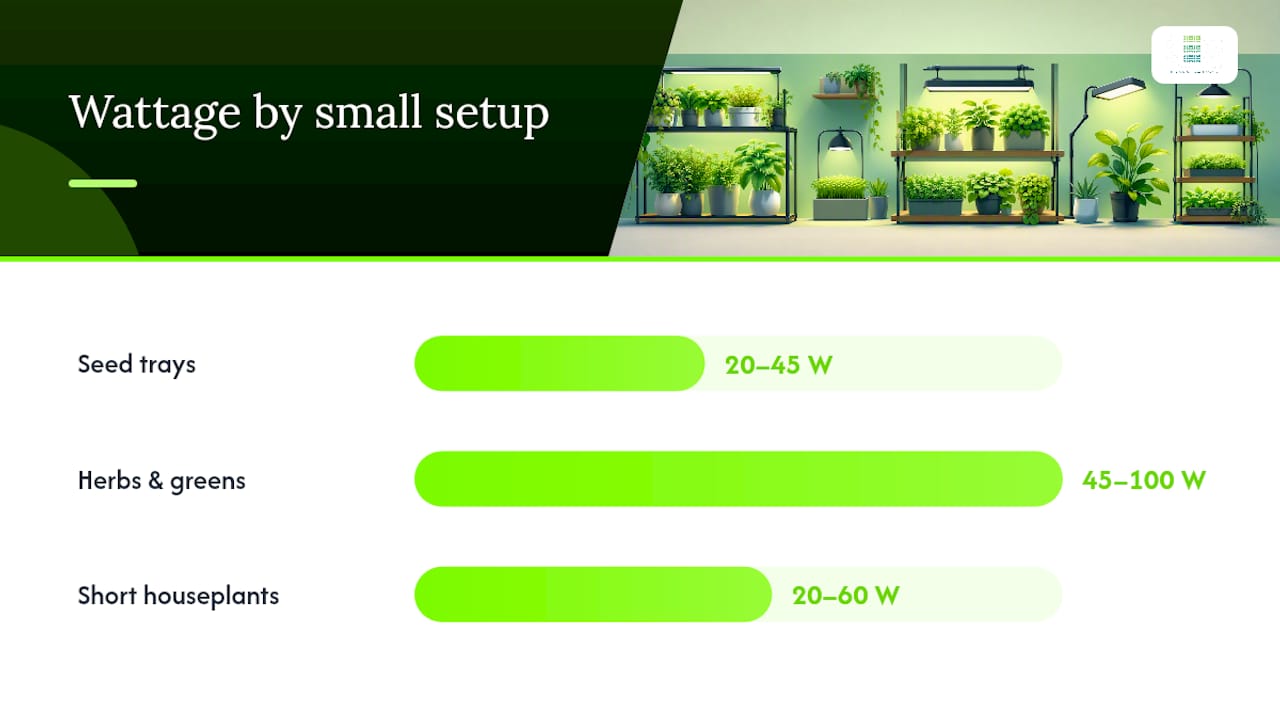
| Follow wattage guidelines | Seed trays need 20 to 45 watts; herbs need 45 to 100 watts, positioned 10 to 14 inches away. |
| Mount low-profile where headroom is tight | Flush mounts and magnetic strips preserve clearance in closets and low-ceiling rooms. |
| Fix shadowing with proximity lighting | Under-canopy bars paired with a top panel even out light across stacked tiers. |
| Keep cycles consistent | Run 14 to 16 hours a day on a timer rather than an irregular schedule. |
| Pick proximity-style systems for tight racks | LedGrowLightsDepot’s Cube Lighting System and TSL Horti Tech PFS pack target under-canopy shadowing and multi-tier coverage specifically. |
Four fixture types cover almost every small-space scenario, and each one solves a different headroom or coverage problem.
LED strips and bars run long and thin, which makes them the natural choice for narrow shelving or the inside wall of a closet. They mount flat against a surface, so they eat almost no vertical space. The tradeoff: a single bar throws a narrower beam than a panel, so you often need two mounted in parallel to cover a full shelf width evenly.
Slim panels spread light across a wider, more even footprint, which is why retail growing guides keep recommending compact panel-style fixtures for seed trays and multi-plant setups. A panel over a 2x2 foot tray beats two bars in coverage uniformity, though it needs a few more inches of clearance to avoid hot spots directly under the fixture.
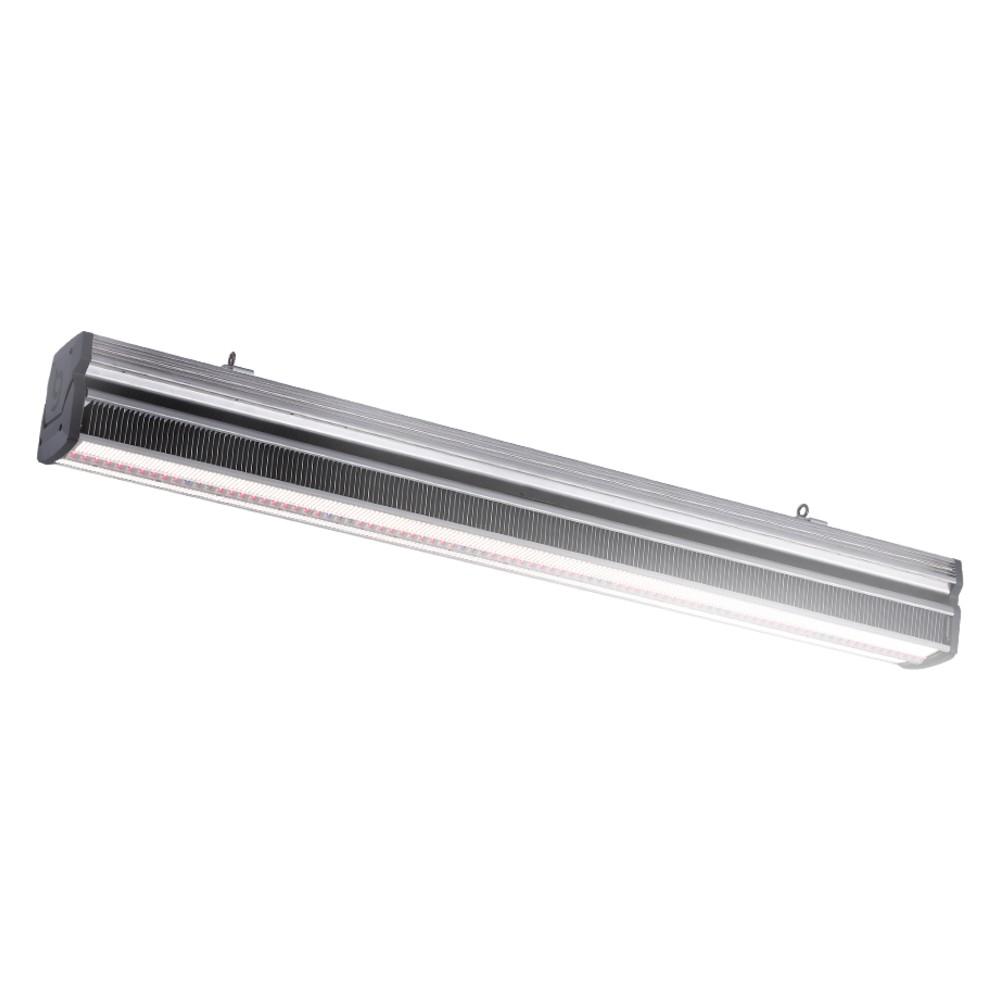
Lamp and clip fixtures solve a different problem entirely: one plant, one pot, no rack. Clip it to a shelf edge or desk lamp arm, angle it down, and you’re done. These work well for a single monstera or a pot of basil on a kitchen windowsill, but they’re the wrong tool if you’re trying to light more than two or three plants.
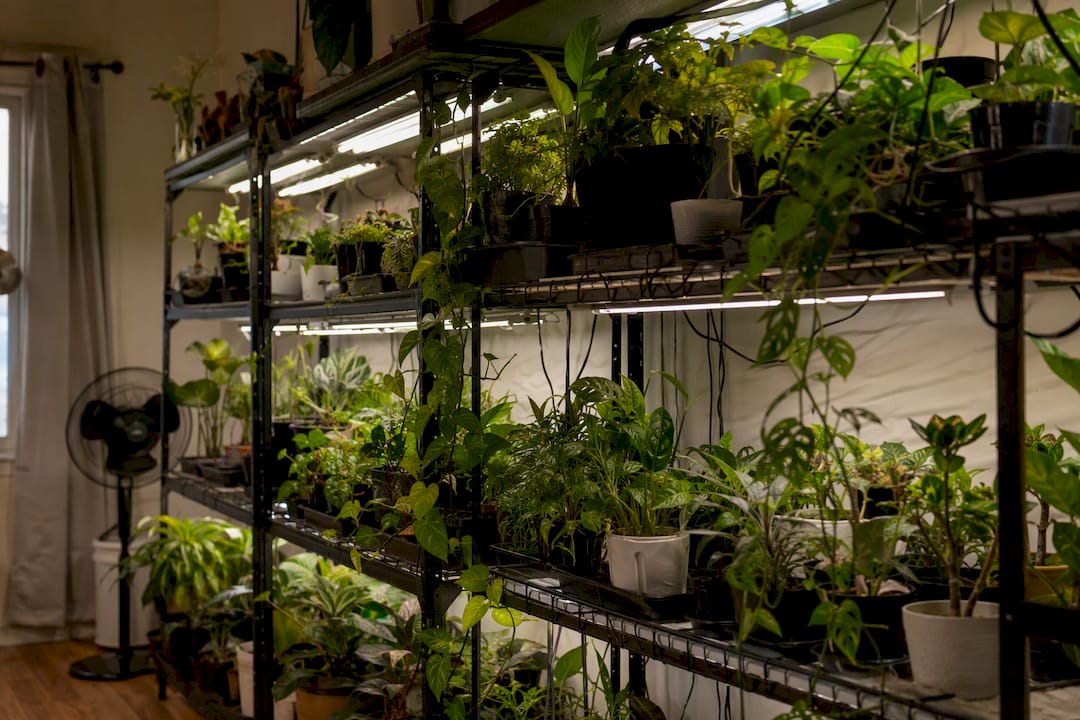
Multi-tier micro-garden stands stack two or three shelves with a light built into the underside of each level. They’re the most space-efficient option per square foot of growing area, since the fixture and the shelf are one unit. The catch: lower tiers can get shaded by the tier above if the plants on top grow tall, which is where under-canopy supplemental lighting becomes useful (more on that below).
A few placement patterns come up constantly with small-space growers:
Do retrofit bulbs or CFLs still make sense? Sometimes. If you’re starting a small tray of seeds for two or three weeks and don’t want to invest in a dedicated LED yet, a cheap CFL clamp lamp gets seedlings through germination without much fuss. But LEDs run cooler and last three to five times longer than fluorescent options according to Gardener’s Supply, so treat CFLs as a stopgap, not a long-term plan. Once seedlings need real light intensity for growth, swap over.
For a deeper breakdown of fixture categories and how they compare on coverage and heat, our guide to compact LED grow light types walks through the tradeoffs in more detail.
You don’t need a PAR meter to get this right, but you do need to understand one number: PPFD, or photosynthetic photon flux density. It measures how much usable light actually lands on your plant’s leaves, not just how bright the fixture looks to your eyes. Seedlings want low PPFD (around 100 to 300 micromoles), leafy herbs want moderate PPFD (300 to 600), and fruiting or flowering plants want the high end (600 and up). Most manufacturer coverage charts already translate this into a simple square-footage number at a given hanging height, so you can skip the math and just match the chart to your tray size.
Here’s how that plays out in wattage terms for common small-space setups:
Distance matters more than most new growers expect. Move a fixture from 12 inches to 24 inches away, and the light hitting the leaves can drop by more than half, because intensity falls off with the square of the distance. That’s why a low-profile fixture mounted close to the canopy often outperforms a more powerful one mounted too far away.
Energy cost is where LEDs pay for themselves. A 40 watt LED bar running for many hours daily consumes moderate electricity, costing a few dollars per month depending on local rates, though your actual bill depends on local rates. Compare that to an old fluorescent shop light pulling two or three times the wattage for the same coverage, and the LED premium up front gets recovered fast.
One more decision point: should you run one larger fixture or several small ones? For a single tray, one panel sized correctly beats splitting the wattage across two smaller lights, since you avoid overlapping hot spots and dark gaps between beams. But once you’re covering multiple shelves or an oddly shaped closet, several small fixtures placed independently give you more control, letting you adjust height and output shelf by shelf instead of compromising with one light trying to do everything. For the full wattage-to-square-footage breakdown across different plant types, see our LED wattage guide for tiny spaces.
Headroom is the real constraint in most apartments, closets, and micro-tents, and mounting strategy is where you win or lose that battle. Layered, low-profile fixtures such as flush mounts and wall-mounted bars preserve ceiling clearance while still delivering even coverage in low-ceiling rooms, a principle that carries over directly from general home lighting into grow setups.
A few mounting approaches consistently work for tight spaces:
Renters and short-term growers benefit the most here, since magnetic and adhesive mounts let you retrofit an existing shelf or bookcase without drilling a single hole.
Proximity mounting solves a problem flush mounts can’t: shadowing on lower tiers of a stacked rack. Placing a slim top panel alongside narrow under-shelf bars aimed up into the canopy from below evens out light exposure across tiers, based on how growers commonly handle stacked rack setups. Without that under-canopy fill, the bottom shelf of a three-tier stand often ends up starved for light while the top shelf gets more than it needs.
Pro Tip: Leave at least 2 to 3 inches of clearance between an LED fixture and any leaf surface, and run a small clip fan nearby, even in a tiny tent. Stagnant warm air right under a light does more damage to leaves than the light itself.
Keep a timer on every fixture and use a surge-protected power strip when running more than one light off a single outlet. Small spaces concentrate heat and moisture faster than open rooms, so airflow and electrical safety matter even more here than in a full-size grow tent.
The shadowing problem in stacked racks is exactly what LedGrowLightsDepot’s proximity systems were built to solve. Positioning supplemental lighting under the canopy, closer to lower leaves, addresses the light penetration gap that standard top-down setups leave behind.
Proprietary proximity systems that enhance under-canopy light distribution have produced yield increases of over 20% along with improved bud grading, based on results LedGrowLightsDepot reports across its customer base. The company also holds a 4.8 out of 5 customer satisfaction rating from more than 5,800 reviews.
Each of the three products maps to a specific small-space scenario:
Home growers running a single closet rack or a two-shelf herb station tend to hit the same wall: the top layer thrives while everything below it stretches toward the light. That’s the specific gap these proximity fixtures were engineered around.
Spectrum and timing matter more in a small grow than a large one, because you have less room to correct a mistake with distance or airflow. Full-spectrum LEDs with a high color rendering index give truer results across a mixed collection of herbs and houseplants than single-band red and blue fixtures, since different plants respond to different wavelength balances rather than one narrow band.
Blue wavelengths in particular drive chlorophyll absorption and shape how compact or leggy a plant grows, which is why growers lean on blue-heavy spectrums during the vegetative stage to keep seedlings short and sturdy rather than stretched. If your seedlings are reaching for the light and toppling over, that’s often a spectrum or distance issue before it’s a fertilizer issue.
For timing, most leafy greens and herbs do well on 14 to 16 hours of light a day, while seedlings can start with slightly less, around 12 to 14 hours. A basic outlet timer removes the guesswork and the risk of forgetting to shut lights off overnight, which matters more in a small space where a light left on 24 hours a day generates enough heat to stress nearby plants. Consistency beats intensity. A steady 14-hour cycle every day outperforms an inconsistent schedule that swings between 10 and 18 hours depending on your week.
Every small grow setup involves a compromise between headroom and coverage, and figuring that out usually takes a failed attempt or two. Mounting a fixture too high to clear a shelf above it often means the light spreads too thin by the time it reaches the leaves, and dialing in the right height without cooking the top of a plant takes some trial and error.
The lesson that tends to stick: an adjustable mount matters more than raw wattage in a cramped space, because the ability to nudge a fixture an inch closer or farther solves more problems than swapping to a stronger bulb. Heat management follows the same logic. A small clip fan moving air across the canopy often does more for plant health than any spectrum adjustment. That’s a big part of why compact, adjustable, proximity-style fixtures tend to outperform bigger, fixed-height lights once a grow space drops below a few square feet.
— Scott
If you’re setting up a multi-tier shelf rack, the Grower’s Choice TSL Horti Tech PFS (4-pack) gives you consistent coverage across several plants without buying four separate fixtures and guessing at spacing. If shadowing on lower leaves is your specific problem, the PROXIMITY Cube Lighting System fills that under-canopy gap directly, rather than forcing you to raise a top light and lose intensity everywhere else. And if you’re working with a single tray or a countertop where ceiling clearance is the real limit, the ThinkGrow LED Model-I fits that low-profile footprint without sacrificing output.
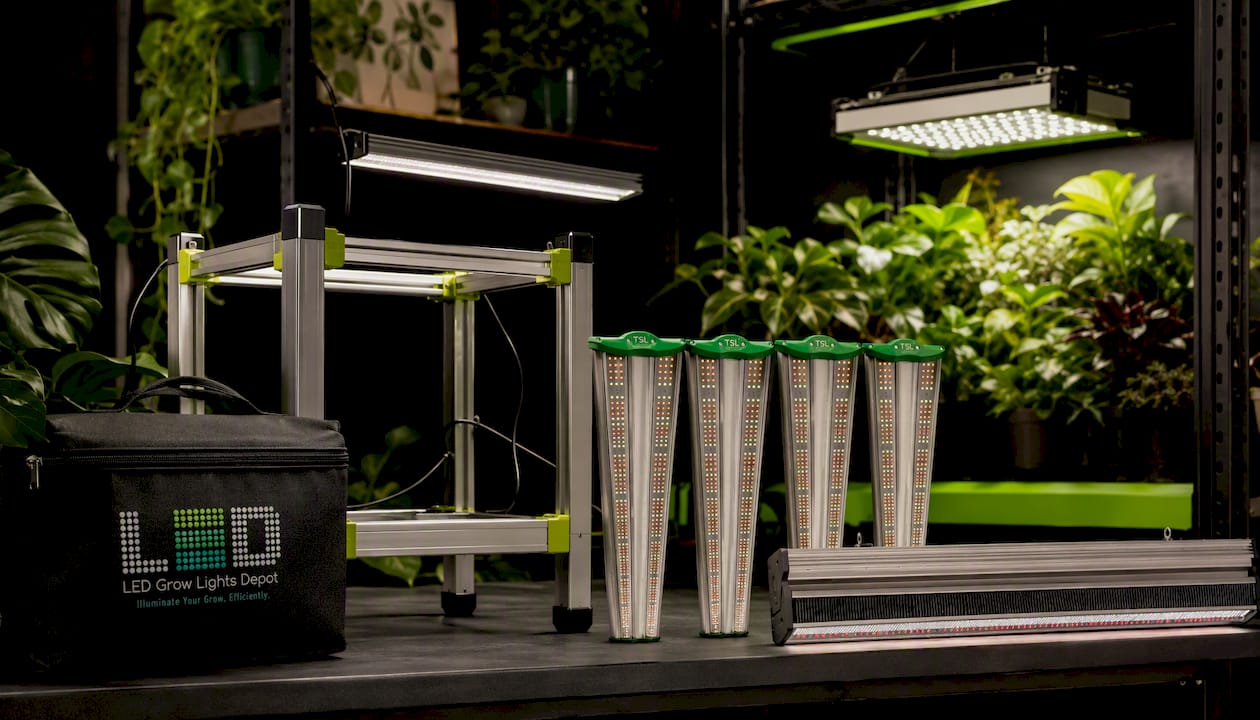
LedGrowLightsDepot backs its fixtures with straightforward product support, so if a light doesn’t fit your space the way you expected, you’re not stuck troubleshooting alone. That matters more in small grows, where one wrong-sized fixture can mean rethinking an entire shelf layout. Browse the full lineup of compact grow lights for small indoor gardens to compare options side by side, or go straight to the ThinkGrow LED Model-I product page if a single-tray setup is what you’re solving for right now.
0 of 3 items selected

Leave a comment