
Free Shipping in the USA on nearly all items!
Limited phone hours during the Holidays! Call us: 888-611-9305
Free Shipping in the USA on nearly ALL items! Limited phone hours during the Holidays!

Choose IP20–IP44 for dry tents and cabinets, IP54–IP65 for greenhouses and vertical farms, and IP66–IP68 for hydroponics and wash-down areas. The standard behind these numbers is IEC 60529, and it’s the only reference you should trust when a supplier claims their fixture is “waterproof.” Higher protection costs more, so match the rating to your actual moisture exposure rather than buying the highest number available. The verification steps below will keep you from getting burned by a vague spec sheet.
TL;DR:
- Matching the IP rating to your grow environment ensures you pay only for moisture protection that your setup truly requires, avoiding unnecessary costs.
- The second digit of the IP code indicates liquid protection levels, with larger gaps between numbers meaning significantly different resistance to splash, jets, or submersion.
- Regularly inspecting gaskets, connectors, and mounting points is essential to maintain moisture protection regardless of the fixture’s IP rating.
- Higher IP fixtures tend to trap more heat, requiring better thermal design to prevent early component failure, especially in sealed or waterproof models.
- A missing or vague IP rating on a fixture’s datasheet should raise red flags, and verifying test reports and gasket quality is crucial before purchasing.
An IP rating tells you exactly what a fixture can survive, expressed as two digits after the letters “IP.” The first digit, ranging from 0 to 6, measures protection against solids like dust and debris. The second digit, ranging from 0 to 9, measures protection against liquids, from light moisture to full submersion. This system comes from IEC 60529, the international standard that manufacturers reference when they stamp a code on a datasheet.
Reading the code is simpler than it looks once you know what each range means:
An IP rating does not tell you anything about chemical resistance, UV stability, or impact resistance. A fixture can be IP68 and still crack if you drop a wrench on it, or degrade under nutrient splash from certain fertilizer salts. Treat IP as one layer of protection, not a blanket durability guarantee.
The first digit maps directly to dust exposure, and dust is a bigger problem for grow lights than most growers realize. Coco coir dust, perlite particles, and trichome resin can coat a heat sink over months, and once that coating builds up, thermal performance drops even on an otherwise healthy fixture. A rating of IP4X blocks particles larger than 1mm, which handles casual debris but not fine dust. IP5X and IP6X block dust almost entirely, which matters most for driver housings mounted low in a tent or near a trim station.
The second digit governs liquid exposure, and the gap between adjacent numbers is larger than it looks:
| Digit | Protection level | Grow-room relevance |
|---|---|---|
| IPX4 | Splashing water from any direction | Occasional overspray near a humidifier |
| IPX5 | Low-pressure jets | Hand-held hose rinsing in a greenhouse |
| IPX6 | High-pressure jets | Commercial power-washing between cycles |
| IPX7 | Temporary immersion to 1 meter | Flood tables, brief submersion |
| IPX8 | Continuous submersion | Fully submerged hydroponic components |
Datasheets sometimes list ambiguous terms like “water-resistant” or “weatherproof” with no accompanying digits. A MARS HYDRO listing on Newegg, for example, marks its under-canopy strip at IP65, a common spec for linkable commercial LED strips, and states it plainly rather than hiding behind marketing language. That’s the standard you should expect from any fixture you’re considering.
A sealed indoor tent with a dehumidifier running rarely sees standing water or airborne moisture beyond normal humidity swings. IP20 to IP44 covers most dry-tent and cabinet setups, provided you’re not misting foliage directly onto the fixture or running ultrasonic humidifiers underneath it. The tradeoff works in your favor here: lower-IP fixtures run cooler because their housings don’t need thick gaskets trapping heat against the driver, and they cost less.
Greenhouses and vertical farms live in a middle zone. Humidity swings are wider, condensation forms on cool surfaces overnight, and hose-downs happen between crop cycles. IP54 to IP65 is usually the right balance for these environments, since it handles splash and low-pressure jets without the premium price of full immersion protection.
Hydroponics changes the calculation entirely. Flood tables splash, ebb-and-flow systems submerge components temporarily, and wash-down protocols in commercial operations use real pressure. IP66 to IP68, or purpose-built waterproof fixtures, are the only sensible choice once your lights sit within splash range of a reservoir or flood cycle.
Higher IP ratings cost more because the housings require thicker gaskets, sealed connectors, and often potted driver compartments. That price difference is real, and it’s worth paying only where the risk justifies it. A grower running a sealed tent with a dehumidifier gains nothing from IP66 hardware except a bigger invoice. A commercial hydro operation running daily wash-downs will lose fixtures constantly without it.
Two extra checks matter regardless of band:
Start by walking your grow space and honestly assessing exposure. Ask yourself how often you hose down surfaces, whether misting systems run near your fixtures, and how close your lights sit to flood tables or reservoirs. Then work through this checklist before you buy anything:
Remember that IP is one factor among several. CNET’s buying guidance rightly points out that spectrum and intensity metrics like PPFD and DLI matter just as much as moisture protection, so don’t let a high IP number distract you from checking whether the light actually delivers the output your plants need.
Pro Tip: Even a properly IP65-rated fixture can fail at the socket if a bulb or connector isn’t fully tightened during installation. That loose connection is one of the most common ingress points, according to lighting manufacturer troubleshooting guides, and it defeats the rating entirely.
An IP number describes what a fixture can survive in a lab test, not what happens in your grow room five years from now. LedGrowLightsDepot’s under-canopy proximity systems are built around consistent light distribution paired with sealed, gasketed housings, and the combination shows up in the numbers: customers report over 20% yield increases alongside a 4.8 out of 5 satisfaction rating across more than 5,800 reviews.
A few installation habits protect that investment regardless of which IP band you buy:
These habits cost nothing and prevent many moisture failures that might otherwise affect the fixture.
Yes, and the mechanism is straightforward: dust and moisture ingress accelerate component failure long before LEDs themselves wear out. Dust settling on a driver board traps heat, and trapped heat shortens the life of capacitors and solder joints well before the diodes degrade. Moisture ingress causes corrosion at connector pins, which introduces resistance, which generates more heat at exactly the point where a connection is weakest.
A fixture running at the correct IP rating for its environment avoids both failure modes almost entirely. One running below its environment’s demands will show early symptoms: flickering, dimming in specific channels, or driver failure well before the rated lifespan of the LEDs themselves. Growers who blame “bad LEDs” for early failures are often looking at ingress damage to the driver, not the diode array.
This is why higher-IP fixtures aren’t just about avoiding a dramatic flood event. They’re about protecting the electronics from the slow, cumulative damage of daily humidity swings, condensation cycles, and dust accumulation that never quite gets cleaned out. A well-sealed IP65 fixture in a greenhouse will consistently outlast an unsealed IP20 fixture running in the same space, even though both use comparable LED chips. The seal is protecting the parts that fail first.
Sealed housings trap heat more than open ones, and that’s the tradeoff nobody advertises. An IP66 or IP68 fixture with a fully potted or gasketed driver compartment has less airflow across its heat sink than an open IP20 design, which means the driver runs hotter for a given wattage. Manufacturers compensate with larger heat sinks, better thermal paste, or derated output, but the physics doesn’t disappear just because the housing is sealed.
This doesn’t mean high-IP fixtures run less efficiently in terms of light output per watt. LED efficacy is mostly a function of the diode and driver design, not the housing. But heat management gets harder as sealing increases, so well-engineered waterproof fixtures need better thermal design to hit the same lumen maintenance curve as an open equivalent.
Practically, this means you should check a fixture’s thermal spec alongside its IP rating, not instead of it. A sealed fixture with a generous heat sink and a moderate drive current will outperform a sealed fixture pushed to its maximum output, even if both carry the same IP68 badge. If you’re comparing two IP65 fixtures, the one with a larger physical heat sink footprint is usually the safer long-term bet in a warm greenhouse.
Low-IP fixtures in dry tents need the least frequent attention, but they need attention nonetheless. Wipe dust from heat sinks every month or two, and keep humidifiers and misting systems positioned away from direct fixture spray. Since these units lack heavy sealing, dust accumulation is the main enemy, not moisture.
Mid-range IP54 to IP65 fixtures in greenhouses need a different routine. Inspect gaskets and seals every few months for cracking or compression set, especially in fixtures that see temperature swings between day and night cycles. After any wash-down, check connector points for trapped moisture rather than assuming the seal handled it automatically. A gasket that looks intact can still have lost its seating pressure after repeated thermal cycling.
Fixtures rated IP66 through IP68 in hydroponic or wash-down zones need the most disciplined schedule. Check cable gland integrity every cleaning cycle, since these are the most common failure point even on fully rated hardware. If you’re running junction points near reservoirs, a properly glanded waterproof enclosure at the connection point adds a second layer of protection beyond the fixture’s own rating. Log any moisture you find inside a housing during cleaning, since repeated small amounts usually point to a failing seal rather than a one-time event.
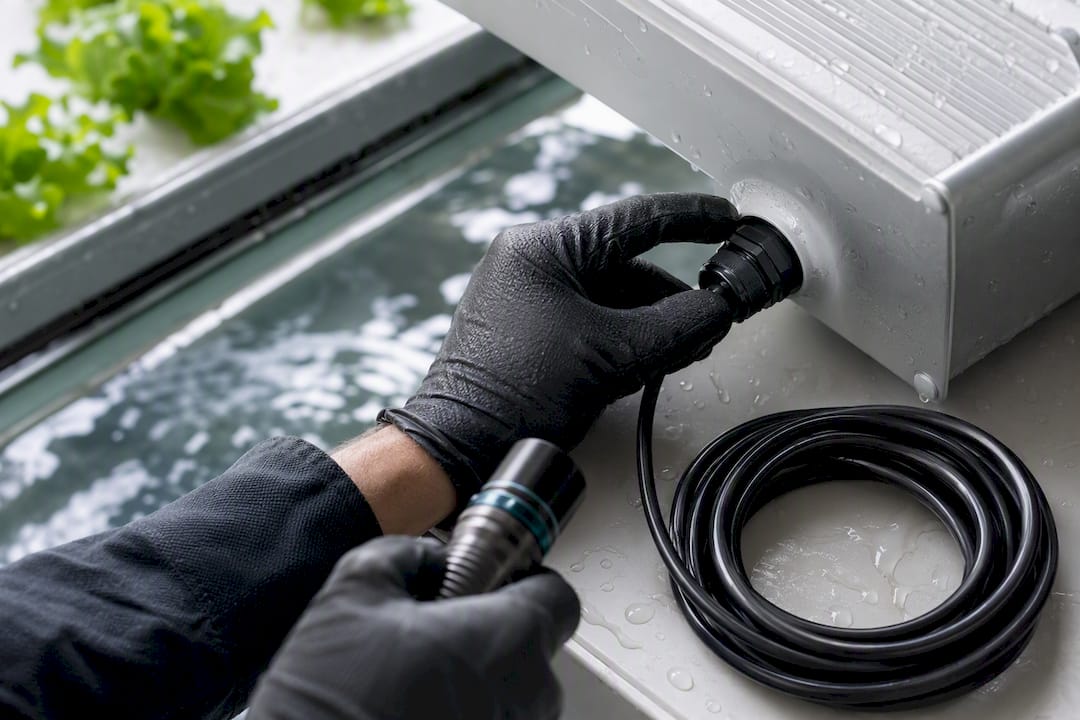
The most common mistake is treating “waterproof” as a real spec instead of a marketing word. There is no standard definition of “waterproof” outside the IP code itself, so a listing without a number is telling you nothing verifiable. Reject any fixture description that uses “weatherproof” or “waterproof” without a corresponding IP code.
The second mistake is overbuying. Growers running dry, climate-controlled tents sometimes pay for IP65 or IP66 hardware they don’t need, adding cost and thermal complexity without any real benefit. If your grow space never sees splash or standing moisture, that budget is better spent on spectrum quality or fixture output than on sealing you’ll never use.
The third mistake is assuming the rating covers the whole installation. An IP65 fixture with an unsealed extension cord or an exposed junction box outside the housing has a system rating equal to its weakest point, not its strongest. Ingress protection is only as good as every connection in the chain, and growers frequently forget that the fixture is one part of a larger wiring system.
The fourth mistake is ignoring maintenance because “the rating handles it.” IP ratings describe a fixture in its tested, undamaged state. Gaskets compress over time, connectors loosen with thermal cycling, and dust finds its way into seams that were tight on day one. A rating is a starting point, not a permanent guarantee.
Three checks decide most fixture purchases: pull the datasheet and confirm an actual IP code exists, physically inspect gasket and connector quality if you can, and plan your cleaning and mounting layout before the fixture arrives, not after. A grower running a greenhouse hydro table who buys an IP44 fixture because it was cheaper will replace it within a season. The math almost never favors the discount once you count the replacement cost and lost grow time.
If you only remember one thing, remember this: a missing IP code on a listing is itself the red flag. Don’t fill in the blank with optimism.
— Scott
LedGrowLightsDepot builds its lineup around the same environment-matched thinking this guide walks through, so you’re not stuck reverse-engineering a datasheet on your own. For dry tents and shelf setups, a compact option like the Sunblaster Micro LED Grow Light Garden covers standard IP20–IP44 needs without overpaying for sealing you won’t use.
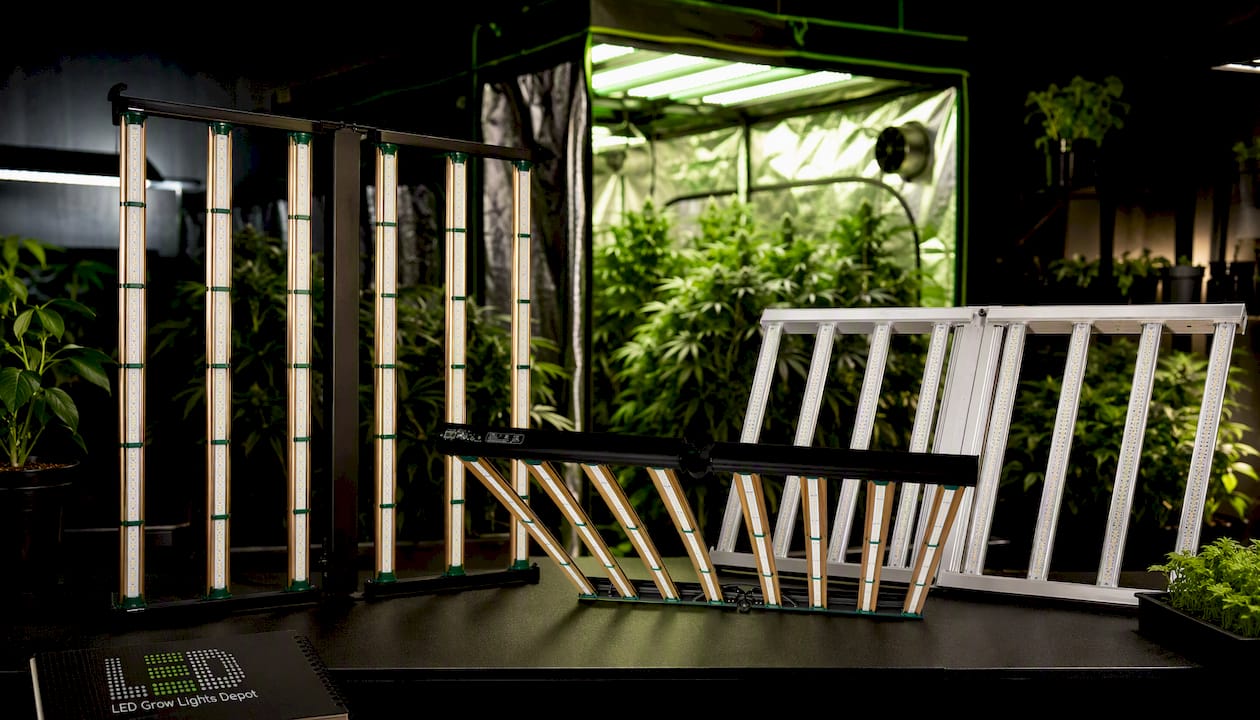
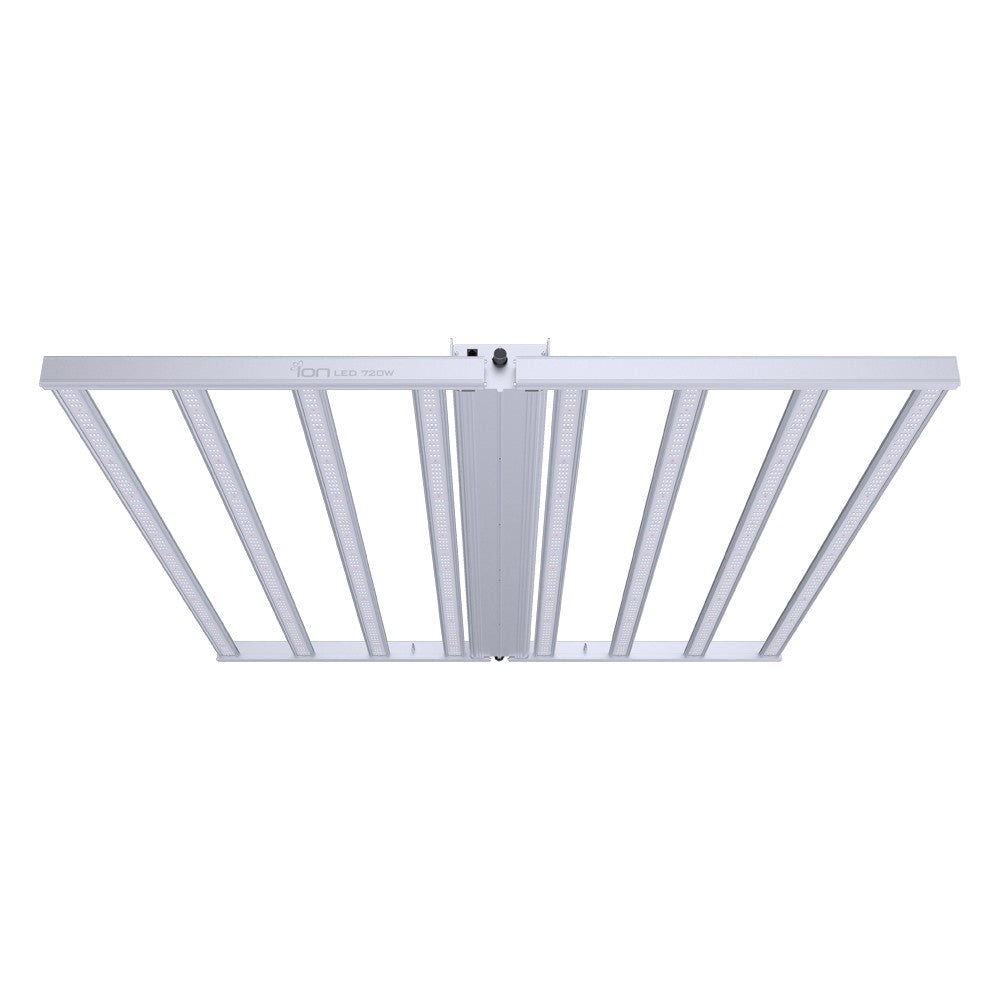
Greenhouse and vertical-farm growers looking for IP54/65-capable output should look at the ThinkGrow LED Model-I Plus or the Grower’s Choice ROI-E720, both built for the humidity swings and hose-downs that define those spaces. Wash-down and hydro-adjacent setups benefit from the sealed housing design on the Grower’s Choice ROI-FF 650W, matched with LedGrowLightsDepot’s proximity lighting systems for under-canopy coverage that’s driven yield increases above 20% for growers who’ve made the switch. Request the datasheet and test-report documentation for any fixture before you buy, and browse the full grow light catalog to compare IP bands side by side against your specific space.
0 of 3 items selected

Leave a comment