
Free Shipping in the USA on nearly all items!
Limited phone hours during the Holidays! Call us: 888-611-9305
Free Shipping in the USA on nearly ALL items! Limited phone hours during the Holidays!

A grow light schedule is the precisely timed daily cycle of light and darkness that indoor plants need to thrive under artificial lighting. Without a deliberate schedule, your plants receive inconsistent signals that disrupt photosynthesis, stall growth, and reduce yields. Getting this right is not complicated, but it does require understanding how light duration, plant stage, and automation work together. This article walks you through stage-specific timing, the biology behind dark periods, and how to set up a system that runs itself.
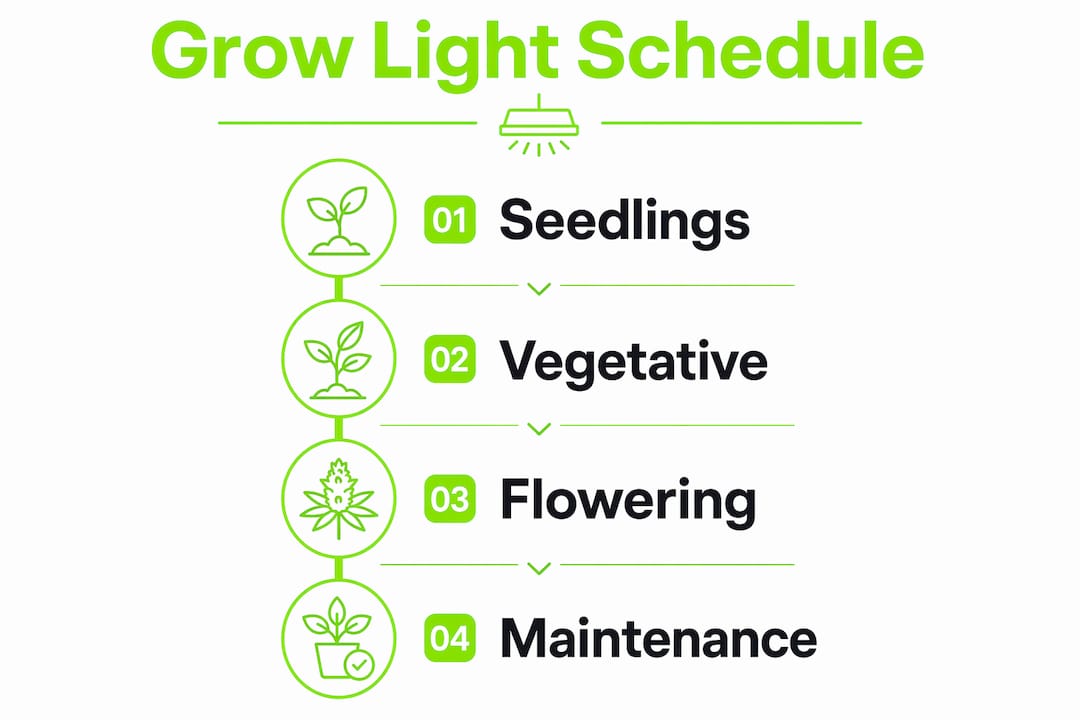
The right light cycle for plants changes as they grow, and treating every stage the same is one of the most common mistakes home growers make. Light schedules vary by stage: seedlings need 16 to 18 hours of light per day, flowering plants thrive on 12 to 16 hours, and foliage plants do best with 12 to 14 hours. Each window exists for a biological reason, not as a rough guess.
| Growth Stage | Light Duration | Dark Period |
|---|---|---|
| Seedlings | 16 to 18 hours | 6 to 8 hours |
| Vegetative | 14 to 16 hours | 8 to 10 hours |
| Flowering | 12 to 14 hours | 10 to 12 hours |
| Foliage/Houseplants | 12 to 14 hours | 10 to 12 hours |
Seedlings are building their first root systems and leaf structures, so they need maximum photon exposure. Seedlings demand 14 to 16 hours of light to support rapid leaf and stem development, with some growers pushing to 18 hours for particularly light-hungry species like tomatoes or peppers. As plants enter the vegetative stage, you pull back slightly to 14 to 16 hours, giving the plant time to consolidate growth rather than just chase light.
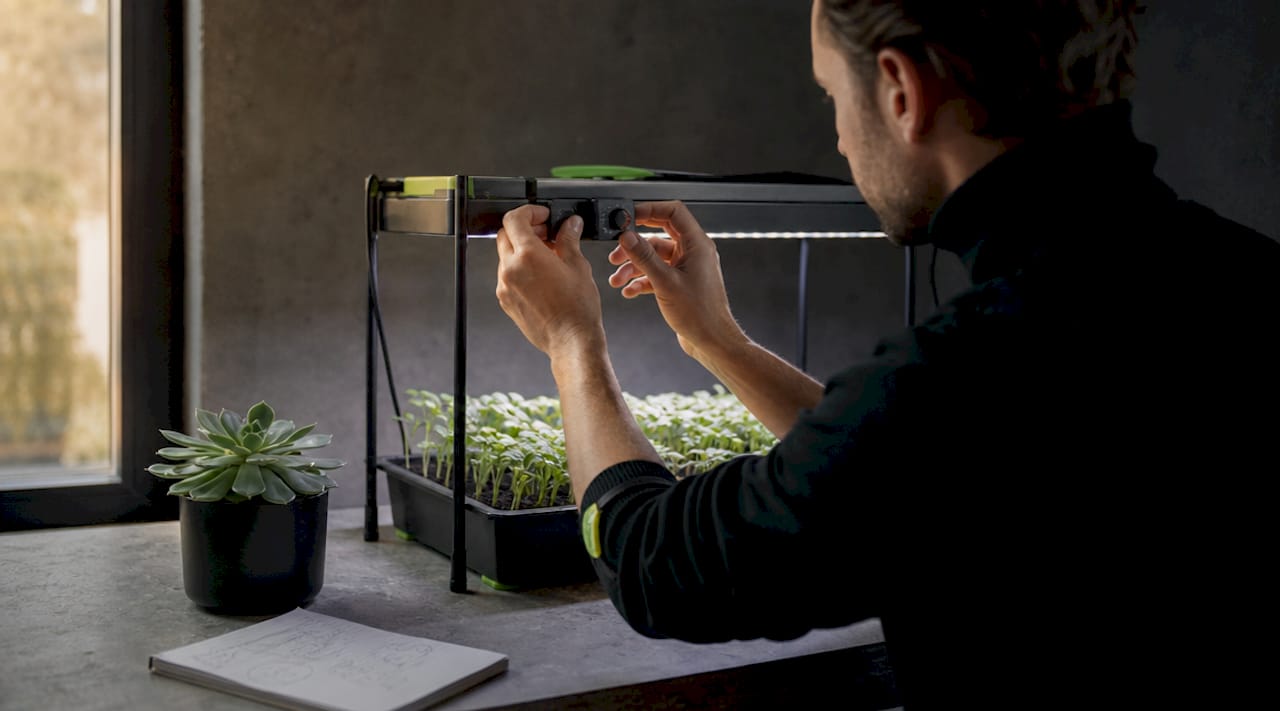
Flowering is where the schedule becomes most critical. Most flowering plants read shorter days as a signal to shift from leaf production to bud or fruit development. Dropping to 12 hours of light triggers this hormonal shift in photoperiod-sensitive species like cannabis, chrysanthemums, and poinsettias. Adjusting timing as plants mature is not optional. It is the mechanism that tells the plant what season it is living in.
Pro Tip: Set your lights to turn on two hours before you wake up and off two hours before you sleep. This lets you observe your plants during their active light period without disrupting the schedule.
For seed germination guidance specific to LED setups, Ledgrowlightsdepot has a detailed 2026 grower’s guide that covers timing from day one.
Plants are not passive recipients of light. They actively track the rhythm of day and night through internal circadian clocks, and disrupting that rhythm has measurable consequences. Automated timers maintain stable circadian rhythms, preventing the erratic lighting patterns that harm plant metabolic efficiency and health. Think of it the way you think about sleep deprivation in humans. Missing one night is manageable. Missing it consistently causes system-wide breakdown.
Dark periods are when plants do work that light periods cannot support. During darkness, plants:
“Dark periods activate essential metabolic processes such as respiration and hormone cycles; neglecting this causes plant stress not fixable by nutrient changes.” — Jungle Fever
This is the point most growers miss. When a plant shows yellowing, stunted growth, or poor flowering, the instinct is to adjust nutrients or pH. But if the light schedule is broken, no amount of feeding fixes the underlying hormonal disruption. A dark period of at least 6 to 12 hours is non-negotiable for most species, and 24-hour light schedules are actively harmful.
Most tropical houseplants thrive on 12 to 14 hours of continuous light per day with 10 to 12 hours of darkness. Regular on/off cycles mimic natural conditions far better than constant light, even when the constant light source is high quality. Consistency matters as much as duration. A plant receiving 14 hours of light at random times each day performs worse than one receiving 13 hours at the exact same time every day.
Automation is not a luxury for indoor growers. It is the only reliable way to maintain the consistency your plants need. Here is how to build a system that works without daily intervention.
Pro Tip: Label your timer with a piece of tape showing the current plant stage and the date you set it. When you adjust the schedule for the next stage, update the tape. This prevents the common mistake of forgetting what schedule is running.
Connecting an LED grow light timer correctly from the start saves you weeks of troubleshooting later. Ledgrowlightsdepot’s blog covers wiring, controller pairing, and common setup errors for most major LED systems.
Hours alone do not tell the full story of what your plant receives. Two plants running on a 14-hour schedule can have dramatically different growth outcomes if their light intensity differs. This is where Daily Light Integral, or DLI, becomes the more accurate measure.
DLI combines duration and intensity into a single number representing the total photons delivered to a plant surface per day. DLI is calculated as: PPFD (µmol/m²/s) × hours × 3,600 ÷ 1,000,000. PPFD is the intensity measurement, expressed in micromoles of photons per square meter per second.
| Plant Type | Target DLI (mol/m²/day) | Typical PPFD at 16h | Typical PPFD at 12h |
|---|---|---|---|
| Seedlings | 10 to 15 | 175 to 260 µmol/m²/s | 230 to 350 µmol/m²/s |
| Vegetative herbs | 20 to 30 | 350 to 520 µmol/m²/s | 460 to 700 µmol/m²/s |
| Flowering crops | 30 to 45 | 520 to 780 µmol/m²/s | 700 to 1,040 µmol/m²/s |
The practical implication is significant. A grower running a high-intensity LED at 600 µmol/m²/s for 12 hours delivers a DLI of about 26 mol/m²/day. A grower running a weaker light at 300 µmol/m²/s for 16 hours delivers only 17 mol/m²/day. The second grower runs lights longer but delivers less total energy to the plant.
More light does not always mean faster growth. Excess light without proper darkness causes plant stress and stunted growth, regardless of how high the PPFD reading is. The goal is to hit the target DLI for your plant type, then protect the dark period. Understanding the types of LED grow light spectrums also matters here, since blue-heavy spectrums support vegetative growth while red-heavy spectrums push flowering, and your schedule should account for both.
A grow light schedule works because it replicates natural photoperiods, delivers the right total light dose per day, and protects the dark periods plants need for hormone regulation and metabolic recovery.
| Point | Details |
|---|---|
| Stage-specific timing | Seedlings need 16 to 18 hours; vegetative plants need 14 to 16 hours; flowering plants need 12 to 14 hours. |
| Dark periods are non-negotiable | At least 6 to 12 hours of darkness supports respiration, hormone cycles, and growth consolidation. |
| DLI beats hours alone | Combine PPFD intensity with duration to calculate total photon delivery and hit your plant’s actual light target. |
| Automate for consistency | Digital or smart timers prevent the schedule drift that disrupts circadian rhythms and stalls growth. |
| Adjust as plants mature | Transitioning from longer to shorter light periods triggers flowering and signals seasonal change to the plant. |
Most home growers I talk to treat their grow light like a lamp. They turn it on when they remember and off when they go to bed. I did the same thing for my first two grows, and the results were frustrating in ways I could not explain at the time. My tomatoes were leafy but slow to fruit. My herbs were leggy and pale. I kept adjusting nutrients and pH, convinced the problem was in the water.
The actual problem was that my plants had no idea what time of year it was.
Once I put a basic digital timer on my setup and committed to a 16-hour schedule for seedlings and a 12-hour schedule for flowering, the difference was visible within two weeks. Stems thickened. Flowering started on schedule. The plants looked like they were working with a plan instead of just surviving.
The mistake I see most often now is over-lighting. Growers assume that if 14 hours is good, 18 hours must be better. It is not. Balanced light duration and intensity are what drive healthy development, not maximum hours. Giving a plant 20 hours of light is like keeping a person awake for 20 hours and expecting peak performance. The biology does not work that way.
My advice: start with the stage-specific schedules in this article, automate from day one, and resist the urge to tinker with the timer every week. Plants reward patience and consistency more than any other variable you control indoors.
— Scott

Ledgrowlightsdepot carries the lights and automation tools that make scheduling straightforward from your first grow. The NextLight 150h is built for home growers who want precise, programmable output without a steep learning curve. Its design supports the full range of stage-specific schedules covered in this article, from seedling intensity to flowering photoperiods. Ledgrowlightsdepot’s catalog also includes complete grow tent kits like the Mars Hydro TS 1000 kit, which pairs a reliable LED panel with a tent sized for home use. With a 4.8 out of 5 rating across more than 5,800 customer reviews, Ledgrowlightsdepot is the starting point most serious home growers return to.
A grow light schedule is the daily timed cycle of light and darkness set to match a plant’s biological needs at each growth stage. It controls photosynthesis, hormone regulation, and flowering triggers in indoor plants.
Light hours depend on plant stage: seedlings need 16 to 18 hours, vegetative plants need 14 to 16 hours, and flowering plants need 12 to 14 hours of light per day.
Yes. A minimum of 6 hours of darkness is required for most plants to complete respiration and regulate growth hormones. Running lights 24 hours a day stresses plants and reduces overall growth.
A grow light timer is a device that automatically switches your lights on and off at preset times each day. Smart timers integrate with apps for remote control and prevent the schedule inconsistency that disrupts plant circadian rhythms.
DLI, or Daily Light Integral, measures the total photons your plant receives per day by combining light intensity and duration. DLI is calculated using PPFD multiplied by hours and a conversion factor, giving you a more accurate picture of actual light delivery than hours alone.
0 of 3 items selected

Leave a comment