
Free Shipping in the USA on nearly all items!
Limited phone hours during the Holidays! Call us: 888-611-9305
Free Shipping in the USA on nearly ALL items! Limited phone hours during the Holidays!

Easy indoor plants that thrive under LED lights include snake plants, ZZ plants, and cast iron plants. These species require minimal care and adapt well to artificial lighting when paired with full-spectrum LED fixtures. The term “grow light gardening” covers the practice of using LED technology to supplement or replace natural sunlight indoors. For beginners and hobbyists alike, the right plant and light pairing removes most of the guesswork from indoor gardening. This guide covers the best plant choices, how to select LED grow lights, and how to set up your space for real results.
The strongest examples of easy indoor plants for LED lights share two traits: low water needs and tolerance for a wide range of light intensities. Snake plant, ZZ plant, and cast iron plant top every beginner list for exactly these reasons. Each one forgives missed waterings, adapts to artificial light, and stays healthy in spaces that lack a south-facing window.
Pro Tip: Prioritize plants that tolerate low to medium light and drought. They give you the widest margin for error when you are still dialing in your LED setup.
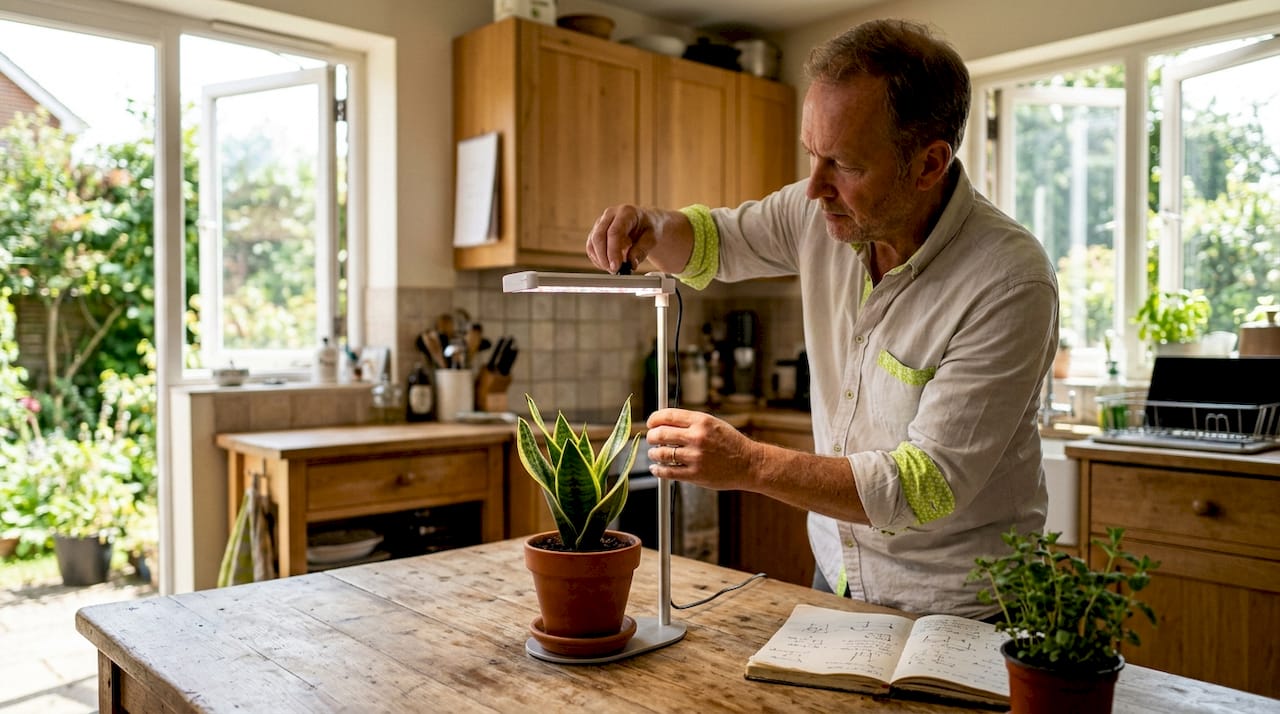
Full-spectrum LED grow lights are the correct choice for easy care houseplants. Full-spectrum LEDs emit PAR in the 400 to 700 nm range, which covers the wavelengths plants actually use for photosynthesis. Generic “blurple” lights (red and blue only) are harder to balance and less visually pleasant in a living space. Fluorescent tubes work in a pinch but consume more energy and produce more heat than modern LEDs.
When comparing LED options, three specifications matter most for beginners:
Energy efficiency is a real advantage of LEDs over fluorescent or incandescent options. LEDs run cooler, which means you can position them closer to plants without risking heat stress. For a deeper look at how spectrum choices affect plant health, the LED grow light spectrums guide from Ledgrowlightsdepot breaks down the science without the jargon.
Pro Tip: Start with a full-spectrum, timer-enabled light. Set it at a higher mounting position first, then lower it gradually while watching leaf color for signs of stress.
Most indoor foliage thrives with 14 to 16 hours of LED light per day, paired with an 8-hour dark period. That dark window is not optional. Plants use it to metabolize, regulate hormones, and avoid the stress that comes from continuous artificial light. A timer set to 14 hours on and 10 hours off covers the needs of nearly every easy care houseplant on this list.
Light intensity is measured in PPFD (photosynthetic photon flux density), not lumens. Most tropical foliage needs roughly 100 to 250 µmol/m²/s for healthy growth. Lumens measure brightness as humans perceive it, which has almost no relationship to what plants actually absorb. Many growers make the mistake of buying the brightest fixture they can find, then wondering why leaves bleach or curl.
The table below gives practical starting points for the most popular easy indoor plants under LED lighting:
| Plant | Daily light (hours) | PPFD target (µmol/m²/s) | Fixture height (inches) |
|---|---|---|---|
| Snake plant | 12 to 14 | 100 to 150 | 18 to 24 |
| ZZ plant | 12 to 14 | 75 to 150 | 20 to 28 |
| Cast iron plant | 10 to 12 | 50 to 100 | 24 to 36 |
| Pothos | 12 to 16 | 100 to 200 | 16 to 24 |
| Spider plant | 12 to 16 | 150 to 250 | 14 to 20 |
Using a timer and avoiding 24/7 light prevents plant stress and mimics the natural light-dark cycles plants evolved with. Start your fixture at the higher end of the height range, observe the plant for one week, then lower it by two inches at a time if growth seems slow.
The right setup depends on how many plants you are growing and where they live in your home. Three configurations cover most situations:
Desk or tabletop setup: A single adjustable LED clip light or gooseneck fixture works for one to three plants on a desk or windowsill. Beginner-friendly models with quick setup and built-in 10-hour timers are widely available and take minutes to install. This is the lowest-cost entry point.
Shelf setup: A full-spectrum LED strip or bar light mounted under a shelf illuminates plants on the shelf below. This configuration works well for pothos, spider plants, and snake plants arranged in a row. The fixed mounting height means you choose plants whose PPFD needs match the fixture’s output at that distance.
Vertical rack setup: A wire shelving unit with one LED bar per shelf creates a compact indoor garden in a small footprint. This is the setup most serious hobbyists use when they want to grow five or more plants without dedicating a whole room. For those building out a more structured grow space, the home grower’s guide covers compact indoor setups in practical detail.
The NextLight 150h from Ledgrowlightsdepot is a strong example of a fixture that works across all three configurations. It includes an adjustable head, full-spectrum output, and a built-in timer, which removes the three most common setup errors beginners make. For enthusiasts who want more control over intensity and spectrum, the ThinkGrow Model-I offers customizable settings suited to a wider range of plant types.
Pro Tip: Mount your LED at the top of its recommended height range on day one. Lower it by two inches every five days while checking for leaf color changes. This method prevents light burn far better than guessing.
LED lighting generally supplements rather than replaces natural light for best growth in low-light tolerant species. This distinction matters for placement decisions. A snake plant near a north-facing window still benefits from four to six hours of LED supplementation each day. A ZZ plant in a windowless office needs a full 12 to 14 hour LED cycle to stay healthy long-term.
The practical takeaway is that you do not need to choose between natural and artificial light. Use whatever natural light your space provides, then fill the gap with a full-spectrum LED on a timer. Selecting species tolerant of a broad light range simplifies this process considerably, since you do not need to hit a precise PPFD target every day. Snake plants, ZZ plants, and cast iron plants all tolerate the natural variation that comes with seasonal light changes and cloudy days.
For growers starting seeds or propagating cuttings under LEDs, the seed germination guide from Ledgrowlightsdepot covers the specific light requirements for young plants, which differ from mature foliage needs.
The most effective approach to growing easy indoor plants under LED lights is pairing low-maintenance species with full-spectrum fixtures, consistent timers, and PPFD-based placement rather than brightness or wattage.
| Point | Details |
|---|---|
| Best plant choices | Snake plant, ZZ plant, cast iron plant, pothos, and spider plant all thrive under LED lighting. |
| Spectrum matters | Full-spectrum white LEDs outperform blurple lights for both plant health and room aesthetics. |
| PPFD over lumens | Target 100 to 250 µmol/m²/s for most easy houseplants; lumens do not measure plant-usable light. |
| Timer is non-negotiable | Set LEDs to 14 to 16 hours on with an 8-hour dark period to prevent stress and support metabolism. |
| Start high, adjust down | Mount fixtures at maximum recommended height first, then lower gradually while monitoring leaf health. |
The biggest mistake I see new indoor gardeners make is treating LED intensity like a volume knob they should crank up. More light is not always better, especially for the low-maintenance species most beginners start with. A cast iron plant sitting under a 200 µmol/m²/s fixture for 16 hours a day will look worse than one getting 80 µmol/m²/s for 12 hours. The plant did not fail. The setup did.
The second thing I have learned is that observation beats measurement for most home growers. You do not need a quantum flux meter to grow a healthy snake plant. You need to check the leaves once a week. Yellowing at the tips usually means too much light or inconsistent watering. Pale, washed-out color means the light is too intense or too close. Dark, slow growth means the plant wants more light or longer hours. These signals are reliable and free.
What genuinely surprised me after years of working with LED setups is how forgiving the right plant and light combination can be. A ZZ plant under a basic full-spectrum LED on a 12-hour timer will grow steadily for years with almost no intervention. That kind of reliability is what makes LED grow light gardening worth the initial setup effort. The plants do the work once you get the conditions close enough.
— Scott
Ledgrowlightsdepot carries a full range of LED grow lights built for exactly the setups described in this article. Whether you are lighting a single snake plant on a desk or building a multi-shelf vertical garden, their team has vetted every fixture for spectrum quality, timer reliability, and real-world plant performance. The NextLight 150h is the top pick for beginners: full-spectrum output, adjustable head, and a built-in timer in one unit. For a broader look at what is available, the full LED grow lights catalog includes options at every price point, backed by a 4.8 out of 5 rating from more than 5,800 verified customers.
Snake plants, ZZ plants, pothos, spider plants, and cast iron plants are the strongest performers under LED lighting. All five tolerate low to medium light and adapt well to full-spectrum artificial light on a timer.
Most easy care houseplants need 12 to 16 hours of LED light per day, followed by an 8-hour dark period. The dark cycle supports plant metabolism and prevents stress from continuous artificial light.
PPFD measures the amount of light plants can actually use for photosynthesis, expressed in µmol/m²/s. Most easy indoor plants need 100 to 250 µmol/m²/s, which is a more reliable guide than wattage or lumens.
Standard household LED bulbs provide some benefit but lack the full spectrum plants need for consistent growth. Full-spectrum LED grow lights covering the 400 to 700 nm PAR range produce significantly better results for indoor gardening.
Start with the fixture 18 to 36 inches above the plant canopy, depending on the species. Lower it gradually by two inches every five days while watching for leaf bleaching or curling, which signals the light is too intense.
0 of 3 items selected

Leave a comment