
Free Shipping in the USA on nearly all items!
Limited phone hours during the Holidays! Call us: 888-611-9305
Free Shipping in the USA on nearly ALL items! Limited phone hours during the Holidays!

A beginner grow kit is a pre-packaged, all-in-one system that gives you everything needed to cultivate plants or fungi indoors without any prior experience. Think of it as the difference between assembling a meal from scratch versus opening a meal kit: the hard prep work is already done. According to Colorado State University Extension, kits matched to your location and season overcome the overwhelm that stops most first-time growers before they start.
What makes these kits genuinely beginner-friendly is what they skip. No seed germination. No sterile lab inoculation. No sourcing a dozen separate materials. You get a fully colonized substrate or fully rooted starter plants, ready to grow the moment they arrive.
The contents vary by kit type, but most share a core set of components designed to cover every stage of early growth.
Mushroom kits and plant kits differ most in the substrate type and humidity management tools. Both, however, eliminate the sourcing problem that trips up beginners.
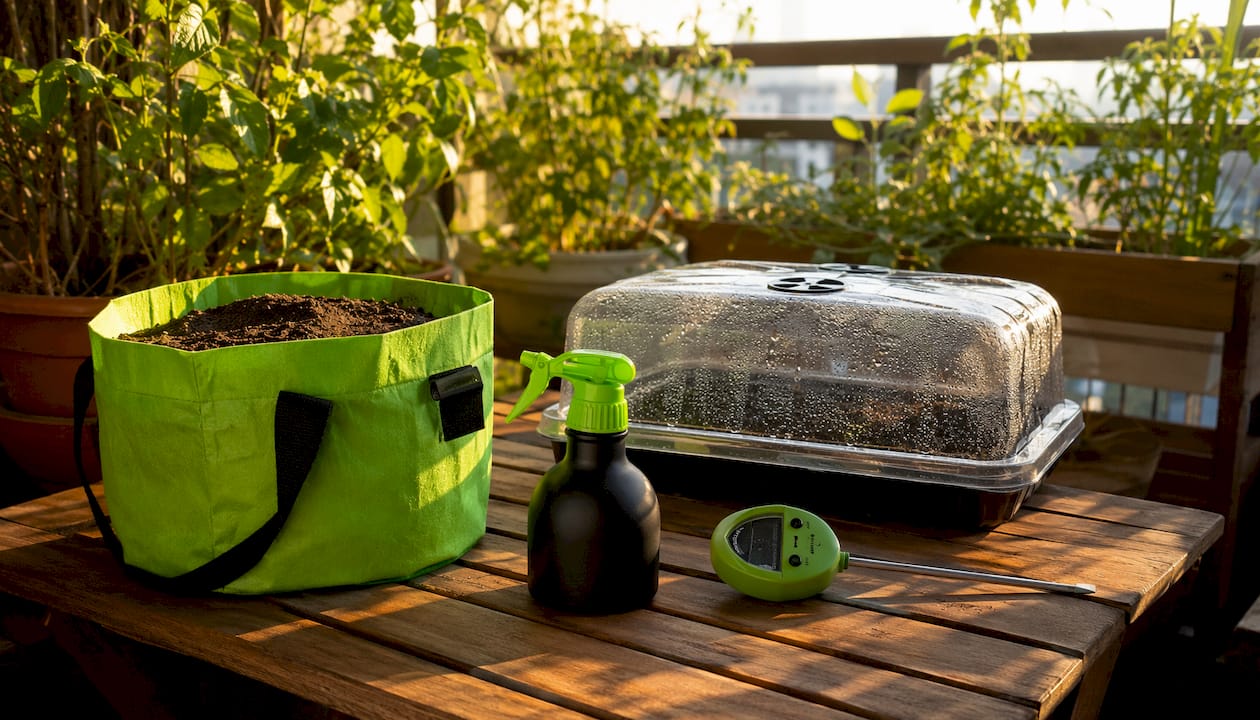
The biggest barrier for new indoor gardeners is not effort, but the sheer number of decisions and technical steps before anything actually grows. Grow kits collapse that list dramatically.
All-in-one mushroom grow bags combine sterilized grain and bulk substrate in a single sealed bag, removing the manual inoculation step where most beginners make errors. Herb and vegetable kits bypass germination entirely by shipping fully rooted plants, which means your first harvest can arrive in as little as 10–14 days after planting.
Pro Tip: If you live in a dry climate, set up a simple DIY greenhouse enclosure around your kit to maintain humidity without constant misting.
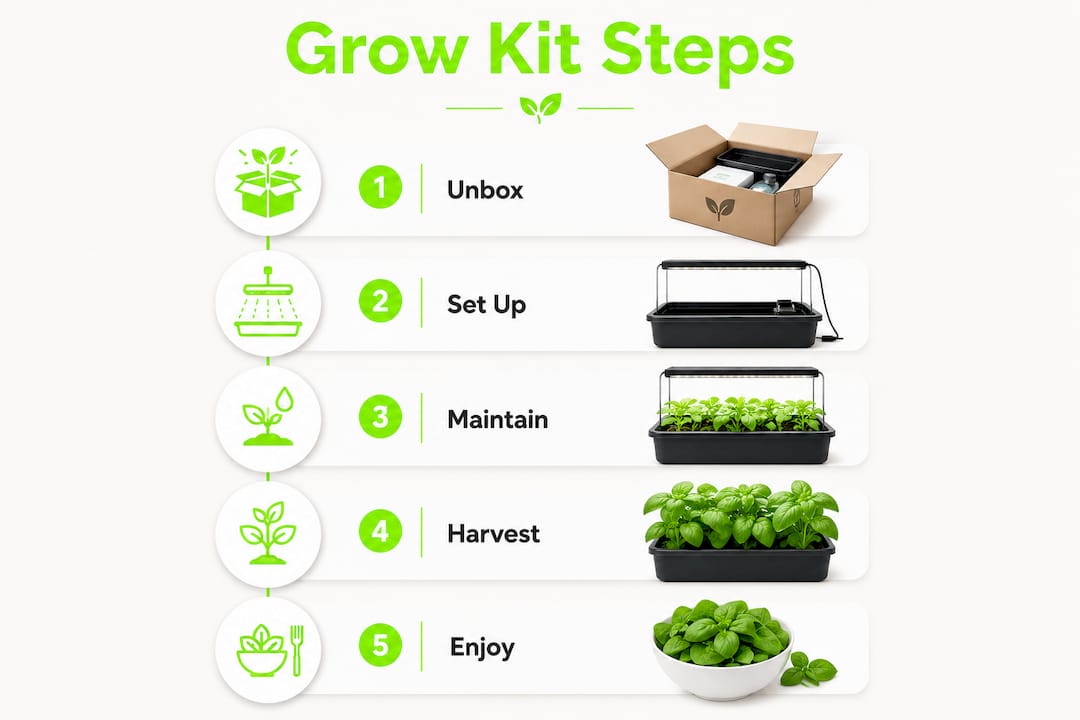
Grow kits are easy, but they are not maintenance-free. That assumption is the single most common reason kits fail.
Cleanliness is critical, especially for mushroom kits. Wash your hands before handling the substrate, and wipe down your work surface with isopropyl alcohol before opening any bag. Even all-in-one kits require this discipline. For plant kits, consistent watering and avoiding waterlogged soil matter most.
Pro Tip: If pins start forming but then dry up and die, build a humidity tent immediately. Cut half-inch holes throughout a large plastic bag, drape it loosely over your kit, and mist the inside of the bag walls daily. The holes keep CO2 from building up.
Seeing something grow because of your own effort is genuinely motivating. Grow kits are designed to deliver that feeling fast. Ready-made kits produce mushrooms in 7–14 days with zero equipment and zero prior skills, which is exactly the kind of quick win that keeps beginners engaged rather than frustrated.
The progression is natural. You start with a kit, you harvest something real, and suddenly the idea of trying a more involved setup feels achievable rather than intimidating.
Once your kit is producing results, lighting becomes the next variable worth understanding. Most beginner kits assume ambient indoor light or indirect sunlight, which works for a first grow. Scaling up, or moving plants fully indoors, requires deliberate light choices.
LED grow lights are the most practical option for home growers. They run cooler than HID lights, use less electricity, and modern full-spectrum LEDs cover both the blue wavelengths seedlings need and the red wavelengths that drive flowering and fruiting. Ledgrowlightsdepot’s beginner LED guide walks through the differences between LED, CFL, and HID in plain language, which is a useful starting point before buying anything.
Most kit failures trace back to airflow, humidity, and temperature, not beginner incompetence. Knowing what to watch for saves a lot of frustration.
| Problem | Likely cause | Fix |
|---|---|---|
| Pins form but die off | Too dry, not enough misting | Build a humidity tent; increase misting frequency |
| Green or black spots on substrate | Contamination | Discard affected kit; sterilize workspace |
| No growth after two weeks | Temperature too low or too high | Move kit to a stable temperature location |
| Yellowing plant leaves | Overwatering or nutrient deficiency | Check drainage; apply included nutrients |
| Leggy, stretched seedlings | Insufficient light | Move closer to a window or add a grow light |
Entry-level herb and vegetable kits typically run $20–$40, which covers the grow bag, soil, rooted plants, and nutrients. Mushroom grow kits fall in the same range. More involved setups, like all-in-one mushroom grow bags with sterilized grain and bulk substrate, can run $30–$60. For most beginners, a $20–$40 kit is the right starting point: low enough risk to experiment, high enough quality to actually produce results.
Online retailers offer the widest selection. Amazon carries a broad range of mushroom and herb kits with fast shipping. Specialty sites like Gardenuity ship herb and vegetable kits matched to your location and season. Home Depot stocks mushroom grow kits from brands like North Spore in-store and online. For PVC greenhouse enclosures that complement your kit setup, specialty garden supply retailers are the better source.
Physical stores including Home Depot, Walmart, and local garden centers carry basic herb kits year-round. Specialty garden centers often stock a wider variety, including mushroom kits, particularly in spring and fall.
Your first grow kit proves the concept. The next step is controlling the one variable that limits every indoor setup: light quality.
Ledgrowlightsdepot’s proprietary proximity systems improve under-canopy light distribution, producing notable yield increases compared to standard setups. The TrolMaster Hydro-X DLI adapter gives you precise daily light integral control without manual adjustments, and the California Lightworks SolarSystem 1100 UVB delivers full-spectrum coverage for growers ready to move beyond kit-level results. With a 4.8 out of 5 rating from more than 5,800 customers, Ledgrowlightsdepot is a trusted next step for home growers who want real output from their indoor space.
A beginner grow kit removes the hardest technical steps from indoor cultivation, giving new growers a realistic path to a first harvest in as little as 10–14 days.
| Point | Details |
|---|---|
| All-in-one design | Kits include substrate, nutrients, containers, and instructions so beginners need no prior experience. |
| Fast first harvest | Fully rooted plant kits and colonized mushroom kits can yield results in as little as 10–14 days after setup. |
| Cleanliness drives success | Contamination from skipping basic hygiene is the top reason mushroom kits fail. |
| Cost entry point | Most beginner kits cost $20–$40, making experimentation low-risk for first-time growers. |
| Ledgrowlightsdepot lighting | Upgrading to an LED grow light system from Ledgrowlightsdepot supports yield gains over 20% for growers ready to scale indoors. |
0 of 3 items selected

Leave a comment