
Free Shipping in the USA on nearly all items!
Limited phone hours during the Holidays! Call us: 888-611-9305
Free Shipping in the USA on nearly ALL items! Limited phone hours during the Holidays!

Wall mounted grow light systems are fixed lighting rigs attached directly to walls or vertical supports to deliver targeted, full-spectrum light to indoor plants. They solve the single biggest problem in indoor gardening: getting enough light to plants without sacrificing floor space. Ledgrowlightsdepot’s proximity-based LED technology demonstrates how proper light placement drives over 20% yield increases compared to standard overhead setups. For home gardeners working with apartments, small rooms, or dedicated grow walls, these systems are the most space-efficient lighting solution available. This guide covers the best wall mounted grow light system examples, key features, placement strategies, and how to choose the right setup for your space.
The most effective wall mounted plant lights share four core characteristics: full-spectrum output, adjustable mounting hardware, modular expansion options, and timer compatibility. Understanding these features before you buy saves money and prevents common setup mistakes.
Full-spectrum LED output is the foundation. Full-spectrum LEDs with a high color rendering index (CRI) eliminate harsh purple tinge and show plants in natural color, which matters both for plant health and for keeping your living space attractive. Plants grown under high-CRI full-spectrum light develop more evenly because all wavelengths needed for photosynthesis are present.
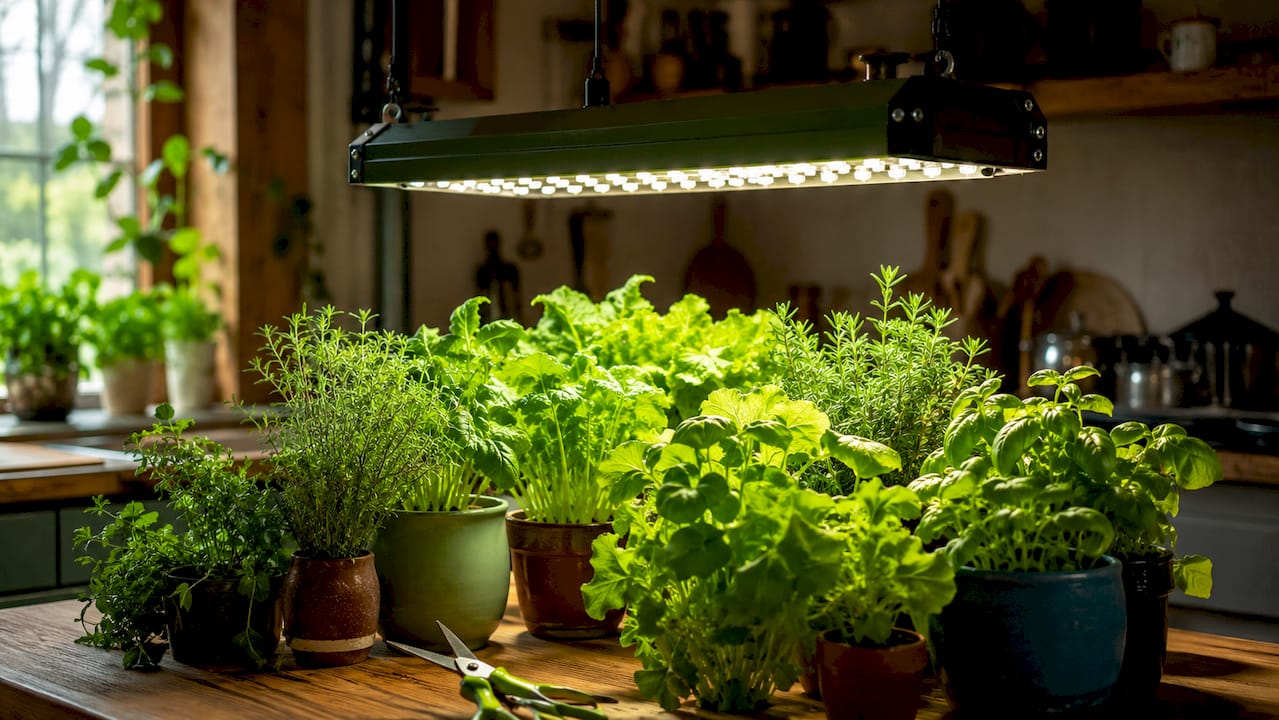
Adjustable mounting hardware determines how well light reaches multiple plant tiers. Fixed-angle brackets work for single-shelf setups, but angled or swivel mounts let you direct light across several growing levels from one fixture. This matters most in vertical hydroponic walls where lower tiers are easy to under-light.
Modular design lets you expand without replacing your whole system. LED bar lights are the most modular format because you can add bars as your wall garden grows. Panels work well for single dense canopies, while spotlights suit accent or targeted lighting for individual specimen plants.
Timer and dimmer integration rounds out a functional setup. Electronic timers set to 16 hours on and 8 hours off optimize photosynthesis for most leafy greens and herbs. Reducing that light period significantly cuts yields in fruiting plants like strawberries, so matching your timer settings to your plant species matters.
Pro Tip: Before buying any fixture, measure the distance from your wall mount point to the farthest plant tier. A fixture with a 120-degree beam angle covers far more vertical surface than a 60-degree spotlight at the same wattage.
These are the most common and effective grow light setup ideas home gardeners actually use, from simple DIY builds to complete commercial kits.
Integrated vertical hydroponic wall systems pack up to 5 plants per square foot into a 24"x48" footprint and hold 20–24 plants total. DIY NFT (nutrient film technique) kits in this category run $120–$180 and take 5–7 hours to assemble. The grow lights mount directly above or beside the panel, angled to cover all growing channels evenly. This setup suits herbs, lettuce, and small leafy greens perfectly.
LED bar lights mounted horizontally across wall-mounted shelving give you the most flexibility. You add one bar per shelf tier, each plugged into a shared timer. This format works well for compact grow light fixtures because bars distribute light evenly across the full shelf width without hot spots. Growers running three to five shelf tiers typically use one bar per tier, wired to a single programmable timer.
Floor-to-ceiling tension rod systems mount grow lights without drilling a single hole. These are the top choice for renters. The pole extends from floor to ceiling using spring tension, and light fixtures clip or slide onto the vertical rod at any height. You can reposition lights in minutes as plants grow. The tradeoff is load capacity: most tension rods support lighter LED bar fixtures but not heavy panel lights.
A single large LED panel mounted flush to the wall works best for dense single-canopy setups like a living herb wall or a flat trellis garden. The panel mounts on two or four wall anchors and plugs into a standard outlet. This is the simplest installation and the most permanent. It suits gardeners who want a clean, architectural look and do not plan to rearrange their setup.
Biophilic lighting enhances indoor living spaces by using plant lighting that appears natural and complements interior design. Track-mounted grow spotlights in this category use high-CRI LEDs that look like standard home lighting to the eye while delivering the photosynthetically active radiation plants need. These fixtures suit living rooms and dining areas where a purple glow would be unacceptable. They pair well with luxury landscape design principles applied indoors.
Fixed wall hydroponic systems like the Wally 32 combine automated watering with wall-mounted plant pockets. The system uses float-compensated tanks that need only a weekly reservoir refill. Pairing this type of wall garden with a wall-mounted LED bar above each plant row creates a nearly self-managing setup. This is the best option for gardeners who travel frequently or want minimal daily maintenance.
Modular hydroponic panel systems with drip irrigation scale from a single panel to a full living green wall. Each panel holds multiple plant pockets and connects to the next with simple fittings. Grow lights mount on a horizontal rail above the panel array and angle downward at roughly 45 degrees. This setup works for both residential and small commercial spaces and is the most scalable of all the examples here.
Getting placement right separates a thriving wall garden from one that produces leggy, pale plants. These steps apply to any of the setups above.
Pro Tip: Clip a small mirror to your lowest plant tier and look at the reflection from your light fixture. If you cannot see the LED surface in the mirror, that tier is not receiving direct light and needs a fixture angle adjustment.
Choosing between system types comes down to four factors: space, plant type, installation constraints, and budget.
| Category | Best for | Installation | Maintenance | Cost range |
|---|---|---|---|---|
| Vertical hydroponic wall (DIY NFT) | Herbs, lettuce, leafy greens | Moderate (5–7 hours) | Weekly reservoir refill | $120–$180 |
| Modular LED bar shelf system | Multi-species collections | Easy (under 2 hours) | Low | Varies by tier count |
| No-drill telescopic pole | Renters, temporary setups | Very easy (under 1 hour) | Very low | Low to moderate |
| Fixed wall LED panel | Single-canopy herb walls | Simple (permanent anchors) | Very low | Moderate |
| Biophilic track spotlight | Living rooms, aesthetic spaces | Easy (track rail) | Very low | Moderate to high |
| Automated wall system with irrigation | Busy gardeners, travelers | Moderate | Minimal (weekly) | Moderate to high |
LED bar fixtures versus panel lights is the most common decision point. Bars win for multi-tier setups because each tier gets its own dedicated light source. Panels win for single dense canopies because they deliver uniform PPFD across a wide surface from one fixture. LED systems consume far less electricity than older HID or fluorescent alternatives, so the long-term operating cost favors LED in every category above.
Hardwired systems deliver cleaner installations but require an electrician and are not practical for renters. Plug-in systems work for most home setups and allow easy timer integration without any electrical work.
Wall mounted grow light systems deliver the best results when full-spectrum LEDs, correct light angles, and timer-controlled schedules are matched to the specific plants and space involved.
| Point | Details |
|---|---|
| Angle matters more than wattage | Lights angled at 30–45 degrees cover multiple tiers; straight-down mounting leaves lower plants under-lit. |
| Timer settings drive yield | A 16-hour on, 8-hour off schedule maximizes growth for most herbs and leafy greens. |
| No-drill systems work for renters | Telescopic tension rod systems mount grow lights without wall damage and reposition easily. |
| Full-spectrum LEDs outperform purple lights | High-CRI full-spectrum fixtures support plant health and keep living spaces visually appealing. |
| Modular bar lights offer the most flexibility | LED bars scale with your garden and allow per-tier light control better than fixed panels. |
Most gardeners get the fixture right and the angle wrong. I’ve watched people spend real money on quality full-spectrum LED bars and then hang them straight down from a wall bracket, pointing at the floor in front of their plants instead of at the plants themselves. The fix takes five minutes and a screwdriver, but the mistake costs weeks of slow growth before anyone notices.
The other mistake I see constantly is under-lighting lower tiers. The top shelf always looks great. The bottom shelf looks like it’s growing in a basement. If your wall system has more than two tiers, you need either a dedicated light source per tier or a fixture with a wide enough beam angle to reach the bottom from the top. Most single fixtures do not cover three or more tiers adequately, regardless of wattage.
My honest recommendation: invest in adjustable mounting hardware before you invest in a more powerful fixture. A 40-watt bar at the right angle outperforms an 80-watt panel aimed at the wrong surface. For anyone blending a grow wall into a living space, biophilic-style high-CRI fixtures are worth the extra cost. The difference between a purple-glowing wall and one that looks like tasteful interior lighting is the difference between a setup you show guests and one you hide behind a curtain.
For apartment gardeners specifically, the urban herb garden lighting guide from Ledgrowlightsdepot covers fixture selection for low-ceiling spaces in detail worth reading before you buy anything.
— Scott
Ledgrowlightsdepot carries full-spectrum LED grow lights built specifically for the kind of close-range, wall-adjacent plant lighting that vertical gardens demand. Their fixtures are rated 4.8 out of 5 across more than 5,800 customer reviews, with growers consistently noting improved canopy coverage and plant density.
For gardeners who want to go beyond basic lighting, the TrolMaster Hydro-X environmental control system integrates full-spectrum quantum sensing with automated environmental monitoring, giving you precise control over the conditions your wall garden lives in. Pair it with the Aqua-X Pro irrigation control system for a fully automated wall garden that manages both light cycles and watering on a single platform. Browse the full range at Ledgrowlightsdepot to find the right fit for your space and plant list.
Herbs, lettuce, spinach, and other leafy greens thrive under wall mounted LED systems because they need moderate light intensity and grow well in vertical configurations. Fruiting plants like tomatoes can work but require higher PPFD and more precise light scheduling.
Most LED bar and panel fixtures perform best at 6–18 inches from the plant canopy, though the ideal distance depends on the fixture’s wattage and beam angle. Check the manufacturer’s PPFD chart for your specific fixture to dial in the correct distance.
LED grow systems consume far less electricity than older HID or fluorescent lighting, making them cost-effective for home use. A typical LED bar running 16 hours per day adds only a few dollars per month to an average electricity bill.
Yes. Telescopic floor-to-ceiling tension rod systems mount grow lights without drilling any holes and leave no wall damage when removed. They are the standard solution for renters or anyone in a non-permanent living situation.
Vertical hydroponic wall systems achieve up to 5 plants per square foot, with a standard 24"x48" panel holding 20–24 plants. Modular systems let you add panels as your collection grows.
0 of 3 items selected

Leave a comment