
Free Shipping in the USA on nearly all items!
Limited phone hours during the Holidays! Call us: 888-611-9305
Free Shipping in the USA on nearly ALL items! Limited phone hours during the Holidays!

PPFD is the metric that matters for plant lighting, measured in µmol·m⁻²·s⁻¹. Lux measures how bright a light looks to the human eye, and it can only be converted to PPFD approximately, using a factor specific to that light’s spectrum. If you need an actual PPFD number, measure it with a quantum sensor or apply a trusted, source-specific conversion factor as a stopgap.
TL;DR:
- Converting lux to PPFD requires a spectrum-specific constant, with sunlight roughly at 0.0185, but actual values vary widely across light types.
- PPFD measures usable photons landing on leaves, making it far more reliable than lux for optimizing plant growth and avoiding under- or over-lighting.
- Relying solely on lux can lead to significant errors, especially when spectrum shifts change the relationship between lux readings and actual photosynthetic light.
- For accurate light measurement, use quantum sensors and take multiple readings across the canopy to calculate the daily light integral rather than relying on single snapshots.
- Target PPFD levels differ by growth stage, with 100-300 for seedlings, 300-600 for vegetative, and 600-900 for flowering, based on a realistic spectrum and fixture data.
PAR stands for photosynthetically active radiation, the 400 to 700 nanometer light band plants use to drive photosynthesis. Everything outside that window is wasted energy as far as a leaf is concerned.
PPF (photosynthetic photon flux) is the total number of PAR photons a fixture produces every second, measured in µmol·s⁻¹. It’s a lab number, generated with an integrating sphere, and it tells you nothing about what happens at the canopy.
PPFD (photosynthetic photon flux density) is PPF spread across a specific area: PPFD = PPF ÷ area, measured in µmol·m⁻²·s⁻¹. This is the number that tells you how many usable photons are actually landing on a leaf surface at a given distance.
Lumens and lux are different animals entirely:
That mismatch is the whole reason lux and PPFD measure fundamentally different things: one is tuned to human perception, the other to plant biology.
Lux was built for offices and photography, not chlorophyll. Because the photopic curve overweights green and underweights red and blue, a light source rich in those plant-critical wavelengths can read as “dim” on a lux meter while still delivering strong PPFD.
Picture three light sources tuned to hit 20,000 lux: natural sunlight, a full-spectrum white LED, and a red-and-blue “blurple” LED. Their PPFD values at that same lux reading can differ dramatically, because each spectrum distributes its energy across wavelengths differently. A blurple fixture heavy in red and blue can produce meaningfully more PPFD per lux than a green-heavy white LED, even though a lux meter treats them as equally bright.
There’s also a time dimension. PPFD is an instantaneous measurement, a snapshot of photon flux right now. Daily Light Integral (DLI) accumulates PPFD across the entire photoperiod into a single daily dose, and that cumulative number often predicts yield better than any single reading.
Relying on lux for crop-critical calls carries real risk:
Pro Tip: If you’re comparing two fixtures and only have lux numbers, check their spectral output charts first. Two lights at identical lux can differ significantly in usable PPFD due to their spectral differences.
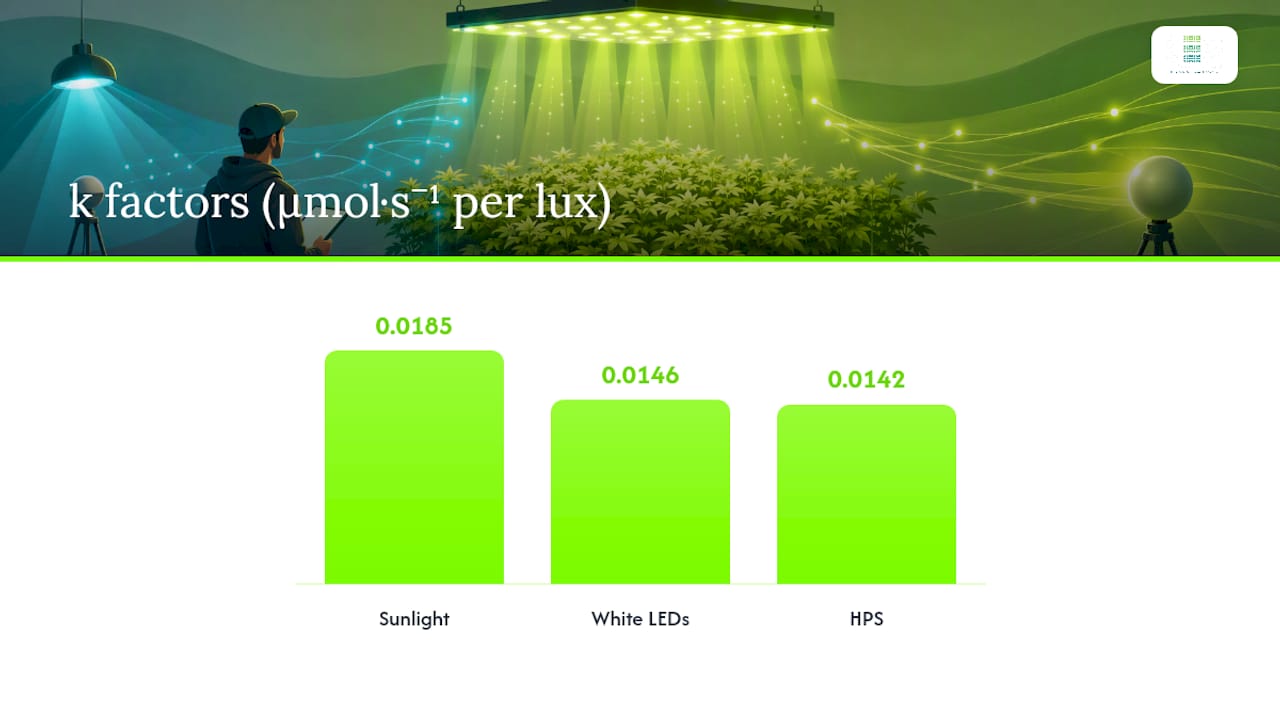
The base formula is simple: PPFD = lux × k, where k is a conversion constant that depends entirely on the light source’s spectrum. There’s no single universal k, because the conversion factor changes with the spectral distribution of whatever is producing the light.
Sunlight is the best-documented case, with a commonly cited factor of about 0.0185 µmol/s per lux. That means 100,000 lux of full sun works out to roughly 1,850 µmol·m⁻²·s⁻¹, in line with peak outdoor readings.
By the numbers: A sunlight k-factor of 0.0185 means 30,000 lux of daylight converts to roughly 555 µmol·m⁻²·s⁻¹ of PPFD, a useful sanity check when you’re calibrating equipment outdoors.
Other sources carry their own approximate factors:
These figures come from published calculator tables built on typical spectral curves, not your specific fixture, so treat them as ballpark estimates rather than lab-grade data.
For the PPF to PPFD side, the math is more reliable because it doesn’t depend on guessing a spectrum. If a fixture is rated at 1,700 µmol·s⁻¹ of PPF and you’re lighting a 4×4 foot canopy (about 1.49 square meters), PPFD at that plane averages roughly 1,140 µmol·m⁻²·s⁻¹, before accounting for distance falloff and beam angle. That’s why manufacturer PPF numbers alone don’t tell you what your plants receive.
Your sensor choice depends on how much the number matters. Quantum (PAR) sensors measure PPFD directly and cost more, but they’re the only tool that gives you a trustworthy figure for crop-critical decisions. Basic lux meters cost a fraction of that and work fine for spotting relative bright and dim zones. Spectrometers sit in between, showing full spectral distribution for growers who want to understand exactly what wavelengths a fixture emits.
A single reading in the center of your tent tells you almost nothing about canopy edges. Take readings on a grid, typically 9 to 16 points across your growing area, at canopy height, then average them to get a representative PPFD figure rather than a best-case number from directly under the fixture.
Phone lux apps deserve real skepticism. They’re calibrated for photography, not horticulture, and small variations in phone model, camera glare, or ambient reflection can throw readings off substantially. Extension guidance is consistent on this: use them for rough trend-spotting only, never for setting canopy distance or dimming a fixture.
Pro Tip: Take your grid readings at the same time each week to track how your fixture’s output degrades over months, since LED diodes do lose intensity gradually.
Target PPFD shifts significantly across a plant’s life cycle, and pushing too hard too early wastes energy without adding yield.
Quick estimate: Using the sunlight k-factor of 0.0185, a lux meter reading of 40,000 lux under a full-spectrum LED roughly suggests 500 to 600 µmol·m⁻²·s⁻¹ of PPFD, but treat that as a rough proxy, not a substitute for a real quantum sensor reading before making a lighting change.
Pushing PPFD past a crop’s saturation point brings diminishing returns and, at extremes, actual photoinhibition, so more light isn’t automatically better. DLI ties this together: two setups with identical peak PPFD can produce very different results if one runs a longer photoperiod, which is why daily accumulated dose usually predicts yield better than any single-moment reading.
The company earns a high customer rating and bases its product information on manufacturer PPF/PPFD datasheets and quantum sensor testing rather than lux estimates. That distinction matters when you’re shopping for a fixture, since PPF and efficacy numbers only translate into usable PPFD once you know the canopy area they’re spread across.
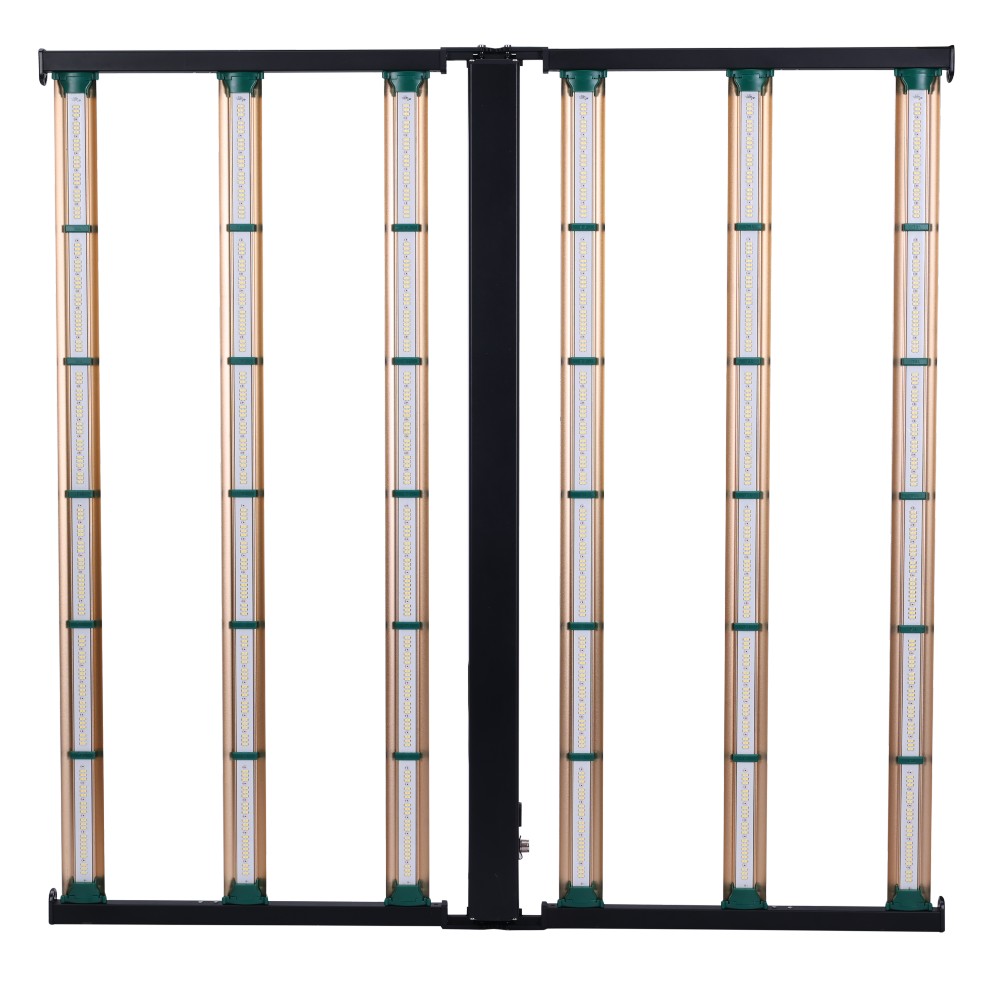
The Grower’s Choice ROI-FF 650W is built specifically for a 4×4 flowering footprint, giving growers a fixture sized to deliver flowering-stage PPFD without guessing at coverage math.
For readers who want to go deeper on the numbers behind fixture selection:
The conventional advice on this topic treats lux to PPFD conversion as a solved problem, something you can look up once and apply forever. It isn’t. The moment you switch fixture types, whether that’s swapping HPS for LED or upgrading to a different diode mix, your k-factor changes and last year’s conversion math becomes wrong.
What gets underestimated is how much distance and angle distort readings. Growers obsess over choosing the right conversion factor while measuring three inches off-center from where their canopy actually sits, which introduces more error than the spectrum mismatch ever will.
My honest read: grid sampling with a real quantum sensor beats any conversion formula, full stop. Lux has a place, mainly for quick day-to-day trend checks when you already know your fixture’s PPFD baseline. But the moment a decision affects yield, whether that’s setting hang height or timing a flip to flower, the lux number needs to get out of the way. Buy the sensor. Skip the math.
— Scott
This retailer offers fixtures accompanied by real PPF and PPFD datasheet data, allowing buyers to size their setups around actual photon delivery instead of marketing specifications.
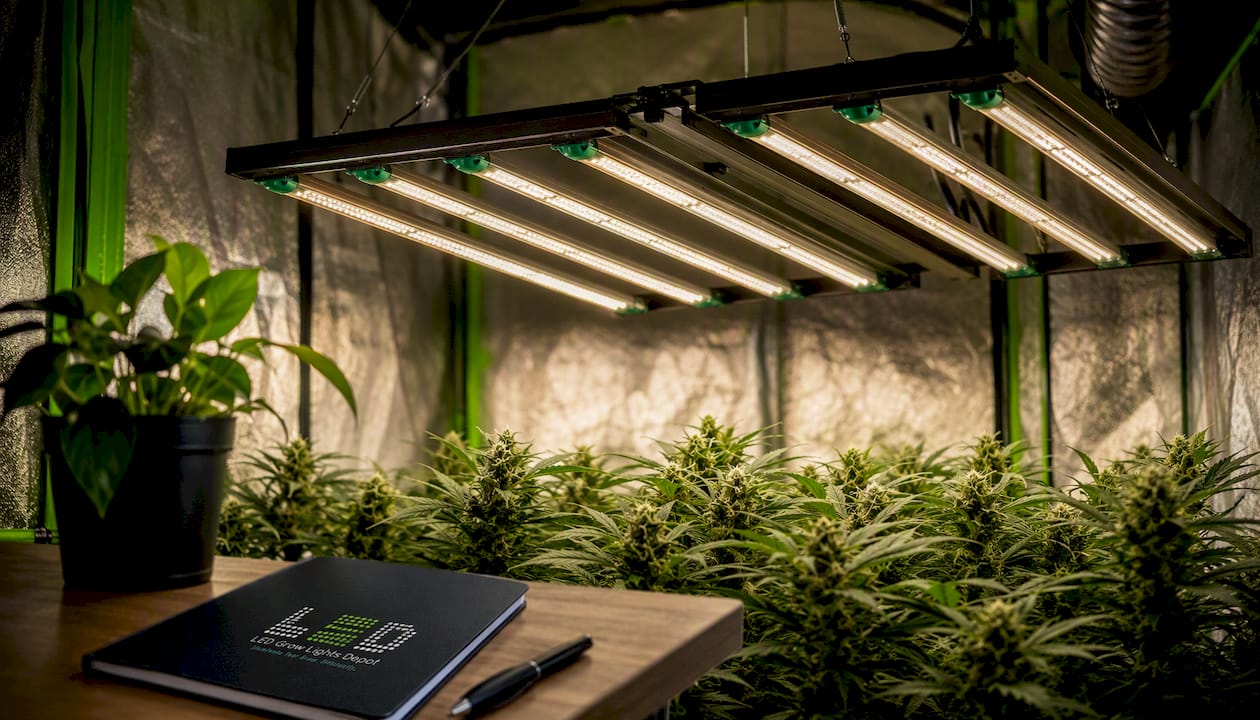
If your target is a dense, even canopy across a 4×4 flowering space, the Grower’s Choice ROI-FF 650W is built for exactly that footprint, with under-canopy proximity distribution designed to push light penetration deeper than a standard top-down fixture, a factor that shows up in bud grading at harvest. Home growers and commercial cultivators both use this approach to close the gap between a fixture’s rated output and what actually reaches lower bud sites. Check the product page for the full PPF and coverage specs, and pair it with our PPFD guides above to map your target range before you buy.
0 of 3 items selected


Leave a comment