
Free Shipping in the USA on nearly all items!
Limited phone hours during the Holidays! Call us: 888-611-9305
Free Shipping in the USA on nearly ALL items! Limited phone hours during the Holidays!

Indoor plant growing is the process of creating controlled environmental conditions that supply plants with light, water, nutrients, temperature regulation, and air circulation so they can photosynthesize and grow indoors. Most people treat it as decoration. The growers who actually succeed treat it as environmental management. Understanding the biology behind the process separates plants that thrive from plants that slowly decline on a windowsill.
Photosynthesis drives indoor plant growth by converting light, water, and carbon dioxide into sugars and oxygen. Every other input, including fertilizer, humidity, and soil quality, supports that single central process. If light is insufficient, nothing else compensates.
The indoor plant growth process mirrors what happens in nature, but you control every variable. Outdoors, plants self-regulate by following the sun, drawing from deep soil, and benefiting from natural wind. Indoors, you replace all of that. You become the sun, the rain, the breeze, and the soil engineer. That shift in responsibility is what makes indoor gardening both challenging and deeply satisfying.
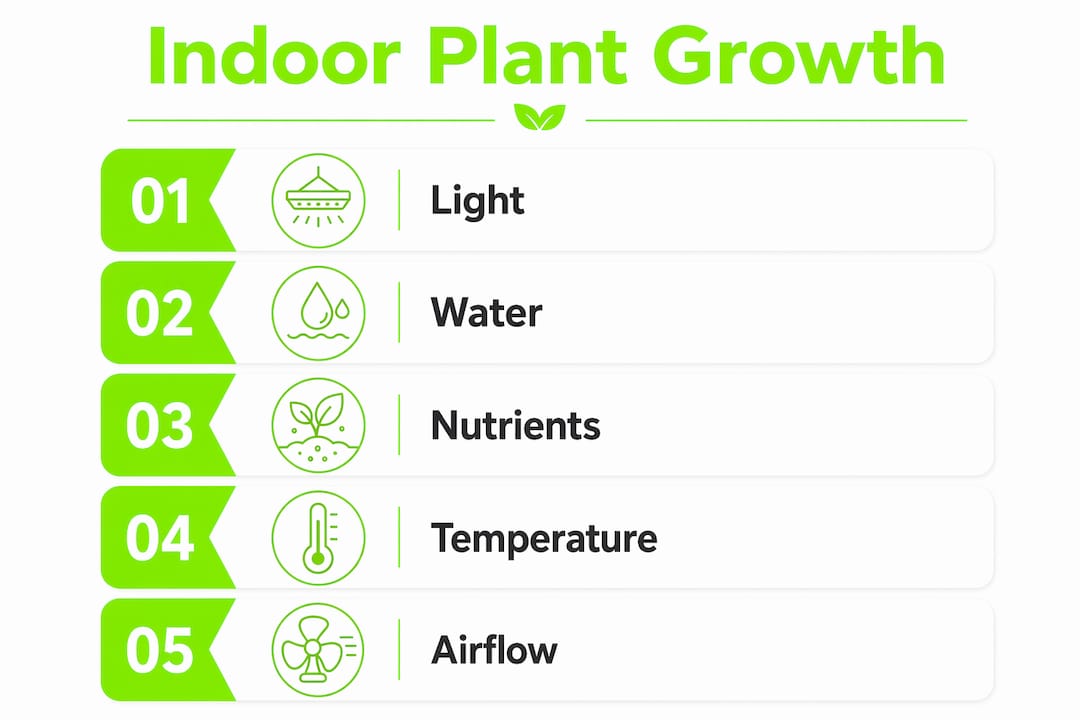
Five inputs govern whether a plant grows or stagnates: light, water, nutrients, temperature, and air circulation. Each one affects the others. A plant in cold soil absorbs water more slowly, which changes how often you need to water. A plant under weak light needs less water because its metabolism slows. Understanding these feedback loops is the foundation of best indoor plant care.
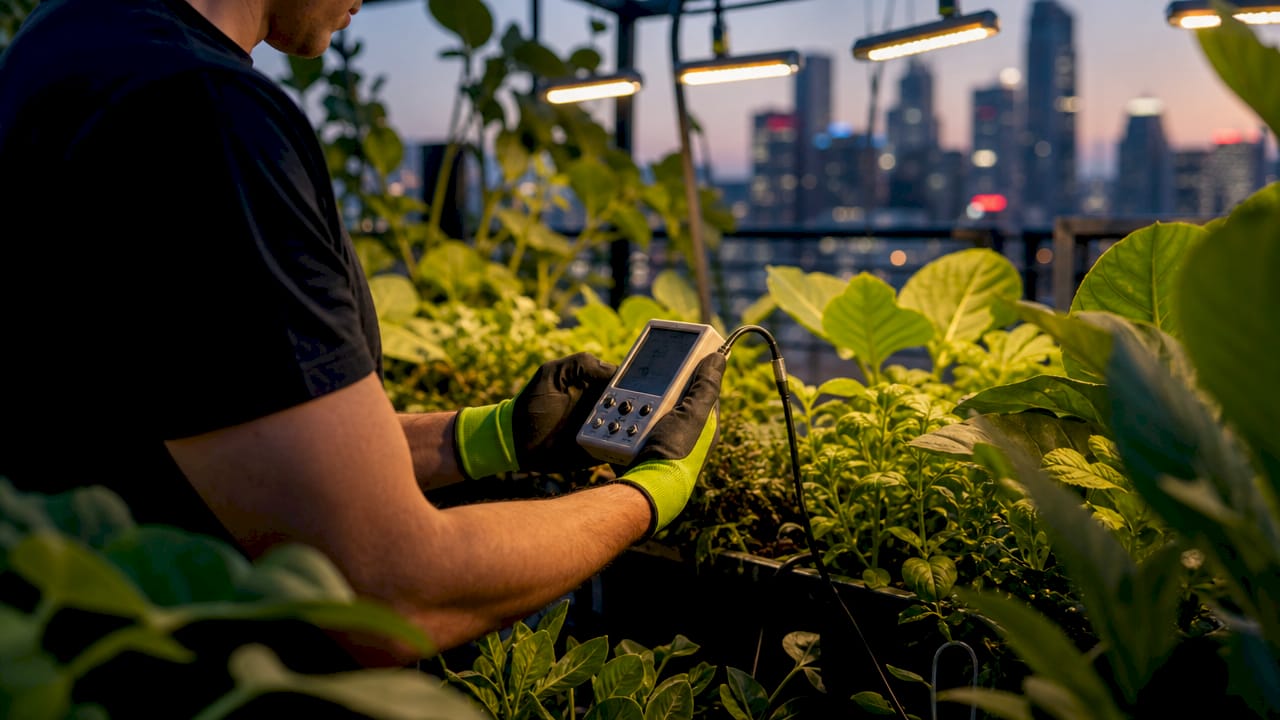
Modern tools like LED grow lights, soil moisture meters, and environmental sensors have made it far easier to manage these variables precisely. Ledgrowlightsdepot, for example, builds LED systems specifically designed to deliver the right light spectrum and intensity for indoor cultivation, addressing the single biggest limiting factor most home growers face.
Five factors determine whether your indoor plants grow actively or merely survive. Each plays a distinct biological role, and each interacts with the others in ways that matter for your daily care decisions.
Light: Light availability is the primary constraint to indoor plant growth. Plants below approximately 75 µmol/m²/s at the leaf surface survive on stored energy reserves rather than growing actively. No amount of fertilizer or humidity adjustment fixes a light deficit.
Water: Water carries dissolved nutrients from soil to roots and supports cell pressure throughout the plant. Too much water suffocates roots by displacing oxygen in the soil. Too little stops nutrient transport entirely.
Nutrients: Indoor plants cannot draw from deep soil reserves the way outdoor plants do. Nitrogen, phosphorus, and potassium must come from you, either through a quality potting mix or regular feeding. Deficiencies show up as yellowing leaves, stunted growth, or poor flowering.
Temperature: Most houseplants thrive between 65 and 80°F. Below that range, metabolic processes slow, nutrient uptake drops, and plants display symptoms that look like deficiency even when nutrients are present.
Air circulation: Moving air supplies carbon dioxide for photosynthesis, supports transpiration, and prevents the humid microclimates on leaf surfaces where pests and fungal diseases establish themselves.
Pro Tip: Buy a basic PAR meter or use a free lux meter app on your phone before placing any plant. Measuring actual light levels at the leaf surface takes 30 seconds and tells you more than any placement guide.
Light is the engine of the indoor plant growth process. Photosynthesis converts light, water, and CO₂ into the sugars that fuel every cellular process, from root growth to leaf expansion. Without adequate light, a plant cannot produce enough energy to grow, regardless of how well you manage everything else.
The gap between what plants need and what most homes provide is significant. Sun-loving indoor plants require 2,000 to 4,000 foot-candles of light for optimal growth. A bright south-facing window on a clear day delivers roughly 1,000 foot-candles at the glass and drops sharply just a few feet back into the room. That gap is why supplemental LED grow lights are not optional for many species.
| Light Source | Typical Intensity | Daily Duration | Best For |
|---|---|---|---|
| South-facing window | 500–1,000 foot-candles | 4–6 hours direct | Low to medium light plants |
| North-facing window | 25–100 foot-candles | Indirect only | Ferns, pothos, peace lily |
| Supplemental LED grow light | 2,000–5,000+ foot-candles | 14–16 hours | Herbs, fruiting plants, high-light tropicals |
| Standard overhead bulb | 50–200 foot-candles | All day | Insufficient for most growth |
Plants need 14 to 16 hours of daily light when using supplemental LEDs to support active growth. That duration requirement surprises most beginners who assume a few hours under a grow light is enough. It is not. Plants integrate light over the full photoperiod, and cutting it short limits the total energy available for growth.
Light spectrum matters as much as intensity. Blue wavelengths (400 to 500 nm) drive vegetative growth and compact structure. Red wavelengths (600 to 700 nm) support flowering and fruiting. Full-spectrum LED grow lights deliver both, which is why they outperform single-spectrum or warm white bulbs for growing plants indoors. You can learn more about how LED grow lights work and their spectrum benefits before choosing a fixture.
Pro Tip: Position your LED grow light so the canopy receives even coverage, then raise or lower it based on plant response. Stretching toward the light means too little intensity or too much distance. Bleached or curling leaves mean too close.
Overwatering kills more houseplants than any other single cause. Plants should never sit in standing water for more than 20 minutes, because waterlogged soil displaces the oxygen roots need to function. The result is root rot, which presents as wilting and yellowing leaves, the same symptoms as underwatering, which is why so many growers make the problem worse by watering more.
The finger test is the correct diagnostic for watering decisions. Push your finger into the soil up to the second knuckle. If it feels moist, wait. If it feels dry, water thoroughly until it drains from the bottom. Fixed schedules ignore the variables that actually determine soil moisture: temperature, light intensity, pot size, and plant species.
Soil composition determines how well your watering decisions translate into root health. Most nursery soils are formulated for shipping and retail, not long-term growing. Repotting into a custom mix of 70% potting soil and 30% perlite improves drainage and air porosity at the root zone. That ratio keeps moisture available while preventing the compaction that suffocates roots.
| Soil Condition | Effect on Roots | Fix |
|---|---|---|
| Dense, compacted nursery mix | Oxygen deprivation, slow drainage | Repot with perlite amendment |
| Overly sandy mix | Dries too fast, poor nutrient retention | Add coco coir or quality potting soil |
| Well-draining custom mix | Balanced moisture and oxygen | 70% potting soil, 30% perlite |
| Waterlogged soil | Root rot, anaerobic conditions | Improve drainage holes, reduce watering |
Cool, wet soil deprives roots of oxygen required for metabolism and nutrient uptake. This condition is frequently misdiagnosed as a watering or nutrient deficiency, leading growers to add fertilizer to a plant that cannot absorb anything until its roots recover. Fixing the soil structure solves the problem. Fertilizing a suffocating root system does not.
Temperature controls the speed of every metabolic process in a plant. Most houseplants thrive between 65 and 80°F, and deviations outside that range create problems that look like other issues. A plant sitting on a cold windowsill in winter may show nutrient deficiency symptoms not because the soil lacks nutrients, but because cool root temperatures slow the uptake mechanisms that deliver them.
Common temperature mistakes include:
Air circulation is the most overlooked input in indoor gardening. Oscillating fans mimic outdoor wind, supporting gas exchange and transpiration while preventing the stagnant, humid microclimates on leaf surfaces where spider mites, fungal gnats, and powdery mildew establish themselves. A small clip fan running on low for several hours a day makes a measurable difference in plant health.
Active airflow prevents harmful microclimates on leaves that promote pests and diseases. This is not about blasting plants with cold air. Gentle, indirect movement is enough to keep leaf surfaces dry and CO₂ levels refreshed around the canopy. Place a fan so it moves air through the space without pointing directly at any single plant.
Pro Tip: Run a small oscillating fan on a timer for four to six hours during the light period. This mimics the natural daytime breeze that strengthens stems and keeps leaf surfaces dry, without the stress of constant direct airflow.
Growing plants indoors successfully means managing five inputs as a connected system, not five separate tasks. Light sets the ceiling for everything else. A plant under strong light grows faster, needs more water, absorbs more nutrients, and produces more biomass. Reduce the light, and the entire system recalibrates downward.
Here is a practical framework for integrating all five factors:
Matching plant selection to your home’s actual conditions rather than aesthetics alone dramatically improves success rates. A fiddle-leaf fig in a north-facing apartment is a recipe for frustration. A pothos or ZZ plant in the same space thrives with minimal intervention. Choosing species that fit your environment is the single most underrated indoor gardening tip.
Environmental sensors like the TrolMaster Hydro-X system take the guesswork out of monitoring by tracking PAR, temperature, and humidity simultaneously. For growers managing multiple plants or a dedicated grow space, that data replaces guesswork with precision.
Indoor plant growing works when light, water, temperature, soil, and airflow are managed as a connected system, with light as the primary constraint that determines the ceiling for all other inputs.
| Point | Details |
|---|---|
| Light is the primary constraint | Plants below 75 µmol/m²/s survive on reserves rather than growing; fix light before adjusting anything else. |
| Overwatering is the top killer | Use the finger test every time and never let plants sit in standing water for more than 20 minutes. |
| Soil structure determines root health | A 70/30 mix of potting soil and perlite prevents oxygen deprivation and root rot. |
| Temperature affects nutrient uptake | Cool roots slow absorption and mimic deficiency symptoms; keep root zones between 65 and 80°F. |
| Airflow prevents disease | A gentle oscillating fan during the light period reduces pests, supports gas exchange, and strengthens stems. |
Most beginners buy a plant because it looks good in a pot at the nursery, then place it wherever it fits the room. That decision, made in about 10 seconds, determines whether the plant lives or slowly declines over the next six months. I have seen it happen hundreds of times.
The single most common mistake is treating low light as a minor inconvenience rather than a hard biological limit. When a plant sits below the threshold where it can photosynthesize actively, no amount of premium fertilizer, careful watering, or humidity trays will produce growth. The plant is running on reserves. You are watching it spend down its savings. Increasing light is the only fix, and for most indoor spaces, that means supplemental LED grow lights.
The second mistake is diagnosing problems in isolation. A yellowing plant is not automatically a nitrogen deficiency. It might be cold roots slowing uptake, waterlogged soil cutting off oxygen, or insufficient light preventing the plant from using the nutrients already present. I always check light first, then soil moisture and temperature, before reaching for a fertilizer bottle.
What actually works is building the environment before choosing the plant. Measure your light. Know your temperature range. Set up airflow. Then pick species that match those conditions. That sequence feels backward to most people, but it is the reason some growers have thriving indoor gardens while others cycle through dead plants every few months. Understanding interlighting techniques for denser canopies is one example of how experienced growers push results further once the basics are dialed in.
— Scott
Getting your light right is the single highest-leverage change you can make to your indoor garden. Ledgrowlightsdepot carries a full range of LED grow lights built specifically for home growers and commercial cultivators, from compact fixtures for a single shelf to high-output systems for dedicated grow rooms.

The NextLight 150h LED Grow Light delivers full-spectrum output with the intensity and efficiency that sun-loving plants need indoors. For growers managing larger spaces, the ION 720W LED Grow Light provides the coverage and canopy penetration to push yields beyond what standard setups achieve. With over 5,800 verified reviews and a 4.8 out of 5 satisfaction rating, Ledgrowlightsdepot has the products and expertise to match every grower to the right solution.
Light is the primary limiting factor for indoor plant growth. Plants below approximately 75 µmol/m²/s cannot photosynthesize actively and survive on stored energy reserves regardless of other inputs.
Water based on soil moisture, not a fixed schedule. Use the finger test by pushing your finger into the soil to the second knuckle, and water only when the soil feels dry at that depth.
Most nursery soils are optimized for shipping, not long-term growing. Repotting into a mix of 70% quality potting soil and 30% perlite improves drainage and root-zone oxygen, which are both critical for healthy growth.
Yes. Full-spectrum LED grow lights deliver the blue and red wavelengths plants need for vegetative growth and flowering. Running them for 14 to 16 hours daily compensates for the light intensity most homes cannot provide through windows alone.
Stalled growth is most often caused by insufficient light, not a watering or nutrient problem. Check actual light intensity at the leaf surface before adjusting fertilizer or watering frequency.
0 of 3 items selected


Leave a comment