
Free Shipping in the USA on nearly all items!
Limited phone hours during the Holidays! Call us: 888-611-9305
Free Shipping in the USA on nearly ALL items! Limited phone hours during the Holidays!

Most LED grow lights produce electromagnetic fields well within the low ranges considered background-level, and typical fixtures are not a meaningful health risk when positioned at normal canopy distances. The exceptions are internal-driver panels, poorly shielded HID ballasts, and dimmer switches at close range. If you’re concerned, take two actions right now:
The measurement and mitigation sections below walk through both in detail.
TL;DR:
- External-driver LED fixtures typically produce ELF magnetic fields below 2 milligauss at normal working distances, posing minimal health risks.
- Moving drivers or power supplies even a few feet away from you can significantly reduce electromagnetic field exposure.
- HID systems with remote ballasts often generate higher EMF levels near the fixture compared to well-designed LED grow lights.
- Measuring EMF with a tri-meter at different distances and locations helps identify and mitigate high field sources effectively.
- Proper wiring, grounding, and fixture placement are critical to minimizing EMF exposure and avoiding symptoms caused by faulty electrical connections.
Visible and near-infrared light are photons, not the electromagnetic field type anyone worries about. The actual concern is extremely low frequency (ELF) magnetic fields generated by the power electronics that run the fixture, not the diodes themselves.
Switching power supplies and integrated drivers create these ELF fields as they convert AC current to the voltage LEDs need. That conversion process can also generate “dirty electricity,” high-frequency electrical noise riding on the wiring. HID systems with remote or digital ballasts frequently produce higher EMF than a well-designed LED fixture, because ballasts handle more current and often sit closer to where a grower stands. Dimmer switches and wiring quality often matter more than the light source itself.
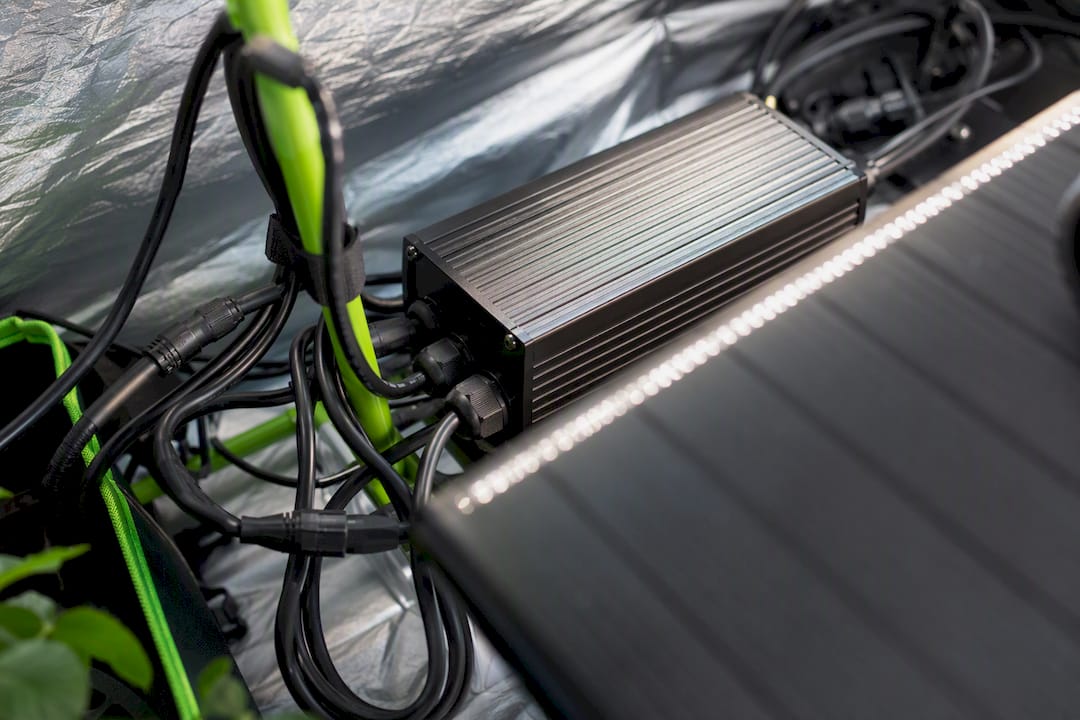
A tri-meter is the right tool for most growers. It reads magnetic fields (milligauss), electric fields, and radio frequency in one device, which lets you tell whether a reading comes from the driver, the wiring, or something else in the room.
This mirrors the protocol independent testers use: baseline with everything off, then energize one circuit at a time.
Pro Tip: If your reading drops sharply the moment you move the driver box two feet away, you’ve found your source. No need to overthink the rest of the room.
Numbers vary by brand and design, but rough patterns hold across most setups:
Independent field tests on sample LED fixtures found readings around 0.25 to 0.8 mG at 12 inches, but a Lutron dimmer pushed nearby readings up to roughly 2.72 mG at 2 inches, higher than the light fixture itself. Field strength falls off fast with distance. A mid-range panel reading 10 to 20 mG at 6 inches might drop to 1 to 3 mG at 24 inches, cutting exposure by half or more. If moving a fixture back reduces your light dose too much, compensate with longer run times rather than crowding the canopy closer to the driver. Worth noting: plenty of household items, hair dryers, vacuum cleaners, older microwaves, produce comparable or higher fields than a well-built LED panel.
Visible and near-infrared wavelengths aren’t the EMF issue here. The concern, to the extent one exists, is ELF magnetic fields from electrical components, not the light your plants use for photosynthesis.
Scientific reviews on low-level ELF exposure show mixed evidence and no firm consensus, which is why precautionary groups like BioInitiative recommend lower thresholds than most regulatory agencies use. That gap explains why you’ll see wildly different “safe” numbers online. If you or someone in your household notices persistent symptoms, headaches, tingling, unusual fatigue, near grow equipment, don’t jump straight to blaming EMF. Get an electrician to check the wiring and grounding first. Faulty connections and vibration from cheap ballasts cause more reported symptoms than the fields themselves.
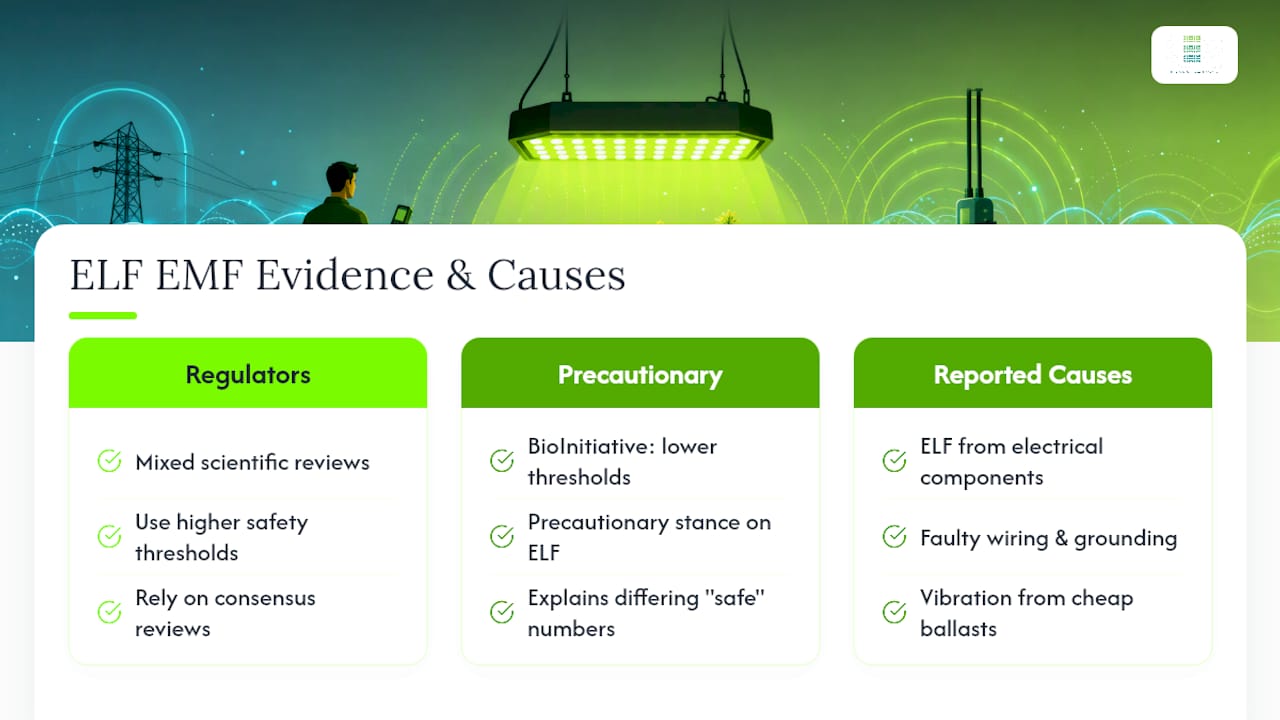
Fixing high readings usually comes down to a handful of practical changes, roughly in order of impact:
Pro Tip: If two fixtures in the same room read differently at the same distance, check the driver design before assuming one panel is defective. Internal vs. external drivers explain most of the gap.
Growers researching fixture types often ask how LED bar fixtures compare to panel lights here too, since driver placement differs between the two designs.
LedGrowLightsDepot carries a 4.8-out-of-5 customer satisfaction rating across more than 5,800 reviews, built on fixtures designed with driver placement and light distribution as core engineering decisions, not afterthoughts.
If you want the technical background on driver types before choosing a fixture, our guide on what makes up an LED grow light breaks down the components. Pairing the right hang height with the right driver design is really the whole game, and our stage-by-stage hanging guide covers that distance question in more depth.
Most LED setups aren’t the hazard forum threads make them sound like. Measure first, fix the driver placement or wiring if numbers run high, and you’ve handled the real risk.
— Scott
If you’re shopping with EMF in mind, look at fixtures that publish their driver design rather than hide it. The ThinkGrow LED Model-I and its upgraded sibling, the ThinkGrow LED Model-I Plus, both run external driver architecture that keeps power electronics off the canopy.
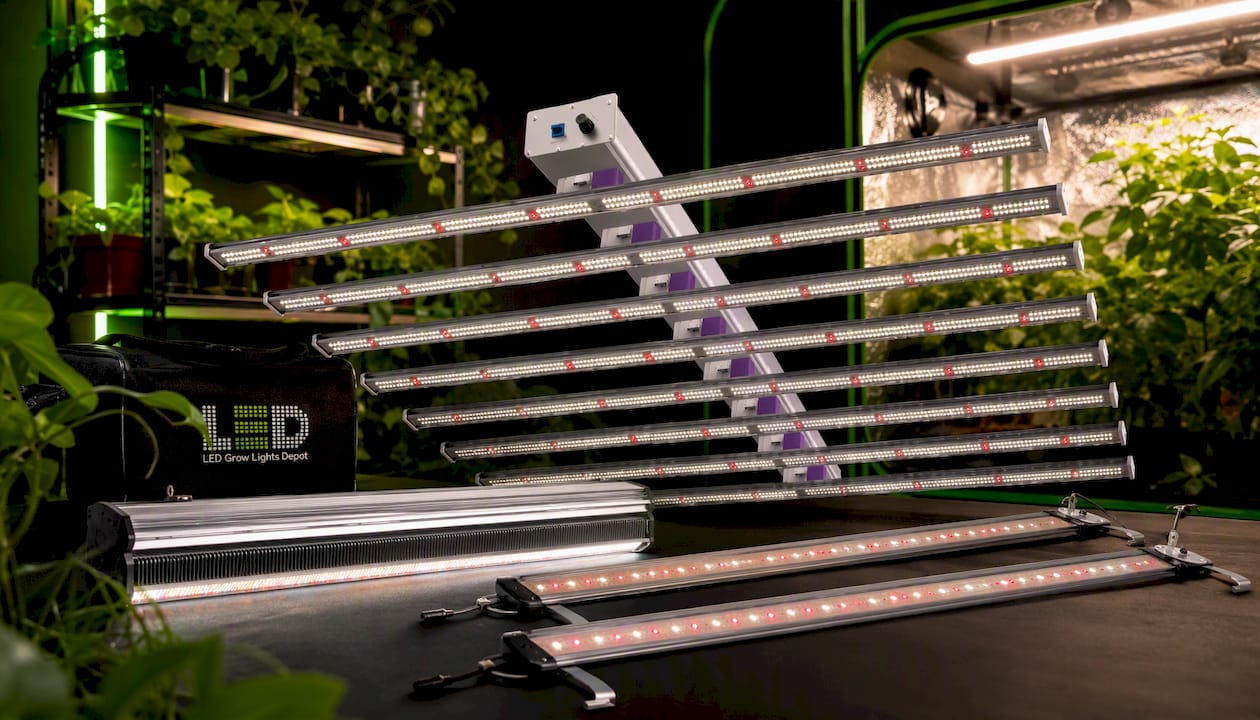
Whatever you choose, measure your current setup before you buy, so you know exactly what problem you’re solving. Browse the full lineup at LedGrowLightsDepot and talk to our team if you need help matching a fixture to your room.
Most LED grow lights produce low-level ELF fields that fall well within background range once you add normal canopy distance and choose an external-driver design.
| Point | Details |
|---|---|
| Light itself isn’t the concern | Visible and near-infrared photons aren’t EMF; ELF fields from drivers and ballasts are the actual variable. |
| Measure before you worry | Use a tri-meter at the fixture face, 12 inches, 24 inches, and your working position to get real numbers. |
| Distance cuts exposure fast | Fields can drop by half or more between 6 inches and 24 inches from the fixture. |
| Wiring issues mimic EMF symptoms | Persistent tingling or buzzing near equipment often means a wiring or grounding problem, not EMF. |
| External drivers reduce exposure | LedGrowLightsDepot’s ThinkGrow and Grower’s Choice fixtures use external-driver designs that keep power electronics off the canopy. |
0 of 3 items selected


Leave a comment