
Free Shipping in the USA on nearly all items!
Limited phone hours during the Holidays! Call us: 888-611-9305
Free Shipping in the USA on nearly ALL items! Limited phone hours during the Holidays!

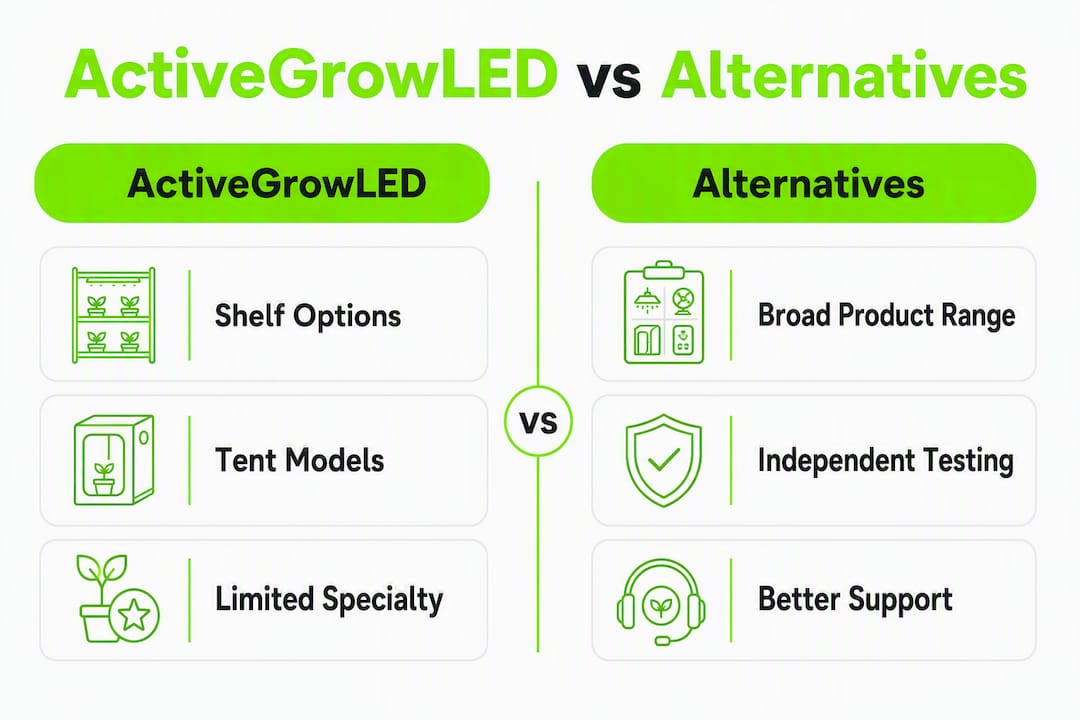
Ledgrowlightsdepot is the strongest single alternative to activegrowled.com for LED grow lights, tents, and supplemental bars, with a 4.8/5 rating from over 5,800 reviews and a catalog that covers everything from compact shelf strips to commercial-grade fixtures. Beyond that one destination, the best activegrowled.com alternatives fall into three practical categories:
Shop by coverage area and PPE (photon efficacy per watt) rather than brand name. Those two numbers cut through the marketing faster than anything else.
The grow lights market spans consumer and commercial segments, and the right alternative depends entirely on your setup. The table below maps the most useful buyer dimensions across the main alternative categories.
| Alternative category | Best for | Coverage / canopy height | PPE (µmol/J) | Spectrum quality | Canopy penetration | Price range | Warranty / certs | Support & reviews |
|---|---|---|---|---|---|---|---|---|
| Ledgrowlightsdepot (specialty LED retailer) | All growers: shelf, tent, commercial | 2×2 ft to 4×4 ft+ depending on fixture | Up to 2.8+ µmol/J (PhotonTek, HLG lines) | Full-spectrum with red peaks; UVA supplement available | Proximity/under-canopy bar systems | $40–$1,200+ | 3–5 yr; ETL/UL on key lines | 4.8/5, 5,800+ reviews |
| Specialty tent/kit sellers | Beginners wanting bundled setups | Matched to tent size | 2.5–2.6 µmol/J typical | Full-spectrum; varies by brand | Panel or bar depending on kit | $150–$600 | 1–3 yr; varies | Moderate community presence |
| Shelf/tube light specialists | Microgreens, orchids, propagation | 1–4 ft shelf strips | — | Sun-white or broad spectrum; red peak varies | Low-profile strip design | $40–$200 | 1–2 yr; check ETL | Forum-based support |
| Commercial fixture distributors | Multi-rack, large canopy, licensed grows | 4×4 ft to 8×8 ft per fixture | 2.8–3.0 µmol/J | Tunable or fixed full-spectrum | High-intensity, uniform spread | $600–$1,200+ | 3–5 yr; DLC/ETL common | Dedicated sales reps |
Price expectations at a glance: budget shelf strips run $40–$150; mid-range tent fixtures land $150–$600; premium and commercial-grade units start around $600 and climb past $1,200 for high-wattage bars.
Stat to know: In one independent PAR test, a SunBlaster 48-inch LED in double configuration produced an average light intensity of 296 µmol/m²/s versus 107 µmol/m²/s for an Active Grow 48-inch model, a significantly greater output per watt in that setup. Raw intensity alone does not tell the whole story, but the gap shows why independent measurements matter.
The range of alternatives that buyers search spans specialized manufacturers to broad hydroponics retailers, so narrowing by use case saves time.
The deepest catalog for growers who want to compare multiple premium brands side by side. Proximity and under-canopy bar systems address the light-penetration gap that flat panels miss, and the HLG UVA supplement line lets flowering growers add spectral depth without replacing their main fixture. Grower’s Choice ROI models cover mid-to-large tents with documented PPE figures.
Good for first-time growers who want one box with everything matched. The trade-off is that bundled kits often use house-brand fixtures with limited spec transparency. Check whether the seller publishes a coverage map and PPE figure before buying.
Pro Tip: Before buying any bundled kit, search the fixture model number plus “PAR test” or “PPFD map.” If no independent data exists, treat the manufacturer’s lumen claims with skepticism.
Replacing T5 fluorescents with LED strips is a well-documented path for orchid growers and microgreens producers. Forum experience confirms that two 26W LED stripes can replace two 115W T5 fixtures with satisfactory results and meaningful energy savings. The key is matching strip length to shelf depth and confirming the spectrum includes a red peak for any flowering or fruiting plants. For a practical setup walkthrough, the shelf grow light urban garden guide covers spacing and canopy distance in detail.
For licensed cultivators or anyone running more than a 4×4 ft canopy, commercial distributors offer DLC-listed fixtures with documented PPE above 2.8 µmol/J and dedicated sales support. The downside is price and lead time; many commercial units ship in 2–4 weeks and require freight delivery. Replacement parts are generally available, but you may need to go through a dealer rather than a direct storefront.
A structured approach cuts through spec-sheet noise quickly.
Questions to ask the seller before buying: What is the shipping lead time to my zip code? What is the return window and who pays return shipping? Can you share an independent PAR/PPFD test report? What driver brand is used, and what is the rated lifespan? Are diodes binned to a specific tolerance?
Red flags: no published coverage map, wattage listed without PPE, warranty under 1 year, no customer support channel beyond email, and no independent test data anywhere online.
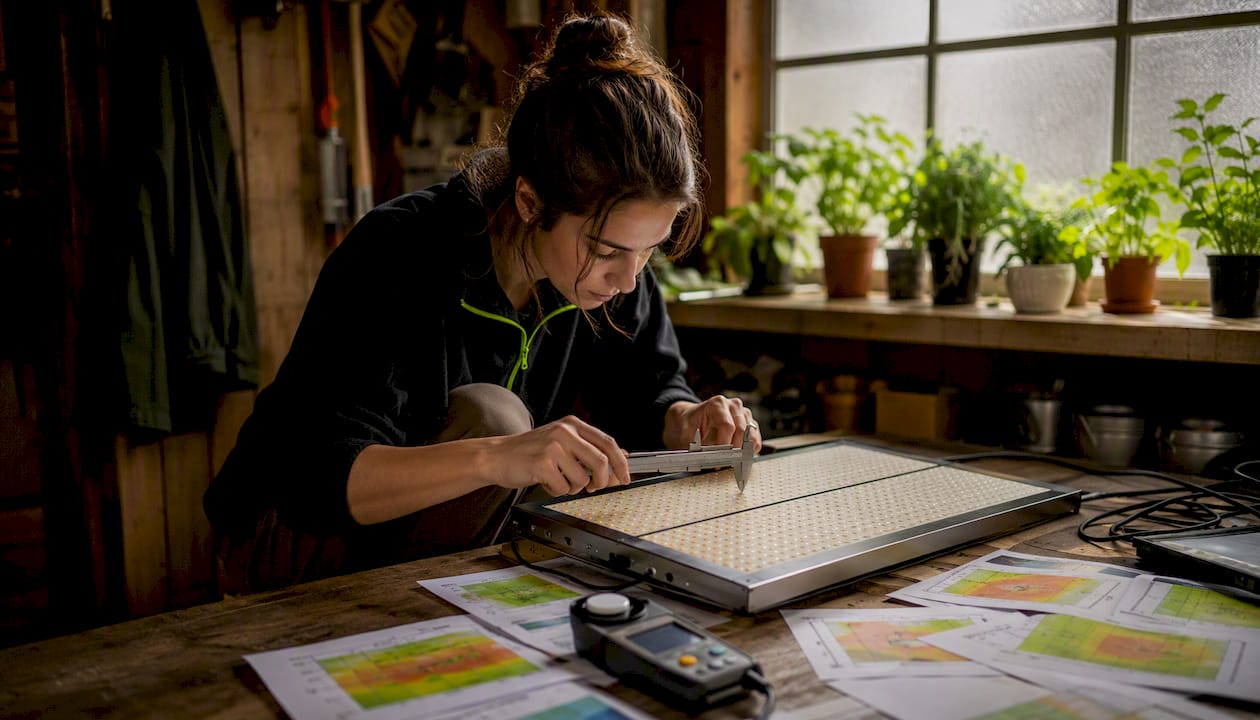
These four terms appear on every spec sheet, and confusing them is the fastest way to overpay or underbuy.
| Metric | Unit | What it tells you | Priority for |
|---|---|---|---|
| PPF | µmol/s | Total fixture output | Comparing fixture size |
| PPFD | µmol/m²/s | Light at canopy | Every grower |
| PPE | µmol/J | Efficiency per watt | Cost-conscious and commercial growers |
Spectrum shape matters independently of these numbers. Independent testing found that a fixture with a red spectral peak may produce a stronger flowering response even when its raw µmol reading is lower than a competitor’s. Quantum flux sensors measure 400–700 nm totals and miss spectral shape effects entirely, which is why test authors recommend plant trials alongside sensor readings. For a deeper look at grow light spectrum basics, the Ledgrowlightsdepot guide covers red peaks and their stage-specific relevance.
Will any LED work as a grow light? No. A general-purpose LED must meet these minimums to be worth trying: PAR wavelength coverage (400–700 nm), a red peak near 660 nm, PPFD above 200 µmol/m²/s at your canopy distance, and a published PPE above 1.5 µmol/J. Decorative or warm-white LEDs almost never meet these thresholds.
Pro Tip: For small shelf grows, prioritize PPE and spectrum over raw wattage. A 26W high-efficiency LED strip at the right canopy distance often outperforms a 65W general-purpose fixture.
The shortlist and comparison table above were built using the following criteria, applied in order:
Data sources included manufacturer spec sheets, independent PAR test write-ups, forum and community feedback on shipping and warranty experiences, and Ledgrowlightsdepot’s product pages. Pricing and stock change frequently; cross-check current listings before purchasing.
Ledgrowlightsdepot is the most complete single-stop alternative to activegrowled.com, covering shelf strips, tent fixtures, under-canopy bars, and commercial-grade LEDs with verified PPE figures and a 4.8/5 customer rating.
| Point | Details |
|---|---|
| Best overall alternative | Ledgrowlightsdepot covers shelf, tent, and commercial needs with documented PPE and 5,800+ verified reviews. |
| Most important spec | PPFD at canopy level determines actual plant growth; always request a published coverage map. |
| Efficiency benchmark | Target PPE above 2.5 µmol/J for mid-range fixtures; commercial-grade units reach 2.8–3.0 µmol/J. |
| Spectrum check | Confirm a red peak near 660 nm for flowering plants; raw µmol readings alone do not predict flowering response. |
| Warranty minimum | Require at least 2 years; 3–5 years is standard for reputable brands, and confirm the return window before buying. |
The conventional advice is to compare wattage and price. That gets you 60% of the way there. The part most buyers skip is the spectral graph. Two fixtures can post identical PPE figures and produce completely different flowering results because one has a pronounced red peak at 660 nm and the other does not. Quantum sensors that generate PPFD maps measure the full 400–700 nm band equally, so a fixture heavy in green light scores the same as one optimized for red, even though plants respond to them very differently.
The other underrated factor is under-canopy penetration. A single overhead panel at 18 inches does a reasonable job on the top layer of a canopy. Below that, light drops off fast. Proximity bars or supplemental strips positioned inside the canopy solve this directly, and the yield difference on dense flowering plants is not marginal. That is the specific problem Ledgrowlightsdepot’s proximity systems address, and it is worth asking any alternative seller whether their fixture lineup includes a supplemental bar option before committing to a main fixture.
If you want under-canopy performance alongside your main fixture, Ledgrowlightsdepot carries the full stack: the PhotonTek X 465W PRO for 4×4 ft tent grows, the PhotonTek X 600W PRO for larger canopies, the Grower’s Choice ROI-E420 as a proven mid-range option, and the HLG 30 UVA supplement for growers who want a spectral boost during flowering without replacing their main light.
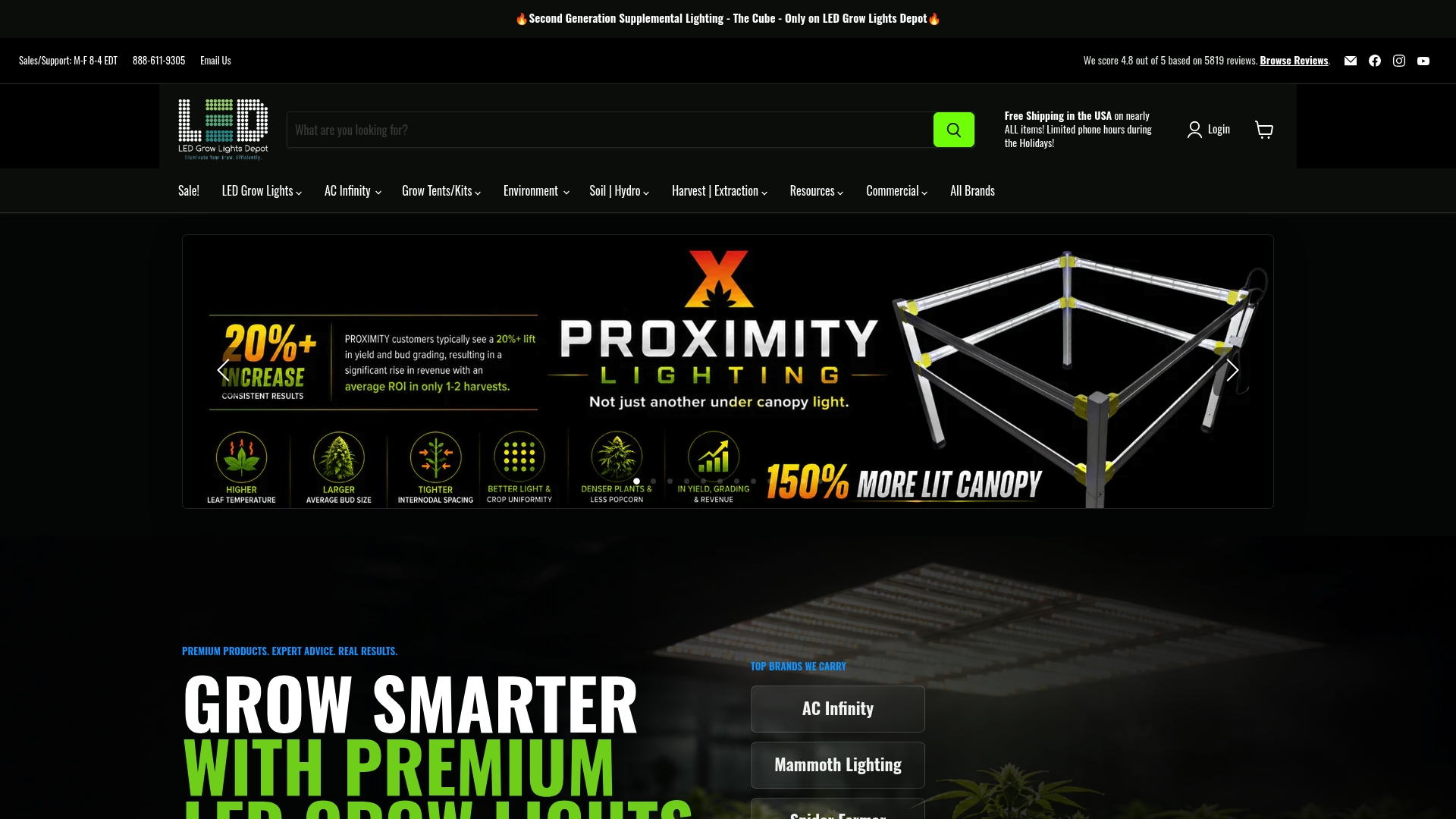
Search by coverage area on the site, compare PPE figures side by side, and use the live chat or support line for a quick fit recommendation. Bulk and financing options are available for commercial orders. With a 4.8/5 rating from over 5,800 customers, the catalog is built for growers who want verified specs, not marketing claims. Browse the full fixture lineup at ledgrowlightsdepot.com and confirm your setup with the support team before you buy.
0 of 3 items selected

Leave a comment