
Free Shipping in the USA on nearly all items!
Limited phone hours during the Holidays! Call us: 888-611-9305
Free Shipping in the USA on nearly ALL items! Limited phone hours during the Holidays!

An LED grow light is an electric light engineered to enhance plant growth by delivering specific wavelengths of light essential for photosynthesis and healthy development. Unlike standard household bulbs, these fixtures are built around the biology of plants, not human vision. Whether you grow herbs on a kitchen shelf or cannabis in a dedicated tent, understanding how this technology works will directly change what you harvest.
The core principle is simple: plants absorb light within the photosynthetically active radiation range of 400 to 700 nanometers, and LED grow lights are designed to deliver exactly that. What separates them from fluorescent or HID alternatives is the ability to tune the spectral output, control heat, and do both at a fraction of the operating cost. Ledgrowlightsdepot carries fixtures built on this science, from beginner panels to commercial arrays, and the difference between a good harvest and a great one often starts with the light source you choose.
An LED grow light works by passing electrical current through semiconductor diodes that emit photons at specific wavelengths. The fixture combines multiple diode colors, typically red and blue, to produce a spectrum optimized for photosynthesis. This is fundamentally different from a fluorescent tube, which emits a broad, uncontrolled spectrum that wastes energy on wavelengths plants cannot use.
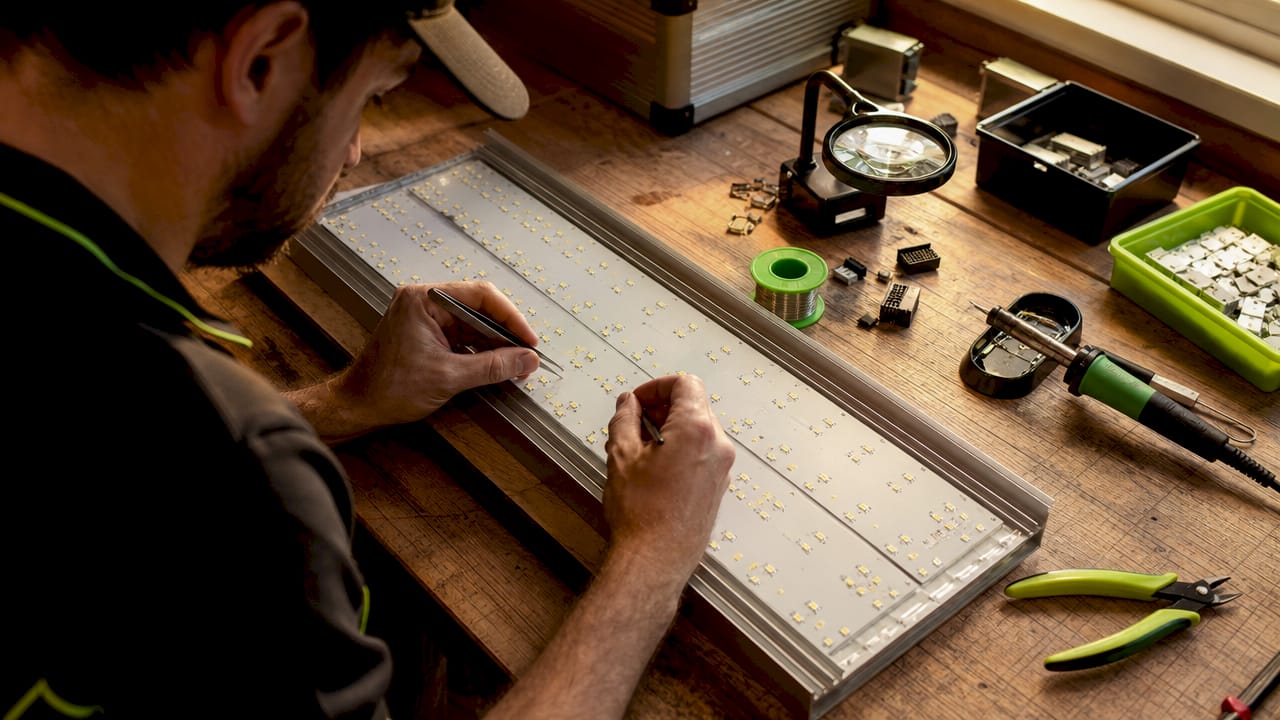
Red wavelengths around 660 nm drive photosynthesis most directly and are critical during flowering. Blue wavelengths between 400 and 500 nm regulate vegetative growth, compact leaf structure, and stomatal function. Research on vertical farm lighting confirms that species-specific red to blue ratios produce measurably better results. Lettuce, for example, performs best at roughly a 3:1 red to blue ratio.
Far-red light, which sits just outside the conventional PAR window at 700 to 800 nm, also plays a meaningful role. Far-red supplementation can increase crop biomass and photosynthetic capacity in certain species, though the optimal dose varies by plant and growth stage. This is why advanced fixtures include far-red diodes as a programmable channel rather than a fixed output.
The process by which light spectrum shapes plant structure is called photomorphogenesis. It governs everything from stem elongation to leaf thickness to flowering time. LED grow lights give you direct control over this process in a way that no other light source currently matches.
Pro Tip: Do not judge a fixture by its wattage alone. Two 300-watt panels can deliver completely different results depending on diode quality, lens design, and spectral composition. Focus on what the light delivers at the canopy, not what it draws from the wall.
LED grow lights are among the most energy-efficient lighting options available, converting electricity to usable plant light far more effectively than HID or fluorescent alternatives. They also last up to 50,000 hours, which is roughly five to ten times longer than a standard HPS bulb. That lifespan difference alone changes the total cost of ownership significantly over a multi-year grow operation.
Heat output is another critical distinction. HID lights run hot enough to require significant distance from the plant canopy and often need supplemental cooling systems. LED fixtures run cool enough to place closer to plants, which improves light intensity at the canopy without burning foliage. This proximity advantage is exactly what Ledgrowlightsdepot’s proprietary systems are built around, contributing to yield increases of over 20% compared to standard setups.
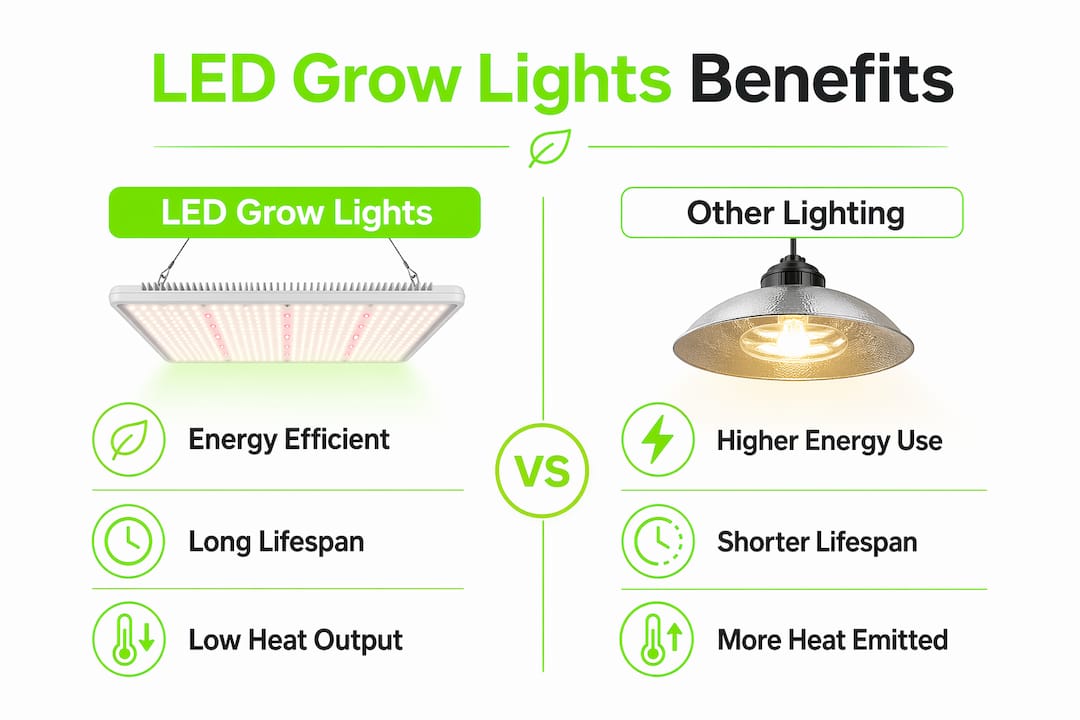
| Feature | LED grow lights | HID (HPS/MH) | Fluorescent (T5/CFL) |
|---|---|---|---|
| Lifespan | Up to 50,000 hours | 10,000 to 24,000 hours | 8,000 to 20,000 hours |
| Heat output | Low | Very high | Moderate |
| Spectral control | Full customization | Fixed spectrum | Limited |
| Energy efficiency | Highest | Moderate | Moderate |
| Upfront cost | Higher | Lower | Lowest |
| Best use case | All growth stages | Large-scale flowering | Seedlings, clones |
The higher upfront cost of LED fixtures is real, but it is offset by lower electricity bills, fewer bulb replacements, and reduced cooling costs. For a home grower running lights 16 hours a day, the savings compound quickly. For a commercial cultivator, the math is even more compelling.
Pro Tip: When comparing fixtures across light types, check the beginner grow light guide at Ledgrowlightsdepot. It breaks down real operating costs across LED, CFL, and HID so you can calculate your actual payback period before buying.
LED grow lights come in several physical formats, each suited to different growing environments. Panels are the most common choice for tent and room grows, offering broad, even coverage over a defined footprint. Strip lights work well for shelving systems and propagation racks where vertical space is limited. Clip-on fixtures serve small desktop gardens and single-plant setups. For a detailed breakdown of compact options, the compact LED grow light guide covers each format with specific use cases.
Spectral configurations vary just as much as physical form. The main categories are:
Color temperature, measured in Kelvin, gives a rough guide to spectral character. Fixtures around 3000K lean warm and red-heavy, favoring flowering. Fixtures at 5000K to 6500K lean cool and blue-heavy, favoring vegetative growth. Many modern panels offer a tunable Kelvin range so you can shift the spectrum as your plants move through their growth cycle. Research on photon efficacy confirms that red LEDs at 660 nm achieve the highest photon efficiency of any single wavelength, which is why quality fixtures weight their diode mix toward that range.
For a deeper look at how spectrum choices affect specific crops, the LED spectrum grower’s guide at Ledgrowlightsdepot is worth reading before you buy.
Selecting the right fixture requires looking past marketing language and focusing on measurable performance indicators. Here are the metrics that actually predict results:
Pro Tip: Ask for the PPFD map, not just the peak number. A fixture that delivers 1000 µmol/m²/s at the center but drops to 300 at the edges will produce uneven plants. Even distribution across the canopy is what separates a good fixture from a great one.
Applying LED grow lights well is as much about timing and positioning as it is about the fixture itself. Start with these practical principles:
For growers starting from seed, the seed germination LED guide covers the specific intensity and spectrum settings that support early root and shoot development without stressing young seedlings.
LED grow lights also influence plant biology well beyond photosynthesis, affecting enzyme activity, gene expression, and postharvest quality. This means the spectrum you choose does not just determine how fast plants grow. It shapes the nutritional density, flavor, and shelf life of what you produce.
LED grow lights outperform every other indoor lighting option when you prioritize PPFD, photon efficacy, and spectral control over raw wattage or marketing claims.
| Point | Details |
|---|---|
| Core function | LED grow lights deliver targeted wavelengths within the 400 to 700 nm PAR range to drive photosynthesis. |
| Efficiency advantage | Lifespans up to 50,000 hours and low heat output make LEDs the lowest total-cost option over time. |
| Spectrum matters | Red to blue ratios, far-red supplementation, and color temperature all affect growth stage outcomes differently. |
| Buy by metrics | PPFD maps, photon efficacy (µmol/J), and photon maintenance warranties predict real performance better than wattage. |
| Practical use | Matching spectrum, distance, and photoperiod to your plant’s growth stage produces measurably better results. |
Most growers who come to me frustrated with their results made the same mistake: they bought a fixture based on wattage and price, then wondered why their plants looked stretched, pale, or uneven. Wattage is not a performance metric. It is a power consumption number. The fixture that draws 200 watts and delivers a uniform 800 µmol/m²/s across a 3x3 canopy will beat a 400-watt fixture with a poor PPFD map every single time.
The second mistake I see constantly is treating “full spectrum” as a quality signal. Every manufacturer uses that phrase. What it actually tells you is almost nothing. What matters is the specific diode mix, the red to blue ratio, whether far-red is included, and whether the fixture lets you adjust any of those channels as your plants move through their cycle. A fixed “full spectrum” panel is better than a basic blurple fixture, but it is still a compromise compared to a tunable multi-channel design.
The third thing I would tell any indoor grower is to take photon maintenance seriously. A fixture that delivers 1000 µmol/m²/s on day one but drops to 600 by year two is not the same fixture you paid for. Look for warranties that specify PPFD maintenance over time, not just diode failure coverage. The total cost of ownership calculation changes completely when you factor in output degradation.
The growers I have seen get the best results are the ones who treat their light source as a precision input, not a commodity purchase. They read the PPFD maps, they adjust mounting height by growth stage, and they watch their plants closely enough to catch problems early. That level of attention, combined with a quality fixture, is what separates a good indoor garden from an exceptional one.
— Scott
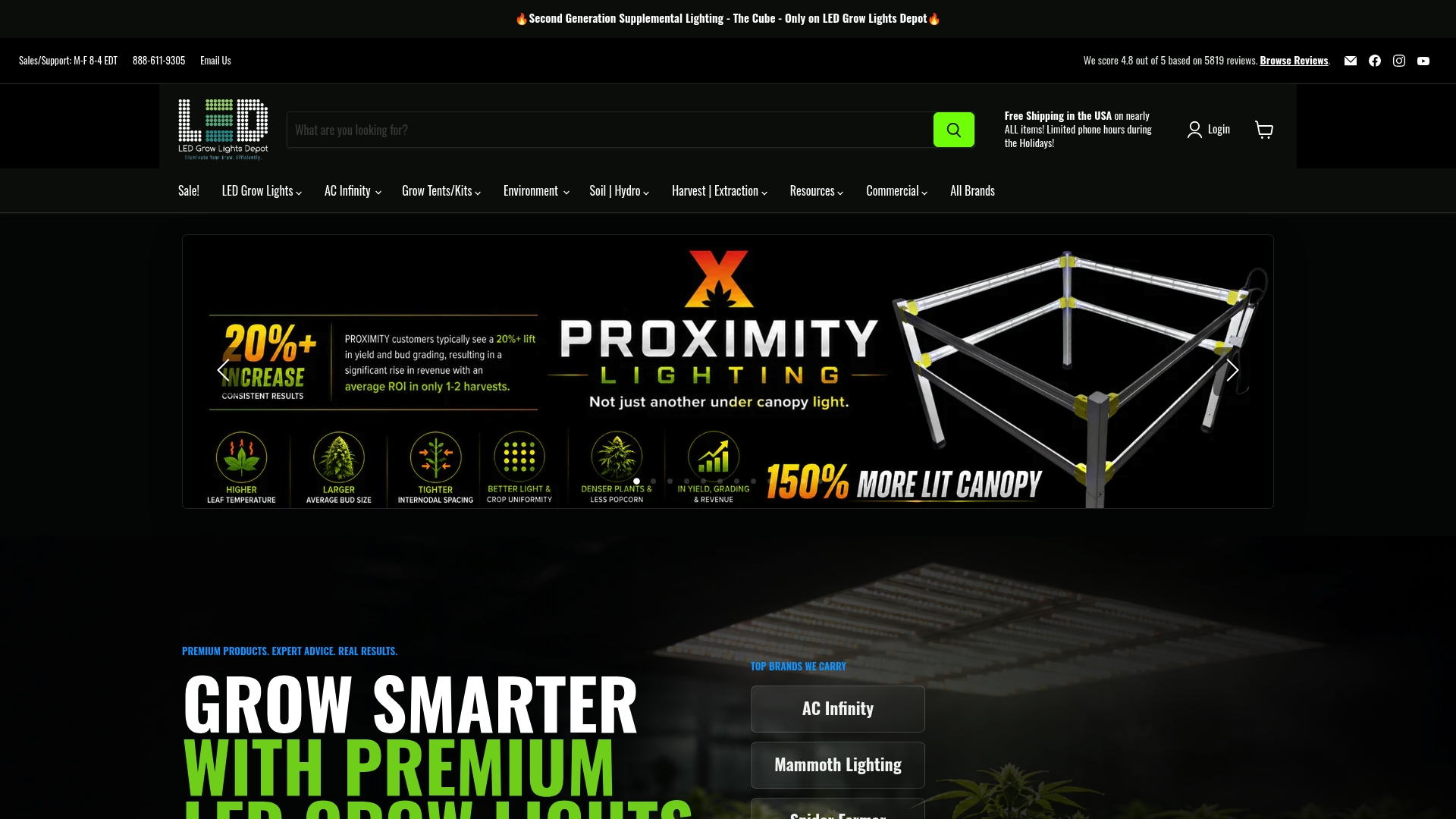
Ledgrowlightsdepot carries a curated range of LED grow lights built for exactly the kind of precision growing this article describes. From beginner-friendly panels to advanced multi-channel fixtures like the NextLight 150h, every product in the catalog is selected for real PPFD performance, spectral quality, and long-term reliability. The proprietary proximity systems used in select fixtures deliver over 20% yield increases compared to standard setups, backed by a 4.8 out of 5 rating from more than 5,800 verified customers. Whether you are setting up your first grow tent or scaling a commercial operation, browse the full selection at LED Grow Lights Depot to find a fixture matched to your specific plants, space, and goals.
An LED grow light is used to provide plants with the specific wavelengths of light they need for photosynthesis and healthy development when natural sunlight is unavailable or insufficient. It is the primary light source in indoor gardens, grow tents, vertical farms, and greenhouse supplemental lighting setups.
Most LED grow lights perform best at 18 to 24 inches above the canopy during vegetative growth and 12 to 18 inches during flowering, though the correct distance depends on the fixture’s PPFD output. Always check the manufacturer’s PPFD map at your intended mounting height rather than relying on general guidelines.
LED grow lights outperform HPS in energy efficiency, lifespan, heat management, and spectral control, making them the better long-term choice for most indoor growers. HPS fixtures carry a lower upfront cost but generate significantly more heat and require more frequent bulb replacement.
Full spectrum refers to a light output that covers a broad range of wavelengths similar to natural sunlight, but the term is not standardized and can be misleading. What matters more than the label is the actual PPFD delivered at the canopy and whether the fixture includes the specific red, blue, and far-red ratios your plants need.
Most vegetables and herbs perform well under 14 to 16 hours of LED light per day, while flowering plants like cannabis typically require a strict 12-hour light and 12-hour dark cycle to trigger and maintain bloom. A programmable timer is the most reliable way to maintain a consistent photoperiod.
0 of 3 items selected

Leave a comment