
Free Shipping in the USA on nearly all items!
Limited phone hours during the Holidays! Call us: 888-611-9305
Free Shipping in the USA on nearly ALL items! Limited phone hours during the Holidays!

A grow light strip is a flexible circuit board embedded with LEDs that emit the specific light wavelengths plants need to photosynthesize indoors. The industry standard term is “LED grow strip” or “horticultural LED strip,” and you will see both used interchangeably with the more casual “grow light strip” across product listings and grower forums. Unlike decorative LED tape, a proper grow strip targets the blue and red wavelengths that drive vegetative growth and flowering. For indoor gardeners working with shelves, seed stations, or compact spaces, these strips are one of the most practical lighting tools available.
A grow light strip is purpose-built for plants. Not all LED strips qualify as grow lights. Standard decorative strips emit white or colored light optimized for human vision, not photosynthesis. A true horticultural strip emits concentrated blue light (roughly 400–500 nm) and red light (roughly 600–700 nm), the two spectral ranges plants absorb most efficiently.
Full-spectrum grow strips go further. They replicate a broader solar profile, including wavelengths that support root development, stem strength, and flowering cycles. Brands like SMD 5050 LED strips are commonly referenced in the grow light market, though chip type alone does not determine plant suitability. Spectrum output and chip density matter far more than the chip model printed on the packaging.
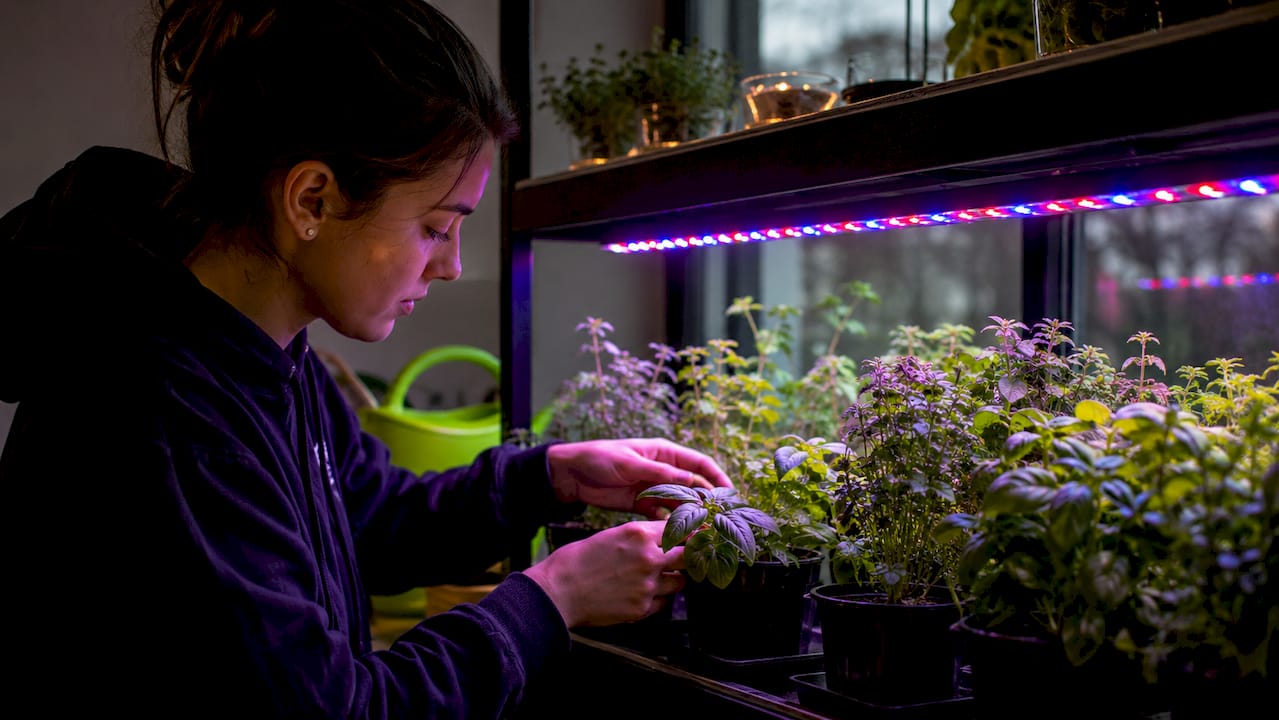
The physical construction sets grow strips apart from decorative tape as well. A grow strip sits on a flexible printed circuit board, with LEDs spaced at regular intervals and sealed under a silicone coating for moisture resistance. That silicone layer is not decorative. It protects the electronics in the humid conditions that indoor gardens routinely create.
Pro Tip: Check the product’s spectral output chart before buying. A strip labeled “grow light” should show clear peaks in the blue and red ranges, not a flat white-light curve.
Grow strips work by converting electrical energy directly into photons at plant-usable wavelengths. LED strips convert approximately 80–90% of electricity into usable light, with minimal energy lost as heat. That efficiency matters because heat stress is one of the most common problems in enclosed indoor gardens.
Placement and timing are the two operational variables you control. Recommended placement is 6–12 inches above the plant canopy, with a daily run time of 8–12 hours. Positioning the strip too far away reduces light intensity at the leaf surface. Positioning it too close risks bleaching or heat stress, even with low-heat LEDs.
The modular design is what separates strips from fixed-panel grow lights. You can cut most strips to length at designated cut points and connect multiple strips in series to cover longer runs. Growers can add strips over time rather than redesign entire systems, which keeps startup costs low. Adhesive backing on the strip makes initial installation fast, though it is not always the most durable option in wet environments.
Pro Tip: Pair your strips with a basic outlet timer. Consistent light cycles matter more than total wattage for most herbs and leafy greens.
The linear, flexible design of LED grow strips allows light distribution in shapes and locations that rigid panels cannot reach. That is the single biggest advantage strips hold over conventional grow lights. A panel hangs above a single footprint. A strip wraps around shelves, runs under cabinet lips, and fills the gaps between tiers on a vertical rack.
Energy efficiency is the second major advantage. Because strips convert most electricity to light rather than heat, they cost less to run and require less ventilation than high-intensity discharge lamps or older fluorescent tubes. For home growers running lights 10 hours a day, that difference shows up on the electricity bill within the first month.
| Feature | Grow light strips | Rigid grow panels |
|---|---|---|
| Space flexibility | High: fits shelves, racks, corners | Low: fixed rectangular footprint |
| Light intensity | Low to medium | Medium to very high |
| Installation | Adhesive or clips, no tools | Hanging hardware required |
| Expandability | Add strips incrementally | Replace or add full units |
| Best use case | Herbs, greens, seedlings | Fruiting crops, high-light plants |
| Heat output | Very low | Low to moderate |
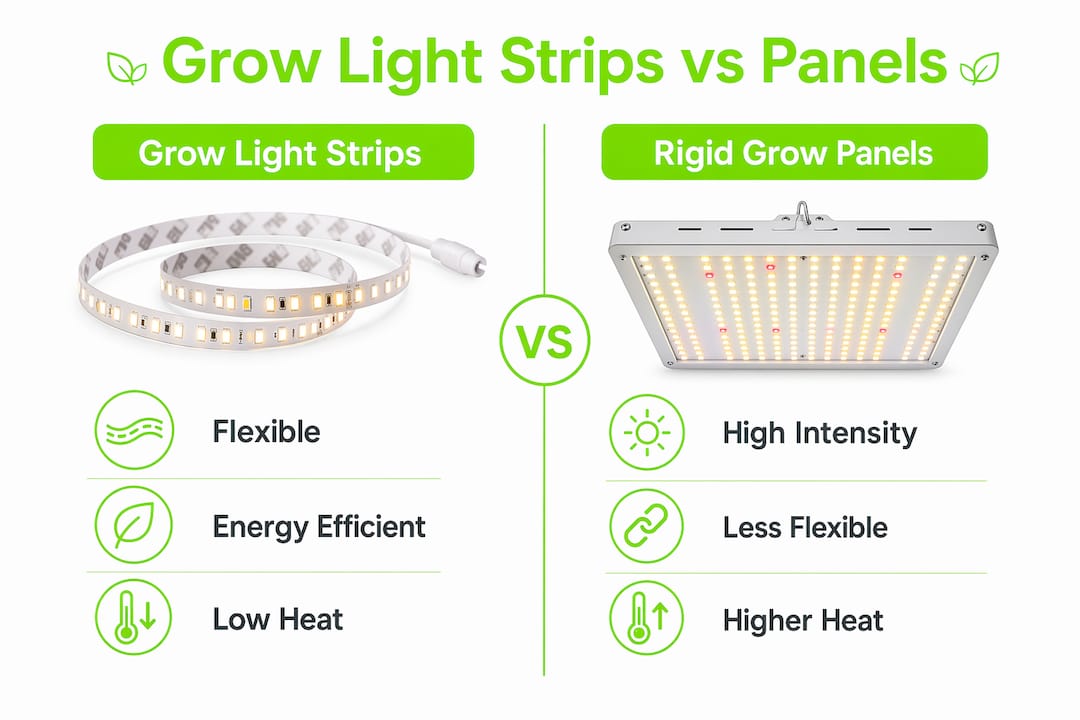
The limitation is intensity. Strips work well as supplemental lighting for houseplants and herbs, but they may lack the photon density that fruiting vegetables like tomatoes or peppers need to produce well. For those crops, a dedicated grow panel or high-output bar light delivers more photosynthetically active radiation per square foot. Strips are not a universal replacement for panels. They are the right tool for specific jobs.
Pro Tip: For multi-tier shelving, run one strip per shelf level rather than one panel overhead. You get more even coverage and avoid the intensity drop-off that happens at lower tiers.
Choosing the right strip starts with four variables: LED density, spectrum, length, and waterproof rating. Higher chip density per foot produces more uniform light and eliminates the growth gaps that low-density strips leave between LEDs. Look for strips rated at 60 chips per meter or higher for consistent plant coverage. Understanding the right light spectrum for your specific crops will sharpen your selection further.
Waterproof rating follows the IP scale. IP65 handles splashing and humidity. IP67 survives brief submersion. For most indoor shelf gardens, IP65 is sufficient. For hydroponic setups or very humid grow tents, IP67 is the safer choice.
Installation follows a straightforward sequence:
One adjustment most growers miss: plants under efficient LED lighting grow faster and consume more water as a result. Increase your watering frequency when you add grow strips, or pair the setup with self-watering planters that handle irrigation automatically. Ignoring this leads to drought stress even when the lighting is perfect.
Pro Tip: Self-watering planters and grow strips are a natural pairing for low-maintenance indoor gardens. The strip handles light; the planter handles water. You check in weekly rather than daily.
Grow strips excel as the primary light source for low to medium light plants and as supplemental lighting for anything that gets some natural light but not enough. The plants that respond best share one trait: they do not need extreme light intensity to thrive.
Plants that perform well under grow strips:
High-light fruiting plants are where strips fall short. Tomatoes, cucumbers, and cannabis in flowering stage need more photon density than most strips deliver. For those crops, compact LED grow lights designed for higher output are a better fit. Strips can supplement a panel in those setups, but they should not be the sole light source.
Heat and moisture management still apply even with low-heat strips. In enclosed spaces like grow tents or cabinets, running multiple strips raises ambient temperature. Check the temperature at canopy level after 30 minutes of operation and ventilate if it exceeds 80°F.
Grow light strips are the most practical lighting tool for herbs, greens, seedlings, and multi-tier indoor setups, but they require the right spectrum, chip density, and installation method to deliver consistent results.
| Point | Details |
|---|---|
| Spectrum is non-negotiable | Only strips with blue and red wavelength peaks qualify as true grow lights. |
| Placement drives results | Position strips 6–12 inches above the canopy and run them 8–12 hours daily. |
| Chip density determines coverage | Choose 60 or more chips per meter to avoid uneven growth gaps. |
| Humidity demands secure mounting | Use mounting clips or silicone brackets in wet environments, not adhesive alone. |
| Strips suit low to medium light plants | Herbs, greens, and seedlings thrive under strips; fruiting crops need higher-output panels. |
The most common mistake I see indoor gardeners make is buying a strip based on wattage alone. Wattage tells you how much electricity the strip draws. It tells you almost nothing about whether the light it produces is useful to your plants. I have tested strips with identical wattage ratings where one grew basil twice as fast as the other, purely because of spectrum quality and chip density.
The flexibility of strips also enables creative configurations that rigid panels simply cannot match. I have run strips along the underside of wire shelving in a four-tier rack, giving each level its own dedicated light source at the correct height. That setup outperformed a single overhead panel every time, because each plant tier got the same intensity rather than the top tier getting full power and the bottom tier getting scraps.
The energy savings are real and worth calculating before you buy. LED efficiency for home grows directly affects your monthly operating costs, and strips sit at the efficient end of the spectrum. The heat reduction is equally practical. I have run strips in a small enclosed cabinet with no active ventilation and maintained safe canopy temperatures throughout the grow.
The one thing I would tell every new grower: do not underestimate how much faster your plants will grow once you give them consistent, quality light. That faster growth means more water demand, and more than a few growers have watched a thriving herb garden wilt because they did not adjust their watering schedule. Match your irrigation to your lighting, and the results will follow.
— Scott
Ledgrowlightsdepot carries a broad selection of LED grow lights designed specifically for indoor gardening, from compact strip options to high-output panels for demanding crops. Every product in the catalog is selected for spectrum quality, energy efficiency, and real-world performance in home and commercial grow environments. Ledgrowlightsdepot has earned a 4.8 out of 5 rating from more than 5,800 customer reviews, which reflects the consistency growers experience across different setups and plant types.
Whether you are setting up a first herb shelf or expanding a multi-tier rack, the team at Ledgrowlightsdepot can point you toward the right lighting solution for your specific plants and space. Browse the full catalog or reach out directly for personalized recommendations.
A grow light strip provides the blue and red wavelengths plants need for photosynthesis when natural light is insufficient. It is most commonly used for herbs, leafy greens, seedlings, and houseplants on indoor shelves or in grow cabinets.
Position grow light strips 6–12 inches above the plant canopy for effective light delivery. Adjust based on plant response: stretching toward the light means move the strip closer; pale or bleached leaves mean move it farther away.
No. Regular LED strips emit light optimized for human vision and lack the specific blue and red wavelengths plants need. True grow strips are engineered to emit the spectral peaks that drive photosynthesis and plant development.
Run grow light strips 8–12 hours per day for most herbs, greens, and houseplants. Use an outlet timer to automate the cycle and maintain consistency, which matters more than total wattage for steady plant growth.
Grow light strips work well as the primary light source for low to medium light plants like herbs and leafy greens. For high-light fruiting crops like tomatoes or peppers, a dedicated grow panel delivers the higher photon density those plants require.
0 of 3 items selected

Leave a comment