
Free Shipping in the USA on nearly all items!
Limited phone hours during the Holidays! Call us: 888-611-9305
Free Shipping in the USA on nearly ALL items! Limited phone hours during the Holidays!

UV-B supplemental lighting is a targeted cultivation tool that stimulates plants to produce more resin and terpenes, directly enhancing flower potency and quality in advanced indoor grows. The 280–320nm UV-B spectrum activates the UVR8 photoreceptor, triggering biological stress responses that increase secondary metabolite output. For growers who have already dialed in their PAR levels, nutrition, and environment, uv-b supplemental lighting advanced grows represent the next logical step toward maximum flower quality. This guide covers the biology, technology selection, scheduling, and troubleshooting you need to get it right.
UV-B radiation triggers a specific photobiological cascade that most growers never fully exploit. The UVR8 photoreceptor, activated at around 288nm, signals the plant to ramp up secondary metabolite production. That means more resin glands, higher terpene concentrations, and denser, more potent flowers. UV-B exposure increases resin and terpene production by activating UVR8, resulting in 20–30% higher resin output under controlled conditions.
Beyond resin, UV-B physically reshapes plant structure. The stress response compacts internodal spacing and thickens leaf cuticles. Thicker cuticles create a more hostile surface environment for fungal spores and soft-bodied pests, which is a real, measurable defense benefit rather than a theoretical one.
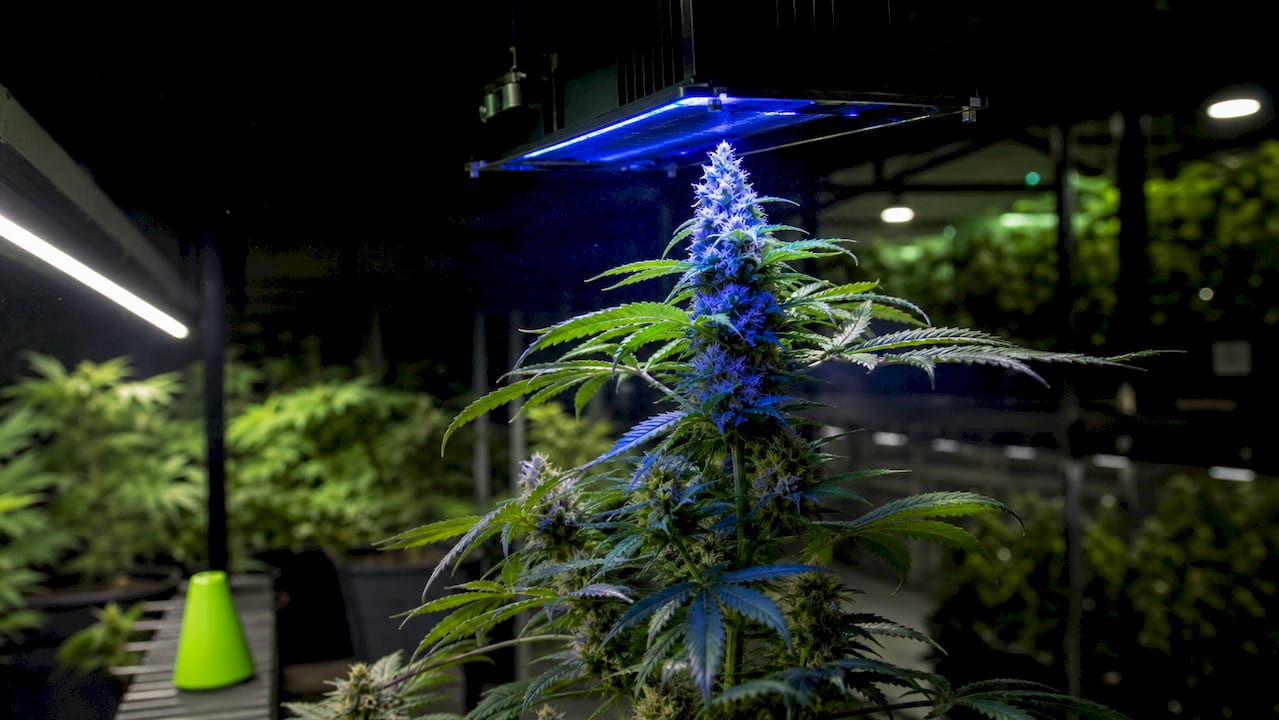
UV-B also creates a surface environment that discourages mold and mite colonization. Growers running UV-B in late flower often report cleaner harvests, particularly in humid environments where botrytis pressure is high. The mechanism is straightforward: UV-B radiation damages the DNA of microorganisms on leaf and flower surfaces.
The risk side of the equation is equally real. Overexposure causes photodamage, bleaching, and leaf tip curl. Plants divert energy from biomass production to repair, which cuts yield weight. The goal is calibrated stress, not punishment.
Key biological effects at a glance:
Pro Tip: Run UV-B only after your canopy is fully established and your primary PAR environment is stable. Adding UV-B to an already stressed plant accelerates damage rather than quality.
The single biggest mistake advanced growers make with UV-B is assuming all UV-labeled fixtures deliver effective UV-B. Most do not. Standard glass and low-quality plastics block 280–300nm wavelengths that are critical for triggering UVR8. A fixture marketed as “UV” may emit UV-A at 365nm with almost no UV-B output at all.
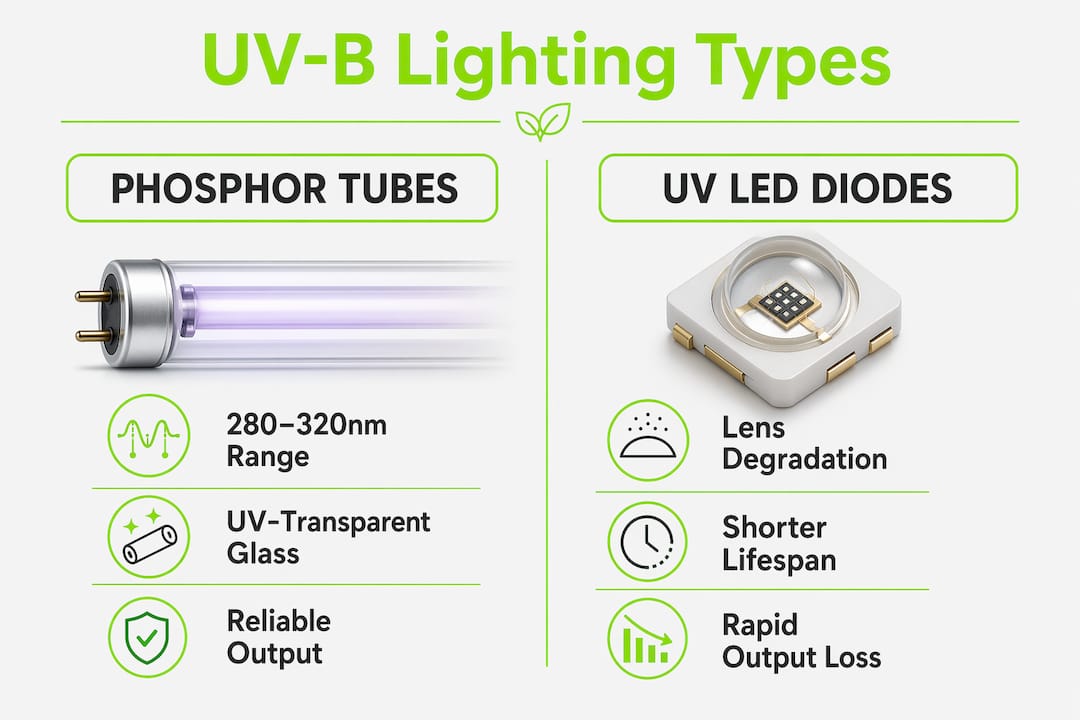
Dedicated UV-B phosphor tubes with UV-transparent glass are the most reliable delivery method for the 280–320nm range. Solacure’s SG-1-98 glass is a well-documented example: it transmits peak UV-B wavelengths efficiently, which generic borosilicate glass cannot do. The physics are simple. If the glass absorbs the wavelength before it exits the fixture, the plant never receives it.
Integrated UV LED diodes present a different problem. UV-induced damage to LED silicone lenses degrades UV-B output rapidly, often within a single grow season. Separating UV-B fixtures from your primary LED array extends your main LED lifespan to its rated 50,000 hours while allowing cost-effective replacement of UV-specific bulbs every 2–3 growth cycles.
| Evaluation criterion | What to look for | What to avoid |
|---|---|---|
| Glass or lens material | UV-transparent glass (e.g., SG-1-98 spec) | Standard borosilicate or plastic lenses |
| Spectral output range | Confirmed 280–320nm output | UV-A only (350–400nm) fixtures |
| Fixture separation | Standalone UV-B bar or tube | UV-B diodes integrated into main LED board |
| Replacement cycle | Replaceable bulbs every 2–3 cycles | Sealed, non-serviceable UV modules |
| Output consistency | Documented lumen/UV output degradation curve | No published degradation data |
The California Lightworks SolarSystem 1100 UVB is one fixture that addresses these criteria directly, with a dedicated UV-B output channel separate from its primary spectrum. Ledgrowlightsdepot carries it alongside the SolarSystem UVB Kit for growers who want a complete, controller-compatible setup.
Pro Tip: Ask the manufacturer for a spectral power distribution chart before buying. If the chart does not show measurable output below 320nm, the fixture will not activate UVR8 regardless of its UV marketing claims.
UV-B supplemental lighting does not substitute for optimized PAR lighting. It acts as a quality enhancement layer added only after your PPFD, nutrition, and environment are dialed in. Introducing UV-B into an underprepared grow produces stress without the metabolic payoff.
Confirm your baseline first. Your primary lighting, VPD, and nutrient program must be stable before week 4 of flowering. UV-B added to a deficient environment compounds problems rather than solving them.
Start at week 4 of flowering with one hour daily. Split the session into two 30-minute blocks, one in the morning and one in the afternoon. This gives plants recovery time between exposures and maximizes metabolite signaling without sustained stress.
Increase exposure by 15 minutes every two days. Work up gradually through weeks 5–8, targeting a peak of 2–4 hours of total daily UV-B exposure by late flower. Growers typically peak at 2–4 hours daily during the final weeks before harvest.
Position fixtures for uniform canopy coverage. Mount UV-B bars parallel to your canopy at the manufacturer’s recommended distance. Uneven coverage creates hot spots that overdose some plants while under-dosing others.
Run UV-B during the final hours of your lights-on period. UV bars run during the final 3–4 hours of lights-on allow plants to capitalize on photosynthetic readiness while minimizing cumulative stress.
Use a programmable timer or lighting controller. Manual UV-B management across a multi-week schedule introduces human error. A dedicated controller removes that variable entirely.
Monitor plants every 48 hours for stress indicators. Check leaf tips, upper canopy leaves, and flower sites for early signs of overdose.
UV-B is not a set-and-forget input. The dose that produces peak resin in week 6 can cause visible damage in week 4. Treat UV-B like a nutrient: start low, increase incrementally, and let the plant tell you when it has had enough.
Safety note for growers: UV-B radiation at 280–320nm causes rapid sunburn and eye damage. Always wear UV-blocking safety glasses and cover exposed skin when UV-B fixtures are active. Never look directly at an operating UV-B tube.
Pro Tip: Split your daily UV-B exposure into two sessions rather than one continuous block. Plants show stronger secondary metabolite responses when UV-B stress is interrupted by recovery periods.
Even well-planned UV-B programs produce problems. Knowing what to look for and how to respond quickly prevents crop loss.
Signs of UV-B overdose:
Leaf curling is the first observable overdose signal. When you see it, reduce daily exposure by 30 minutes and hold that level for four days before attempting another increase. Do not increase intensity and duration simultaneously.
Balancing UV-B with your existing PAR environment:
High PPFD environments above 800 µmol/m²/s already generate some plant stress. Adding UV-B on top of high-intensity PAR requires a more conservative ramp-up schedule. Reduce your starting UV-B dose by half if your PPFD regularly exceeds 1,000 µmol/m²/s.
The yield versus potency trade-off:
High UV-B exposure shifts plant energy from vegetative growth to resin production, slightly reducing harvest weight while improving flower potency and market value. This is not a flaw. It is the intended outcome. Growers chasing maximum dry weight should use conservative UV-B doses. Growers prioritizing potency and terpene profile can push the upper end of the exposure range.
Maintaining fixture health:
Replace UV-B tubes on schedule, typically every 2–3 growth cycles, even if they still emit visible light. UV-B output degrades before visible output does. A tube that looks fine may be delivering a fraction of its rated UV-B output. Track replacement dates and log them alongside your crop results to identify performance drift.
Validating results with lab testing:
Cannabinoid and terpene lab panels are the most reliable way to confirm that your UV-B program is producing measurable results. Compare results from UV-B-treated harvests against your baseline runs from the same genetics. Consistent gains in terpene concentration confirm that your protocol is working.
UV-B supplemental lighting produces measurable gains in resin and terpene output only when spectrum quality, exposure scheduling, and fixture health are managed together.
| Point | Details |
|---|---|
| Spectrum quality determines results | Only fixtures transmitting 280–320nm activate UVR8; standard glass blocks the critical range. |
| Separate UV-B from primary LEDs | Standalone UV-B tubes protect main LED lifespan and allow cost-effective bulb replacement. |
| Gradual ramp-up prevents damage | Start at one hour daily in week 4 of flowering, increasing to 2–4 hours by late flower. |
| Leaf curl signals overdose | Reduce exposure by 30 minutes at first sign of leaf tip curling and hold before increasing again. |
| Lab testing validates the program | Terpene and cannabinoid panels confirm whether UV-B exposure is producing measurable quality gains. |
Most growers who try UV-B and report disappointing results made the same mistake: they bought a fixture with “UV” in the name and assumed the work was done. The fixture market is full of products that emit UV-A at 365–400nm, which has a different biological effect than UV-B at 280–320nm. UV-A influences circadian rhythms and some pigmentation responses. UV-B activates UVR8 and drives resin production. They are not interchangeable.
The second pattern I see consistently is impatience with the ramp-up schedule. Growers who jump to two hours of UV-B in week 4 because “more is better” end up with bleached canopies and reduced yields. The insight that more wattage or longer UV-B exposure is not better sounds obvious once you have seen the damage firsthand. It is not obvious before.
My strongest recommendation is to run a controlled test before committing your entire crop. Take two identical plants from the same mother, run one with UV-B and one without, and compare the lab results side by side. That single test will tell you more about your specific genetics and environment than any general protocol can. It also gives you a defensible baseline for scaling up.
The growers I have seen get the best results from advanced UV-B lighting share one habit: they treat UV-B as a precision input, not a passive addition. They log exposure times, watch their plants closely, and adjust based on what they observe. That discipline is what separates a quality improvement from an expensive mistake.
— Scott
Ledgrowlightsdepot carries UV-B specific fixtures built for growers who want precise spectrum control without compromising their primary LED setup.
The California Lightworks SolarSystem 1100 UVB delivers a dedicated UV-B channel compatible with the SolarSystem controller ecosystem, giving you programmable sub-schedules for exact exposure management. For growers who want a complete, ready-to-run solution, the SolarSystem UVB Kit includes everything needed for integration into an existing advanced grow setup. Ledgrowlightsdepot holds a 4.8 out of 5 rating from more than 5,800 customer reviews, and their team is available to help you match the right UV-B fixture to your canopy size, grow stage, and controller setup.
Effective UV-B for plant resin production must cover the 280–320nm range to activate the UVR8 photoreceptor. Fixtures that only emit UV-A above 350nm do not trigger the same secondary metabolite response.
Start UV-B at week 4 of flowering with one hour of daily exposure split into two sessions. Increase by 15 minutes every two days, peaking at 2–4 hours daily during the final weeks before harvest.
Yes, high UV-B exposure shifts plant energy toward resin production and away from biomass, which can slightly reduce dry weight. The trade-off is higher potency and terpene concentration, which increases flower quality and market value.
Request a spectral power distribution chart from the manufacturer and confirm measurable output below 320nm. Standard glass and plastic lenses block the 280–300nm range, making the fixture ineffective for UVR8 activation regardless of its UV marketing claims.
Replace UV-B tubes every 2–3 growth cycles even if they still produce visible light. UV-B output degrades faster than visible output, so a tube that appears functional may no longer deliver effective UV-B at the plant level.
0 of 3 items selected

Leave a comment