
Free Shipping in the USA on nearly all items!
Limited phone hours during the Holidays! Call us: 888-611-9305
Free Shipping in the USA on nearly ALL items! Limited phone hours during the Holidays!

Lighting controls are the automation layer that converts LED grow lights into adaptive, data-driven actuators. They manage spectrum, intensity, and photoperiod timing automatically, so your crop gets the right light at every growth stage without manual intervention. Occupancy-linked lighting strategies deliver significant energy savings in the range of 20–40%, and when lighting ties into HVAC and CO2 systems via BACnet (ANSI/ASHRAE), those savings compound.
Ledgrowlightsdepot’s PhotonTek fixtures and TrolMaster Hydro-X adapters are built to slot into exactly this kind of automated stack.
A lighting control stack has five layers: controllers (central servers or gateways), LED drivers, luminaire-level controllers, sensors, and software or cloud dashboards. Each layer talks to the next through a communication protocol.
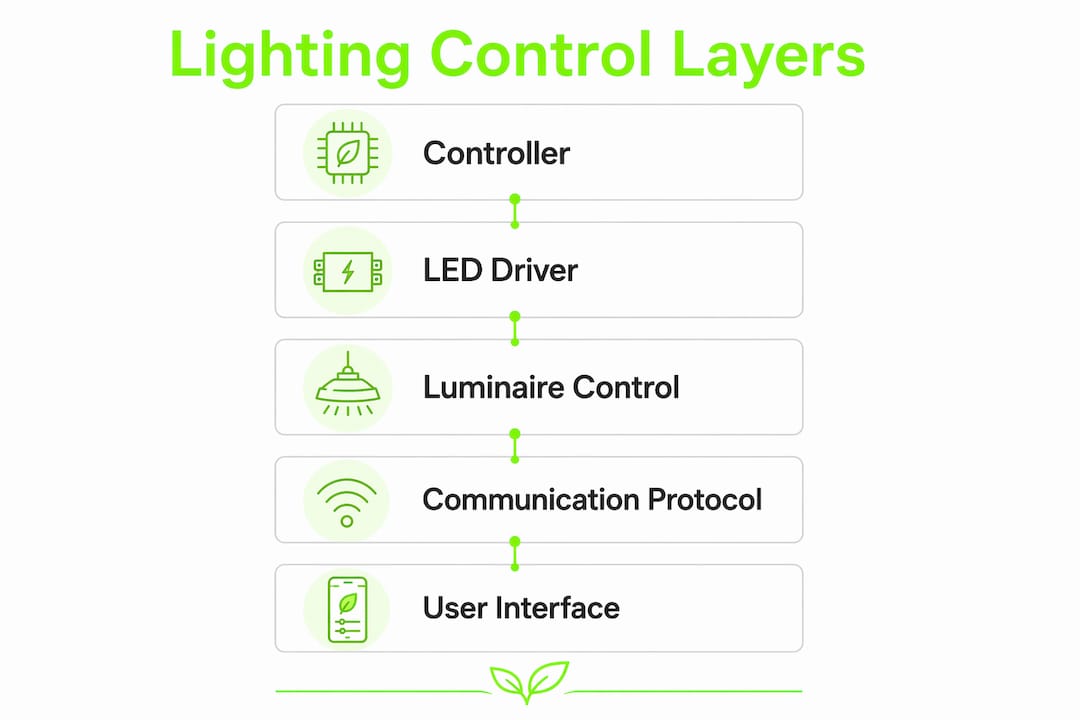
For horticulture, the protocols that matter most are BACnet, DALI, DMX, and ZigBee — chosen based on scale, latency, and device interoperability. BACnet (ANSI/ASHRAE) is the standard that connects lighting to a building automation system (BAS) and satisfies U.S. energy-compliance reporting. DALI and D4i handle driver-level dimming and two-way energy data. Wireless options like ZigBee suit retrofits where running new cable is impractical.
Networked lighting controls let facility managers monitor energy remotely and support compliance with energy conservation programs through those standardized protocols. The data flow looks like this: controller → gateway → drivers → luminaires → sensors → BMS. Remote diagnostics at the luminaire level require two-way digital communication between drivers and the central processor — a detail many growers overlook when specifying hardware.
Automated lighting systems do three things for cultivators that manual switching never can: they hold recipes precisely, they respond to environmental feedback, and they generate the data you need to prove ROI.
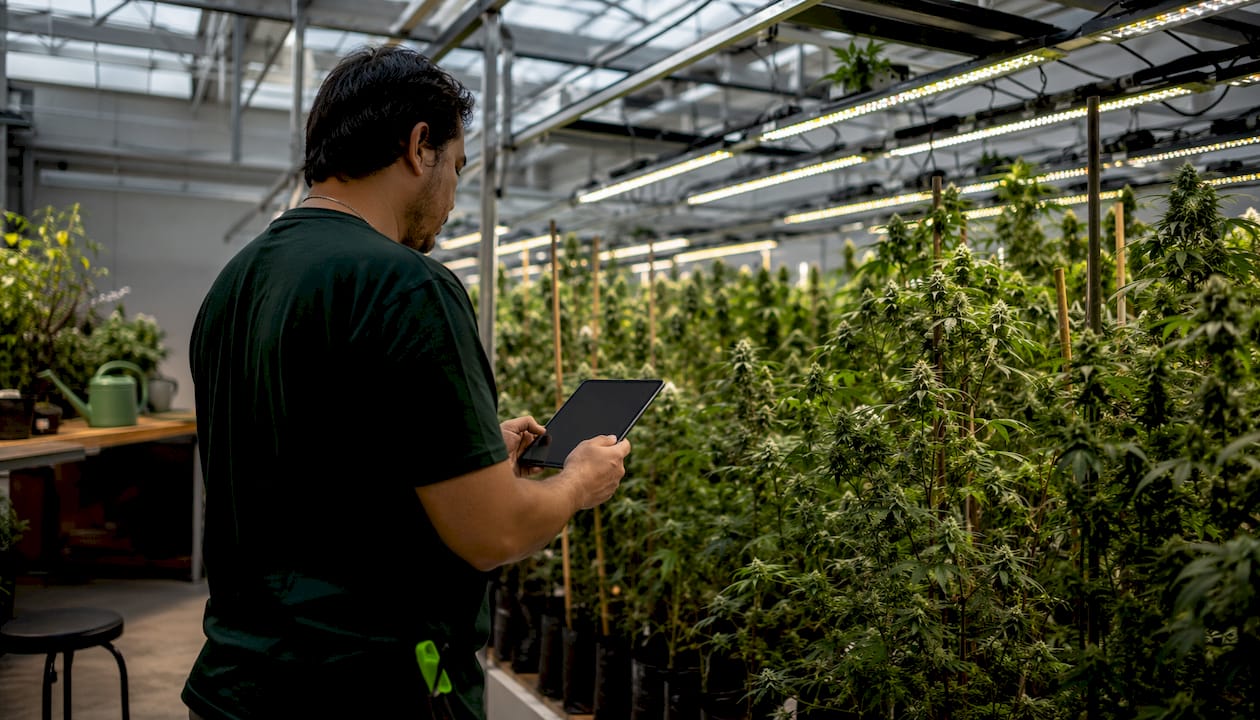
Crop-level gains come from spectrum tuning matched to developmental stage. Vegetative growth favors blue-heavy spectra; flowering responds to red-shifted ratios. Automating those transitions eliminates the human error that causes grade variability between harvests. Photoperiod automation handles the rest, running 18/6 or 12/12 schedules without a timer that drifts.
Operational savings show up in labor and downtime. Fault alerts and remote diagnostics mean a technician can identify a driver failure from a dashboard rather than walking every row. Adaptive horticultural lighting that mimics natural light cycles and responds to crop stage is now the standard framing in 2026 technical reviews, a shift from the simple timers most growers started with.
Energy and compliance benefits are where the numbers get real. Occupancy-based strategies produce substantial lighting savings. Add demand-response and load-shedding via OpenADR, and utility rebates can meaningfully offset capital costs. BACnet-enabled reporting satisfies U.S. building codes and green-building programs without manual data pulls.
| Facility scale | Goals | Recommended architecture |
|---|---|---|
| Home / desktop grow (1–4 fixtures) | Simple schedules, basic dimming | Standalone scheduled controller |
| Mid-scale commercial (1–3 rooms) | Zonal control, energy reporting | Centralized server/gateway with zonal sensors |
| Large multi-room operation | Granular recipe control, resilience, BAS integration | LLLC or hybrid (LLLC + centralized gateway) |
Centralized systems are easier to commission and manage from a single interface, but a gateway failure can affect the whole facility. Luminaire-level lighting controls (LLLC) give higher granularity and resilience — fixtures can run fallback schedules locally when the central server goes offline — but they typically require more initial setup. For commercial LED systems scaling toward maximum yield, a hybrid approach often wins: LLLC at the fixture level, a gateway for BAS communication.
Missing standard protocols like BACnet at the hardware-selection stage is the single most common reason growers can’t scale or connect to a BAS later.
The integration flow is straightforward once you map it: an occupancy sensor or schedule triggers a lighting dim → the BAS reads that signal and shifts the HVAC setpoint → CO2 injection sequences off the reduced heat load. Occupancy sensors paired with lighting controls can trigger “unoccupied” HVAC setpoints, amplifying energy savings well beyond lighting alone.
BACnet (ANSI/ASHRAE) is the protocol that makes this coordination legal and scalable in the U.S. It provides a standardized language between lighting controllers, HVAC units, and energy-management systems — meaning your lighting data can feed directly into utility demand-response programs and building-code compliance reports without custom middleware.
A holistic system-level approach — lighting plus HVAC plus sensors — can double efficiency gains compared to managing each system in isolation, because occupancy or daylight signals trigger coordinated setpoint changes across the whole facility. For growers exploring smart electrical system integration, verifying BACnet and OpenADR support before purchasing any controller is non-negotiable.
Translating a horticultural recipe into an automated schedule means defining four parameters per stage: spectral mix, PPFD target, photoperiod, and transition ramp duration.
Log daily PPFD snapshots at canopy level and set event-driven alerts for deviations greater than 10% from target. That cadence catches driver drift before it affects the crop.
Pro Tip: Before rolling a new recipe facility-wide, run it on one rack or one zone for a full cycle. Compare grade, yield, and energy data against your control zone. A two-zone A/B structure with identical genetics is the cleanest experimental design — it isolates the lighting variable and gives you defensible data for future spec decisions.
For detailed grow light schedule templates, Ledgrowlightsdepot’s blog covers photoperiod logic and timing in practical detail.
Calibrate PAR sensors every 90 days minimum. Sensor drift is the most common reason automated recipes underperform — a sensor reading 15% low will cause the controller to push fixtures harder than the crop needs, wasting energy and risking light stress.
ROI timelines vary by facility size and utility program participation. Demand-response rebates and energy savings from occupancy strategies (20–40%) can shorten payback periods substantially — but only if commissioning is done correctly and the system is generating accurate energy data from day one.
| Fixture | Wattage | Best for | Control adapter | Interface |
|---|---|---|---|---|
| PhotonTek SQ300W PRO | 300W | Small rooms, single-tier racks | TrolMaster LMA-series | analog dimming |
| PhotonTek X 465W PRO | 465W | Mid-scale multi-rack rooms | TrolMaster LMA-series | analog dimming |
| PhotonTek X 600W PRO | 600W | Large canopy, high-PPFD targets | TrolMaster LMA-series | analog dimming |
A practical example: a 1,200 sq ft commercial veg room running four PhotonTek X 465W PRO fixtures connected via TrolMaster LMA-12 adapters to a Hydro-X controller. The Hydro-X manages schedule and dimming, logs PPFD data, and connects to a BAS gateway via a wired interface. The result is a fully automated room with remote monitoring, fault alerts, and the data structure needed for utility demand-response enrollment.
Ledgrowlightsdepot carries the full PhotonTek PRO series and TrolMaster Hydro-X adapter lineup, with compatibility guidance backed by a 4.8/5 rating from more than 5,800 grower reviews. That depth of field experience means the compatibility notes you get are grounded in real installations, not spec-sheet assumptions.
Lighting controls are only as effective as the architecture, sensors, and commissioning behind them — get those three right and the energy and crop gains follow automatically.
| Point | Details |
|---|---|
| Define control goals first | Choose architecture by facility scale: standalone for home grows, centralized or LLLC for commercial rooms. |
| Require BACnet/OpenADR | Verify protocol support before purchasing any controller or driver to avoid BAS and rebate eligibility gaps. |
| Sensor placement matters | Mount PAR/PPFD meters at canopy level and calibrate every 90 days to keep recipes accurate. |
| Commission professionally | Skipping commissioning is the top reason LLLC deployments underperform on energy reporting and demand-response. |
| Ledgrowlightsdepot compatibility | PhotonTek PRO fixtures with TrolMaster LMA adapters provide a verified, scalable stack with expert support. |
The conversation around automated lighting usually stops at scheduling and dimming. What gets less attention is commissioning quality and what happens in the first 60 days after install. Sensors drift. Staff override schedules manually and forget to revert. Gateways lose sync with drivers after a firmware update and nobody notices until the next energy bill arrives.
The one metric worth watching immediately after commissioning is the delta between your controller’s reported PPFD and your handheld meter reading at canopy. If those two numbers diverge by more than 10%, something in the sensor chain is wrong. Fix it before you run a full crop cycle on bad data.
Pro Tip: Set a weekly calendar reminder for the first three months post-install to manually spot-check one sensor per zone. It takes five minutes and catches drift before it compounds into a full-cycle yield problem.
Getting the lighting automation stack right starts with fixtures that are built to be controlled. The PhotonTek SQ300W PRO is the right starting point for smaller rooms, while the PhotonTek X 465W PRO and X 600W PRO handle mid-to-large canopies with the output and control compatibility commercial grows demand. All three pair with TrolMaster Hydro-X LMA adapters for schedule, dimming, and BAS-ready data logging.
Ledgrowlightsdepot’s team can walk you through adapter compatibility, protocol requirements, and commissioning considerations for your specific room layout. With a 4.8/5 rating from more than 5,800 growers, the guidance you get is grounded in real field experience. Visit ledgrowlightsdepot.com to browse the full lineup or request a compatibility checklist for your facility.
0 of 3 items selected

Leave a comment