
Free Shipping in the USA on nearly all items!
Limited phone hours during the Holidays! Call us: 888-611-9305
Free Shipping in the USA on nearly ALL items! Limited phone hours during the Holidays!

Reflective walls in grow tents are defined as interior linings that capture and redirect light back toward plants instead of letting it absorb into surrounding surfaces. A properly lined grow tent delivers 30–50% more usable light compared to an unlined room. That gain comes without adding a single watt to your lighting setup. High-quality materials like diamond-patterned Mylar reach up to 98% reflectivity, making them the most efficient option available for indoor cultivators. The role of reflective walls in grow tents is not decorative. It is a core performance mechanism that determines how much of your light budget actually reaches your plants.
Reflective walls function as photon recyclers. Every photon that misses a leaf would otherwise hit a wall and convert to heat. A reflective lining bounces that photon back into the canopy for another chance at absorption. This process is called photon recycling, and it is the primary reason reflective interiors matter.
The practical result shows up in Photosynthetically Active Radiation (PAR), the wavelength range plants use for photosynthesis. Reflective interiors increase PAR reaching foliage across the entire canopy, not just the top layer directly under the light. That means lower leaves and side shoots receive meaningful light instead of sitting in shadow. Growth becomes more uniform, and you get better use of every inch of growing space.
Reflective surfaces also reduce hotspots. A bare bulb creates a cone of intense light directly below it and dim zones at the edges. Reflective walls scatter that energy outward, flattening the intensity curve. The result is a more even spread across your canopy, which reduces the risk of bleaching center plants while outer plants stretch for light.
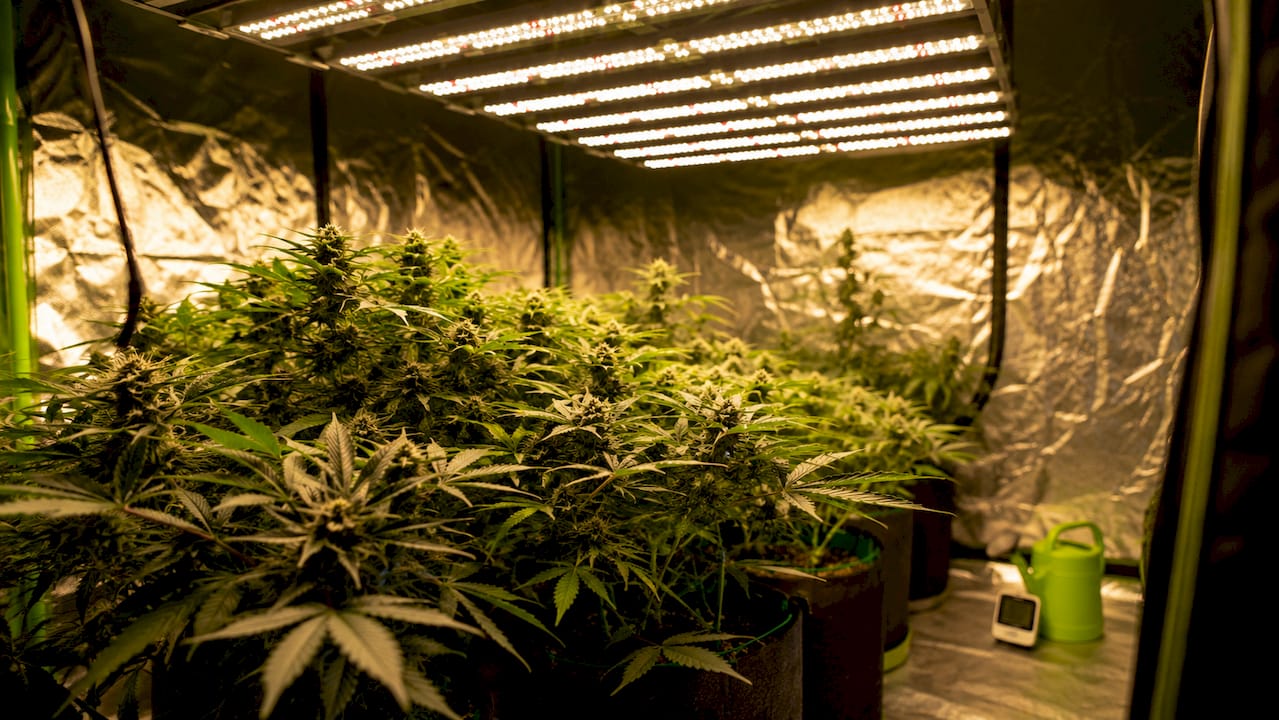
Energy savings follow naturally. The reflective interior reduces light loss significantly, turning nearly every photon into usable PAR and improving the electrical efficiency of your grow lights. You get more plant growth per kilowatt-hour, which matters whether you are running a small home tent or a larger commercial setup.
Key benefits of reflective walls at a glance:
The material choice determines how much light actually bounces back to your plants and how long that performance holds up.
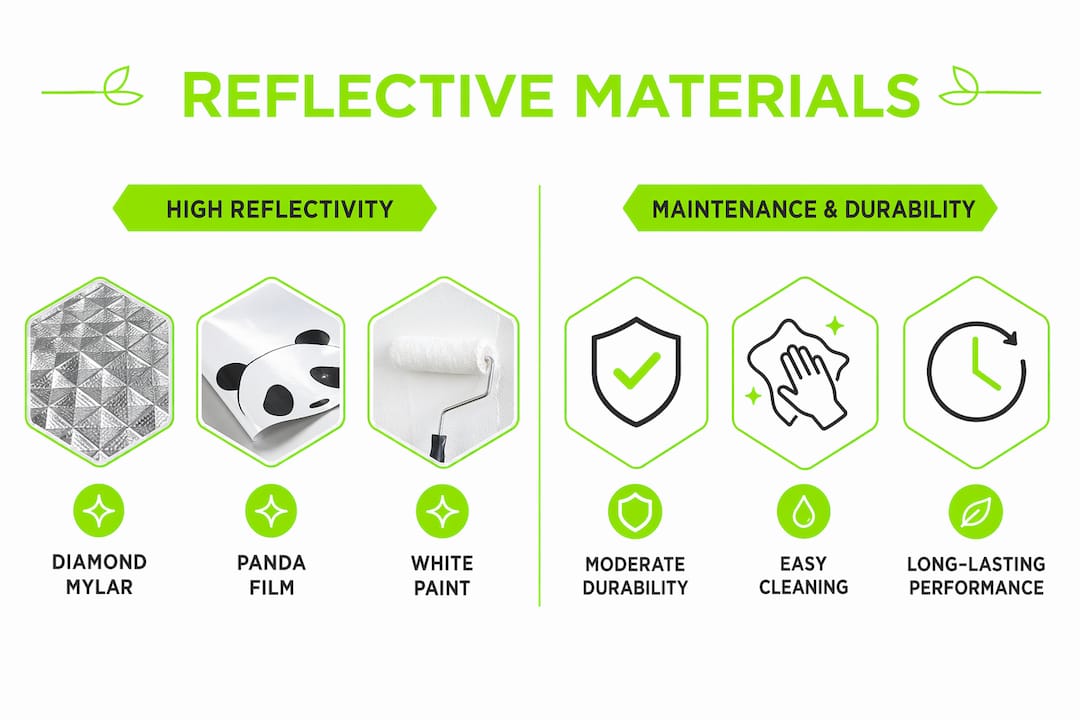
Diamond-patterned Mylar is the top performer among reflective materials for grow tents. Its textured surface scatters light in multiple directions rather than creating a single specular reflection. That scattering effect is what produces even canopy coverage. At up to 98% reflectivity, Mylar wastes almost no incident light. It is also lightweight and easy to install in tents of any size.
Flat white paint reflects roughly 85–90% of light and costs very little. It works well for permanent grow rooms but is impractical inside a fabric tent. Panda film, a black-and-white polyethylene sheeting, sits in a similar range and adds the benefit of being waterproof. Panda film is a common choice for lining grow room walls or floors where moisture is a concern. Neither material matches Mylar’s peak reflectivity, but both outperform bare walls or dark surfaces by a wide margin.
Material longevity affects long-term reflectivity. Mylar is thin and can tear or crease, and creases create dead spots where light scatters poorly. Panda film is more durable under physical stress. Higher denier fabric in the tent shell itself also matters. Thicker outer fabric blocks more light from escaping and supports the reflective lining without degrading it.
| Material | Reflectivity | Durability | Best use |
|---|---|---|---|
| Diamond Mylar | Up to 98% | Moderate | Grow tent linings |
| Flat white paint | 85–90% | High | Permanent grow rooms |
| Panda film | 85–90% | High | Floors, wall liners |
Pro Tip: Smooth out any creases in Mylar before you start a grow cycle. A single deep fold can create a concentrated hot spot that stresses plants directly below it.
Reflective walls lose performance over time if you ignore them. Dust, water droplets, and nutrient residue accumulate on the surface and block light from bouncing back. A thin film of dried nutrient solution can cut reflectivity noticeably. The plants do not tell you the walls are dirty. You just see slower growth and wonder why.
Cleaning is straightforward but requires care. Wipe Mylar surfaces with a soft, damp cloth and avoid abrasive materials that scratch the reflective layer. For Panda film, a mild soap solution works well. Clean walls at the start of each grow cycle and spot-check monthly during long runs.
Heat buildup is the other major challenge. Reflective walls can trap heat, and without adequate ventilation, temperatures climb fast. Plants under heat stress show curling leaves, slowed growth, and reduced yield. The fix is not to reduce reflectivity. The fix is proper airflow.
Watch for these warning signs inside a reflective tent:
Pro Tip: Run your exhaust fan continuously during lights-on periods. A reflective tent with good airflow runs cooler than an unlined room because the walls reduce the heat load on your lights.
Getting full value from reflective surfaces requires more than buying a tent with a shiny lining. The setup decisions you make around the lining determine whether you capture that 30–50% light gain or leave it on the table.
Choose a tent with high denier fabric. Thicker outer fabric blocks light leaks and keeps the interior environment stable. A tent that leaks light is also leaking the controlled microclimate that reflective walls help maintain. Look for tents rated at 1680D or higher for long-term durability.
Position your lights at the correct height. Proper light placement combined with reflective walls prevents light burn and stretching. Too close and center plants bleach while walls reflect excess heat downward. Too far and intensity drops before it reaches the canopy. Use a PAR meter to confirm even distribution across the tent floor.
Use grow room light mapping to find dead zones. Even with reflective walls, corners and edges can receive less light than the center. Mapping your PAR readings at canopy height shows exactly where to adjust light position or add supplemental sources.
Maintain airflow as a non-negotiable. Pair your reflective tent with an inline fan sized for at least one full air exchange per minute. This prevents the heat buildup that reflective surfaces can accelerate.
Combine reflective walls with quality LED lighting. Understanding LED efficiency for home grows shows why this pairing matters. LEDs produce less radiant heat than older technologies, which means reflective walls amplify light output without compounding heat problems the way HPS setups can.
Reflective walls maximize grow tent performance by recycling photons that would otherwise convert to heat, delivering 30–50% more usable light to your canopy without increasing wattage.
| Point | Details |
|---|---|
| Light gain is measurable | Reflective walls deliver 30–50% more usable light versus unlined spaces. |
| Mylar leads on reflectivity | Diamond-patterned Mylar reflects up to 98% of incident light, outperforming paint and film. |
| Maintenance preserves performance | Dust and nutrient residue degrade reflectivity; clean walls at every grow cycle. |
| Ventilation is not optional | Reflective surfaces trap heat; continuous airflow prevents plant stress and yield loss. |
| Reflectivity amplifies, not replaces | Reflective walls boost existing light. They do not compensate for an undersized lighting setup. |
The most common mistake I see indoor cultivators make is treating reflective walls as a given. They buy a tent, assume the lining does its job, and never think about it again. Two grow cycles later, the walls are coated in a fine layer of dried nutrient mist and the grower is chasing a yield problem with more expensive lights.
Reflective walls are an optimization layer, not a light source. Reflective walls redistribute existing light rather than add intensity. If your base lighting is undersized for your canopy, no amount of Mylar fixes that. Get the lighting right first, then let the reflective interior squeeze every photon out of your investment.
The maintenance piece is where I see the biggest gap between what growers know and what they actually do. Cleaning tent walls feels like a low-priority task. It is not. A clean reflective surface in a well-ventilated tent with properly positioned lights is the difference between a good harvest and a great one. Consistent, sustainable indoor growing results come from treating every part of the system with the same attention you give your nutrients and watering schedule.
— Scott
Reflective walls do their best work when paired with a light source built for efficiency and even distribution.

Ledgrowlightsdepot carries a full range of LED grow lights designed to work with reflective tent interiors. The NextLight 150h LED Grow Light delivers high-efficiency output that reflective walls can spread evenly across your canopy, reducing hotspots and dead zones. For cultivators who want a complete tent solution, the Spider Farmer 3’ x 3’ x 6’ Indoor Grow Tent features a quality reflective lining built for consistent light distribution from day one. Ledgrowlightsdepot holds a 4.8 out of 5 rating from more than 5,800 growers. Browse the full selection at Ledgrowlightsdepot to find the right combination for your setup.
Reflective walls capture light that would otherwise hit the tent surface and convert to heat, redirecting it back toward the plant canopy. This increases usable light by 30–50% compared to an unlined growing space.
A properly lined grow tent delivers 30–50% more usable light than an unlined room. High-quality diamond-patterned Mylar achieves up to 98% reflectivity, making it the most efficient lining material available.
Reflective walls can trap heat if ventilation is inadequate. Running a properly sized inline fan continuously during lights-on periods prevents heat buildup and keeps plant stress low.
Clean reflective surfaces at the start of every grow cycle. Dust, water droplets, and nutrient residue reduce reflectivity over time, so monthly spot-checks during long runs are also recommended.
Reflective walls redistribute existing light rather than add intensity. They are an optimization layer that improves the efficiency of your current lighting setup, not a substitute for adequate wattage.
0 of 3 items selected


Leave a comment