
Free Shipping in the USA on nearly all items!
Limited phone hours during the Holidays! Call us: 888-611-9305
Free Shipping in the USA on nearly ALL items! Limited phone hours during the Holidays!

LED wattage in tiny indoor growing spaces is defined as a measure of electrical consumption, not a measure of plant growth potential or light quality. Most growers in compact setups make the same costly mistake: they shop by watts and wonder why their plants underperform. The role of LED wattage in tiny spaces is to tell you how much power a fixture draws, nothing more. What actually drives plant growth is lumen output, light distribution, and spectral quality. Ledgrowlightsdepot, with a 4.8 out of 5 rating from more than 5,800 growers, consistently points customers toward these better metrics when choosing LED lighting solutions for limited space.
Wattage is an electrical measurement, not a performance metric for plants. A 100W fixture and a 40W fixture can produce nearly identical plant results if the 40W unit delivers more usable light per watt. Wattage measures energy use, not biological growth potential, and higher wattage often brings increased heat and cost without proportional yield gains.
The metrics that actually matter are PPFD (photosynthetic photon flux density), lumens, and light spectrum. PPFD measures the number of photons hitting your canopy per second, which is the direct driver of photosynthesis. Lumens measure total visible brightness, and spectrum determines which wavelengths reach your plants. None of these are captured by a wattage label.
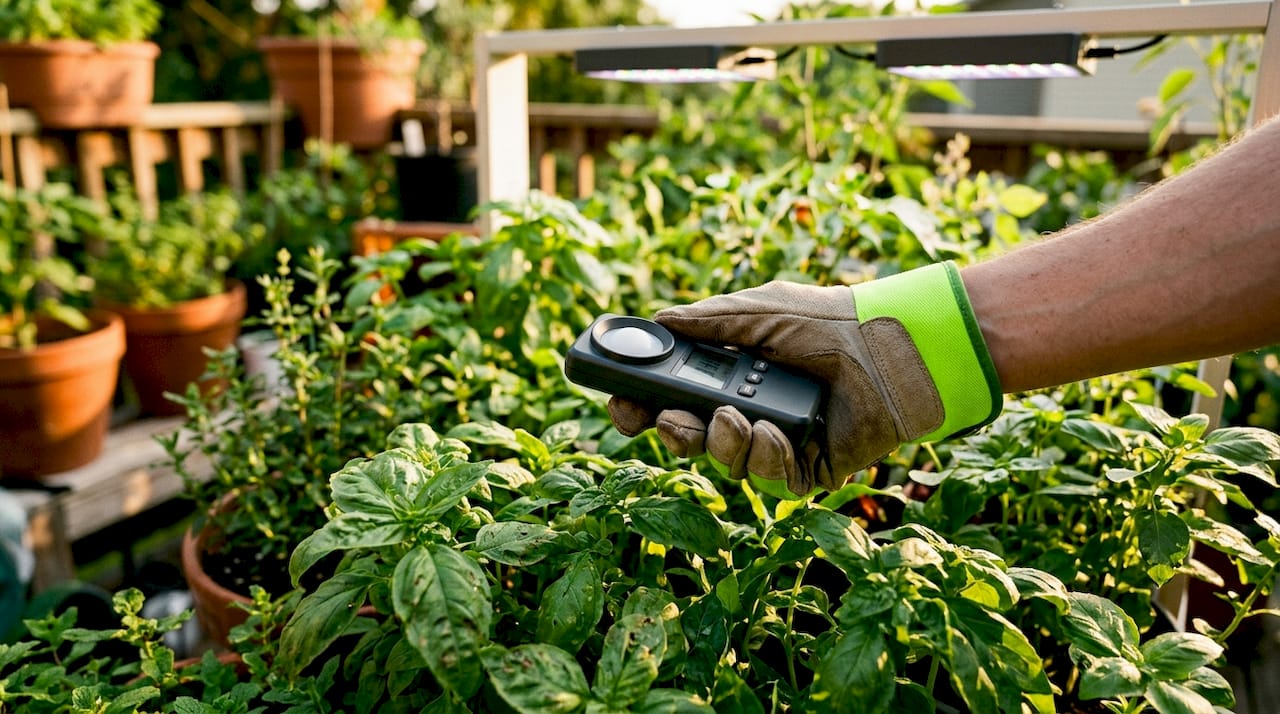
High wattage in a small grow space creates a specific problem: heat stress. A single 200W fixture crammed into a 6 sq ft tent raises canopy temperature fast, causing leaf curl, bleaching, and stunted growth. LED efficiency directly impacts heat generation, meaning a lower-wattage, high-efficiency LED keeps your canopy cooler and your plants healthier.
Modern LEDs have changed the math entirely. A 5W–9W LED fixture can replace a 40W–60W incandescent bulb while consuming 80–85% less energy. That efficiency gap means wattage comparisons across fixture types are nearly meaningless without also knowing the lumen-per-watt ratio.
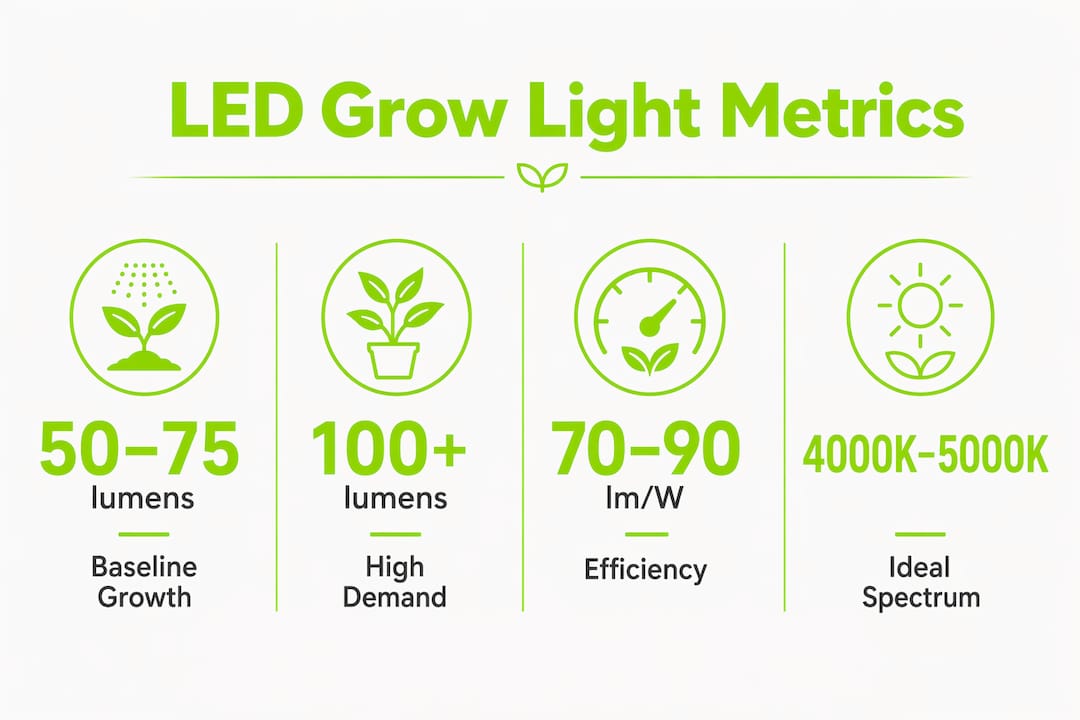
Pro Tip: When comparing fixtures, divide total lumens by watts to get lumen-per-watt efficiency. A fixture delivering 130+ lumens per watt is a strong performer for small-space growing.
Lumen density is the practical performance measure for small indoor gardens. The standard target is 50–75 lumens per square foot for baseline vegetative growth. High-demand plants and flowering stages need more than 100 lumens per square foot to hit their yield potential.
Spectrum matters just as much as intensity. The right color temperature and CRI (color rendering index) shape how your plants grow, not just how bright your space looks. Here is what to target:
Light color temperature and CRI affect plant morphology in ways that raw wattage never captures. A 60W warm-white household LED will produce worse results than a 20W full-spectrum grow LED in the same space. The spectrum is the difference, not the wattage.
Pro Tip: If your plants are stretching toward the light or showing pale, thin leaves, the problem is almost always spectrum or intensity, not wattage. Check your CRI and color temperature before adding more watts.
Single-source high-wattage setups create uneven light and heat, degrading plant health in ways that are hard to diagnose. One bright fixture casts shadows across lower leaves, creates hotspots directly under the center, and leaves corner plants light-starved. Splitting the same total wattage across two or three fixtures solves all three problems at once.
The practical framework for distributing light in a small grow looks like this:
The layered lighting approach also gives you control that a single fixture cannot. A layered strategy combining ambient, task, and accent lighting improves light uniformity and reduces shadow issues across the canopy. In a grow tent, this means a primary overhead fixture for canopy coverage, a secondary side light for lower branches, and a small accent source for seedling trays or clones.
Fixture placement relative to the canopy changes everything. Proximity and intensity at the canopy matter more than raw wattage. A 30W LED positioned 8 inches above your canopy delivers more usable PPFD than a 100W fixture hung 3 feet away. Smaller fixtures placed closer to plants outperform distant high-wattage units every time.
| Grow area | Total lumen target | Recommended fixtures |
|---|---|---|
| 4 sq ft | 1,200–1,500 lumens | 2 fixtures |
| 6 sq ft | 1,500–1,800 lumens | 2–3 fixtures |
| 10 sq ft | 2,000–2,500 lumens | 3 fixtures |
Start with your grow area in square feet, then work backward from your lumen target. This approach gives you a fixture spec to shop for rather than a wattage number to guess at.
For a practical comparison of what these specs look like in real fixture categories:
| Fixture category | Typical lumens per watt | Best use case |
|---|---|---|
| Entry-level grow panels | 70–90 lumens/watt | Seedlings, herbs, low-demand plants |
| Mid-range full-spectrum LEDs | 100–120 lumens/watt | Vegetative growth, mixed gardens |
| High-efficiency grow LEDs | 130–160 lumens/watt | Flowering, high-demand crops, tight spaces |
Choosing the right LED grow light comes down to lumens, spectrum, and placement, not the wattage number on the box. Always verify product specs by lumen output and CRI before purchasing. A fixture labeled “300W” with no lumen spec is a red flag.
Pro Tip: Look for fixtures that list both total lumens and lumen-per-watt efficiency in their specs. If a manufacturer only lists wattage, ask for the lumen output before buying. Transparency in specs signals a quality product.
For a deeper breakdown of watts per square foot and how to apply these calculations to specific plant types, Ledgrowlightsdepot has a dedicated resource that walks through the math in detail.
In tiny indoor growing spaces, lumen density, spectral quality, and multi-fixture distribution determine plant performance far more reliably than wattage alone.
| Point | Details |
|---|---|
| Wattage measures energy, not growth | Use lumen output and PPFD as your primary performance metrics, not watts. |
| Target 50–100+ lumens per sq ft | Baseline growth needs 50–75 lumens/sq ft; high-demand plants need over 100. |
| Full-spectrum LEDs outperform warm bulbs | Choose 4000K–5000K with CRI 90+ to support healthy plant morphology. |
| Multiple fixtures beat one high-watt unit | Distribute 1,200–2,500 lumens across 2–3 fixtures to eliminate hotspots and shadows. |
| Proximity drives PPFD efficiency | Placing smaller LEDs closer to the canopy delivers more usable light than distant high-wattage fixtures. |
Most growers I talk to start in the same place: they see a high-wattage number on a fixture and assume it means better results. I understand the logic. More power should mean more light, right? In practice, that thinking leads to heat-stressed plants, wasted electricity, and disappointing harvests.
The growers who get the best results in small spaces are the ones who treat their grow like a precision operation. They measure their canopy area, calculate their lumen target, and then shop for fixtures by efficiency rating and spectrum, not by watts. They use two or three smaller fixtures instead of one big one, and they position lights based on PPFD readings, not guesswork.
The other thing I have noticed: focusing on lumen output and distribution rather than wattage reduces waste heat and improves grow efficiency in ways that show up fast. Within a single grow cycle, you see tighter node spacing, more even canopy development, and less leaf curl. Those are the signals that your light is working correctly.
Ledgrowlightsdepot’s resources and product range reflect this same philosophy. Their compact LED grow light options are built around efficiency and spectrum quality, not raw wattage claims. If you are serious about getting the most from a small space, that is the right place to start.
— Scott
Small-space growers need fixtures that deliver real lumen output, full-spectrum quality, and efficient heat management without filling a tent with a single oversized unit.
Ledgrowlightsdepot carries a curated range of full-spectrum LED grow lights designed specifically for compact indoor gardens. Every product in their lineup is rated for CRI 90+ performance and includes detailed lumen and efficacy specs so you can match fixtures to your actual grow targets. For growers who want precise environmental control alongside their lighting setup, the TrolMaster Hydro-X system integrates full-spectrum quantum sensing with environmental monitoring, giving you real data on what your canopy actually receives. With more than 5,800 verified reviews and a 4.8 out of 5 satisfaction rating, Ledgrowlightsdepot is the resource small-space growers rely on for products that perform.
LED wattage tells you how much electrical power a fixture consumes, not how bright it is or how well it grows plants. Lumen output and PPFD are the metrics that predict plant performance.
Target 50–75 lumens per square foot for baseline growth and more than 100 lumens per square foot for high-demand plants or flowering stages. Multiply your grow area in square feet by your target to get your total lumen requirement.
Multiple smaller fixtures outperform a single high-wattage unit in tight spaces. Distributing light across 2–3 fixtures eliminates hotspots, reduces heat stress, and delivers more even PPFD across the canopy.
Full-spectrum LEDs in the 4000K–5000K range with a CRI of 90 or above produce the most compact, healthy plant growth. Warm-white household bulbs in the 2700K range lack the blue spectrum plants need for strong vegetative development.
Fixture height depends on the specific LED’s intensity and beam angle, but smaller, lower-wattage LEDs placed closer to the canopy consistently deliver higher usable PPFD than distant high-wattage fixtures. Check the manufacturer’s recommended hanging height for each fixture and adjust based on plant response.
0 of 3 items selected


Leave a comment