
Free Shipping in the USA on nearly all items!
Limited phone hours during the Holidays! Call us: 888-611-9305
Free Shipping in the USA on nearly ALL items! Limited phone hours during the Holidays!

LED grow lights deliver roughly twice the photosynthetically active radiation (PAR) per watt compared to standard HPS fixtures, making the benefits of LED over HPS commercial grows impossible to ignore in 2026. Top-tier LEDs now hit approximately 3.0–3.1 µmol/J versus 1.7 µmol/J for a 1000W double-ended HPS unit. That gap translates directly into lower electricity bills, better crop quality, and fewer operational headaches. Commercial growers evaluating a lighting upgrade will find the LED vs HPS benefits extend well beyond simple wattage savings, touching spectrum control, HVAC sizing, maintenance cycles, and total cost of ownership.
The core advantage of LED lighting is photon efficacy, measured in micromoles of PAR per joule (µmol/J). A higher number means more usable light reaches your canopy per kilowatt-hour consumed. Current top-tier LED fixtures achieve 3.0–3.1 µmol/J, roughly double the 1.7 µmol/J output of a standard 1000W HPS unit. That difference means a commercial facility running 100 fixtures can deliver the same PAR with half the electricity draw.
For a large-scale operation, that efficiency gap compounds fast. Lower wattage per fixture means smaller electrical infrastructure, reduced demand charges, and a lighter load on your utility contract. The energy savings from LED vs HID switching are not marginal. They reshape the entire operating cost structure of a facility.
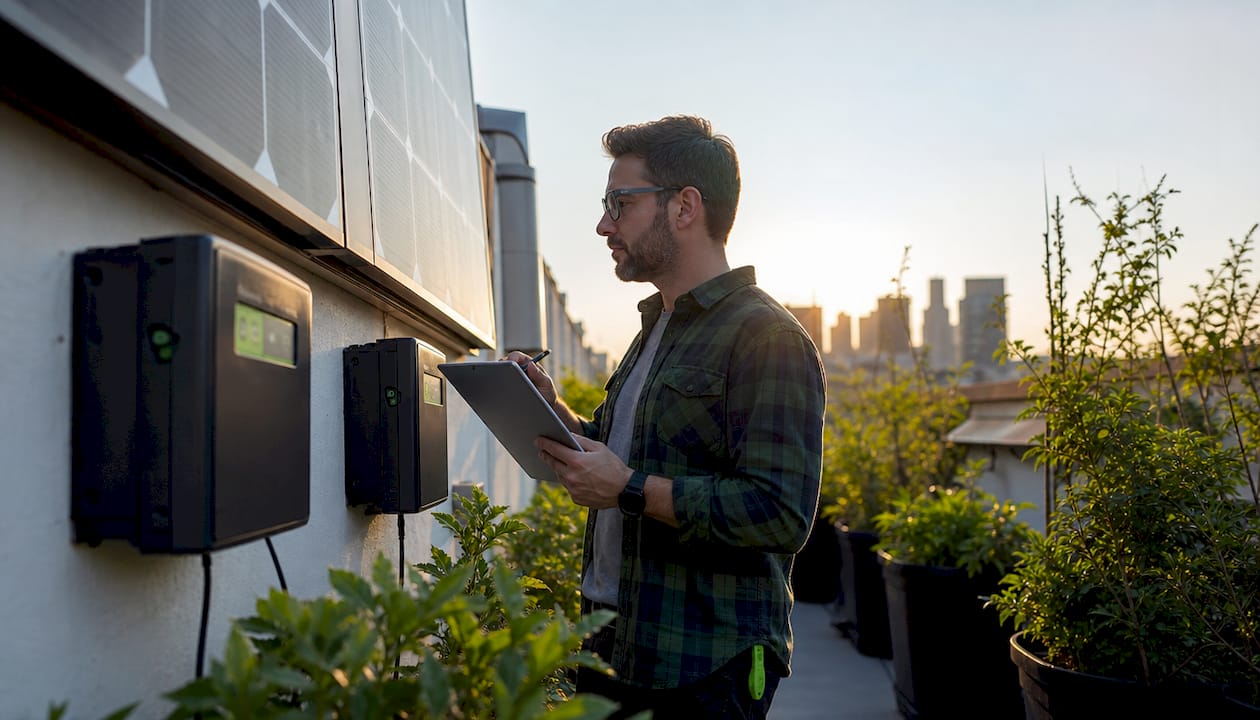
Pro Tip: When comparing fixtures, always evaluate µmol/J efficacy alongside total photon output (µmol/s). A high-efficacy fixture with insufficient output will not cover your canopy adequately.
| Metric | LED (top-tier 2026) | 1000W DE HPS |
|---|---|---|
| Efficacy (µmol/J) | 3.0–3.1 | ~1.7 |
| Relative energy use | ~50% | 100% |
| Heat output | Low | High |
| Spectrum control | Full | Fixed |
Spectrum control is the single biggest qualitative advantage LEDs hold over HPS. HPS produces a fixed, sodium-heavy spectrum that skews heavily toward yellow and red wavelengths. It lacks meaningful blue light output, which is critical for compact, vigorous vegetative growth. LEDs allow growers to dial in adjustable red, blue, far-red, and UV ratios at the channel level.
That tunability matters at every growth stage. During veg, a higher blue ratio promotes tight internodal spacing and strong structural growth. During flower, shifting toward red and far-red drives flowering response and canopy penetration. UV supplementation at targeted doses stimulates secondary metabolite production, including terpenes and resin compounds that directly affect crop quality and market value.
HPS growers cannot replicate this. They run the same spectrum from clone to harvest, accepting whatever plant morphology that fixed output produces. LED growers using spectrum-tuning techniques can influence plant architecture, potency, and quality in ways that simply are not possible with HPS.
Pro Tip: Far-red light (700–750nm) accelerates the Emerson enhancement effect, boosting photosynthesis efficiency beyond what red and blue alone achieve. Look for fixtures that include a dedicated far-red channel.
Key spectrum advantages LEDs provide over HPS:
HPS fixtures convert a significant portion of their electrical input into radiant heat rather than light. That heat loads directly onto your HVAC system, forcing larger cooling and dehumidification capacity. LEDs running at half the wattage for equivalent PPFD cut HVAC tonnage proportionally, which reduces both upfront capital equipment costs and ongoing energy consumption.
The financial impact is larger than most growers expect. In many U.S. climates, HVAC capital savings can exceed the upfront premium paid for LED fixtures before a single kilowatt-hour of energy savings is counted. A new build designed around LEDs from the start can specify smaller HVAC units, smaller electrical panels, and reduced structural load from lighter fixtures.
Decoupling heat from lighting also makes climate management more predictable. HPS creates large thermal swings tied to light cycles, which forces HVAC systems to work harder during lights-on periods. LEDs produce a steadier, lower thermal load that climate control systems handle more efficiently.
HVAC-related benefits of switching to LED:
| Factor | LED facility | HPS facility |
|---|---|---|
| HVAC sizing | Smaller, lower cost | Larger, higher cost |
| Climate stability | High | Variable |
| Cooling energy | Lower | Higher |
| Thermal load pattern | Steady | Cyclic spikes |
HPS maintenance is a hidden operational cost that growers often underestimate. HPS bulbs lose meaningful PAR output well before they visibly dim, which means scheduled replacements are required to maintain yield uniformity across a facility. Skipping a replacement cycle risks uneven canopy development and inconsistent harvests across rooms.
LEDs largely eliminate that cycle. LED fixtures maintain output far longer with minimal degradation and require no bulb swaps. The set-and-forget reliability of LED systems reduces labor hours, eliminates bulb procurement logistics, and cuts the operational downtime associated with scheduled HPS maintenance windows.
Ballast maintenance is another hidden HPS cost. HPS systems require external ballasts that generate heat, fail over time, and need periodic replacement. LED drivers are integrated or close-coupled to the fixture and carry longer rated lifespans. Fewer failure points mean fewer unplanned outages during critical growth phases.
Benefits of LED lifecycle reliability:
The upfront cost of LED fixtures is higher than HPS. That is the only financial category where HPS wins. Commercial greenhouse operators report 20%–30% reductions in overall operational costs after switching to LED, driven by energy, maintenance, and HVAC savings combined. That figure reflects real-world performance across multiple facility types.
The payback calculation depends on your electricity rate, facility size, and current HPS wattage. Growers in states with higher commercial electricity rates see faster payback periods. Growers planning new builds benefit most because they avoid the HVAC oversizing penalty entirely. The long-term costs of LED vs HID consistently favor LED for operations planning more than two years of continuous production.
HPS retains value in one specific scenario: cold-climate greenhouses where radiant heat offsets heating costs during winter months. In that context, HPS heat is a useful byproduct rather than a liability. Outside that niche, and for operators without access to extremely cheap electricity, LED wins the total cost of ownership calculation in 2026.
Pro Tip: Build your ROI model using three inputs: current annual electricity cost for lighting, estimated HVAC reduction, and projected bulb replacement labor. Most growers find payback in 18–36 months depending on facility scale and local utility rates.
New commercial grow builds now overwhelmingly specify LED fixtures from the start. HPS remains relevant mainly for operators with capital constraints and access to very cheap electricity with short payback horizons. That is an increasingly narrow segment of the market.
The industry shift reflects a straightforward calculation. LED fixtures offer superior efficacy, spectrum control, lower heat output, and longer lifespans. When you design a facility around those characteristics from day one, every system in the building benefits. Electrical infrastructure, HVAC, structural supports, and climate control all scale down proportionally.
Growers converting existing HPS facilities face a different calculation. Retrofit economics depend on fixture age, current electricity costs, and whether HVAC capacity can be reduced. For facilities running HPS fixtures older than three years, the PAR degradation alone often justifies the switch before energy savings are factored in.
LED grow lights outperform HPS across every major commercial metric in 2026, from photon efficacy and spectrum control to HVAC costs and maintenance overhead.
| Point | Details |
|---|---|
| Efficacy advantage | Top-tier LEDs deliver 3.0–3.1 µmol/J versus 1.7 µmol/J for 1000W HPS. |
| Spectrum control | LEDs allow full-cycle tuning of red, blue, far-red, and UV; HPS cannot. |
| HVAC savings | Cutting fixture wattage by ~50% reduces HVAC tonnage and capital costs proportionally. |
| Maintenance reduction | LEDs eliminate scheduled bulb replacements and ballast failures that drain HPS labor budgets. |
| Operational cost savings | Commercial operators report 20%–30% lower operational costs after switching to LED. |
The growers who get the most out of LED conversions are the ones who treat it as a systems decision, not just a lighting swap. Swapping fixtures without revisiting HVAC sizing, light scheduling, and spectrum programming leaves real money on the table. The efficiency gains are real, but they only fully materialize when the whole facility is designed around them.
The spectrum control argument is the one I find most underappreciated. Growers coming from HPS are used to thinking about light intensity as the primary variable. LEDs add a second dimension: light quality. The ability to run a different spectrum recipe during veg versus flower, or to add a UV boost in the final two weeks, produces measurable differences in crop quality that intensity alone cannot achieve.
HPS still makes sense in a narrow set of circumstances. A cold-climate greenhouse operator heating with propane who runs lights through winter may find HPS heat genuinely useful. A capital-constrained operator with a two-year facility horizon and very cheap electricity might not see payback fast enough to justify LED premiums. Those are real situations. They are also the exception, not the rule.
My honest recommendation: if you are building new or replacing fixtures older than three years, run the full cost model including HVAC and maintenance, not just electricity. The complete list of LED benefits is longer than most growers realize before they dig into the numbers.
— Scott
Commercial growers ready to act on the LED vs HPS benefits covered here will find a well-curated selection at LED Grow Lights Depot, rated 4.8 out of 5 across more than 5,800 reviews.
The ROI-E900 commercial LED fixture is built for large-scale cultivation with high efficacy and full spectrum control. For precision light scheduling and DLI management, the Medic Grow GLC-1 lighting controller pairs with commercial LED arrays to automate spectrum recipes and photoperiod programs across multiple rooms. LED Grow Lights Depot carries fixtures across every canopy size, from mid-size rooms to full commercial builds, with expert support to match the right fixture to your facility’s specific wattage, spectrum, and coverage requirements.
Top-tier LED fixtures in 2026 achieve approximately 3.0–3.1 µmol/J compared to 1.7 µmol/J for a standard 1000W double-ended HPS unit. That makes LEDs roughly twice as efficient at converting electricity into usable plant light.
Yes. Cutting fixture wattage by approximately 50% reduces HVAC tonnage proportionally, lowering both upfront capital equipment costs and ongoing cooling energy. In many U.S. climates, HVAC savings alone can offset the LED fixture premium.
HPS retains value in cold-climate greenhouses where radiant heat offsets winter heating costs, and for capital-constrained operators with very cheap electricity and short facility horizons. Outside those scenarios, LED wins the total cost of ownership calculation.
Most commercial operators report payback in 18–36 months depending on facility scale, local electricity rates, and whether HVAC downsizing is factored in. Commercial greenhouse operators broadly report 20%–30% reductions in operational costs post-switch.
Yes. Channel-level control over red, blue, far-red, and UV ratios allows growers to influence plant morphology, terpene profiles, and secondary metabolite production in ways that fixed-spectrum HPS cannot achieve.
0 of 3 items selected


Leave a comment