
Free Shipping in the USA on nearly all items!
Limited phone hours during the Holidays! Call us: 888-611-9305
Free Shipping in the USA on nearly ALL items! Limited phone hours during the Holidays!

Grow light financing options are specialized financial products that help indoor growers and cultivation businesses acquire lighting equipment without paying the full cost upfront. The most common types of grow light financing options include equipment loans, leases, SBA loans, point-of-sale plans, and working capital loans. Each fits a different budget size, business stage, and equipment type. Understanding which plan matches your situation preserves working capital and lets you scale without draining cash reserves.
Equipment loans are the most widely used method for financing grow lights. You borrow a set amount, purchase the lights outright, and repay the lender over time. Equipment financing typically covers 80–100% of the purchase price with repayment terms of 2–7 years. That range gives both home growers and commercial operations room to match monthly payments to their cash flow.

The grow lights themselves serve as collateral, which makes qualification easier than unsecured loans. Lenders take less risk when they can repossess a physical asset. This also means equipment loans secured by assets often carry lower interest rates than working capital loans.
At the end of the loan term, you own the equipment outright. Ownership builds equity and opens the door to tax advantages, including Section 179 depreciation, which lets you deduct the full cost of qualifying equipment in the year of purchase rather than spreading it over years.
Pro Tip: Ask your lender whether the loan qualifies for Section 179 before signing. A CPA can confirm the classification and calculate the exact deduction for your tax situation.
A lease gives you the right to use grow lights for a set period without owning them. You make monthly payments to the leasing company, and at the end of the term you typically choose to buy the equipment, return it, or upgrade to newer models. Leasing LED grow lights allows easier technology upgrades every 3–5 years, which matters because LED efficiency and output improve rapidly.
Monthly lease payments run lower than loan payments for the same equipment. That difference keeps more cash available for nutrients, labor, and other operating costs. For a startup grow operation, that cash flow advantage can be the difference between staying solvent and running short in month three.
Loans result in ownership; leases provide flexibility but no equity. That tradeoff is worth it when the technology you are financing will be outdated before the loan pays off. LED grow light efficiency has improved enough in recent years that a 5-year-old fixture can underperform a current model by a meaningful margin.
Pro Tip: Negotiate an upgrade clause into your lease agreement before signing. Some leasing companies include it by default; others require you to ask.
Point-of-sale financing is the fastest and simplest grow light payment option for individual growers and small operations. Retailers offer these plans through third-party providers, often featuring 0% interest “Pay in 4” plans that split the purchase into four equal payments with no interest charges. This works well for purchases under $2,000 where a full equipment loan would be overkill.
The approval process is typically instant or near-instant, requiring only a soft credit check in most cases. You do not need business financials, tax returns, or collateral. That accessibility makes these plans the go-to for hobbyists upgrading a tent setup or a small grower adding a second light.
The main limitation is purchase size. Point-of-sale plans rarely cover large commercial arrays. For anything beyond a few fixtures, you will need a loan or lease instead.
Working capital loans provide cash for general business expenses rather than a specific asset purchase. A grower might use one to cover electricity bills, payroll, or supplies while waiting for a harvest to sell. They are not designed for equipment purchases, but they fill gaps that equipment loans cannot.
Business lines of credit offer revolving funds for operational cash flow needs, while equipment loans target specific assets with structured repayment. A line of credit works like a credit card: you draw what you need, repay it, and draw again. That flexibility costs more in interest than a fixed equipment loan.
Successful growers use a blend of equipment financing and working capital loans to stabilize cash flow while funding assets. The combination lets you finance your lights through a structured loan while keeping a credit line available for unexpected costs.
Working capital loans typically carry higher interest rates because they are unsecured. Use them for short-term needs, not as a substitute for proper equipment financing.
A merchant cash advance (MCA) gives you a lump sum upfront in exchange for a percentage of your future sales. Approval is fast, often within 24–48 hours, and lenders focus on revenue history rather than credit scores. That speed and accessibility attract growers who need cash immediately.
The cost is the problem. MCAs use a factor rate rather than an interest rate, and the effective annual percentage rate can be extremely high. A factor rate of 1.3 on a $10,000 advance means you repay $13,000 regardless of how quickly you pay it off. There is no benefit to early repayment.
MCAs work as a last resort when no other option is available and the return on the equipment justifies the cost. For most growers, a working capital loan or equipment loan is a better choice. Treat MCAs as emergency financing, not a standard grow light payment option.
SBA loans are government-backed loans administered through approved lenders. The SBA 7(a) program provides capital from $50,000 to $5 million with repayment terms of 7–25 years. Those long terms push monthly payments low, which helps large commercial operations manage cash flow on major buildouts.
The SBA 504 loan program targets fixed assets like real estate and large equipment. Movable grow lights are classified as equipment and financed with equipment loans or leases, while permanent greenhouse structures may require SBA 504 or real-estate-secured loans. Knowing which category your build falls into determines which program applies.
The tradeoff for low rates and long terms is a slow approval process. SBA loans require detailed financial statements, business plans, tax returns, and sometimes collateral beyond the equipment itself. Approval can take 60–90 days. Plan your timeline accordingly.
| Feature | SBA 7(a) | SBA 504 |
|---|---|---|
| Loan amount | $50,000–$5 million | Up to $5.5 million |
| Best use | Working capital, equipment | Real estate, large fixed assets |
| Repayment term | 7–25 years | 10–25 years |
| Approval timeline | 30–90 days | 45–90 days |
| Collateral required | Often yes | Yes |
The right grow light financing plan depends on three factors: how long the equipment will stay useful, whether you want to own it, and how much monthly payment you can absorb. Choosing between loan and lease depends on your business growth stage. Loans fit long-life infrastructure; leases suit fast-evolving technology.
For hobbyists and small growers, point-of-sale plans cover most single-fixture purchases without paperwork. For startups building out a grow room, a lease preserves cash while providing access to current LED technology. For established commercial operations, an equipment loan or SBA 7(a) loan provides ownership and the best long-term cost structure.
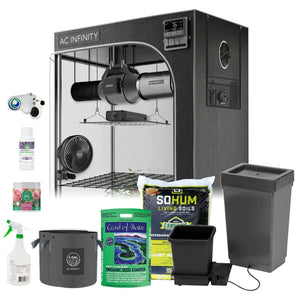
Bundling multiple equipment types into a single loan simplifies financing and can result in better terms. Financing your lights, irrigation system, and environmental controls under one agreement reduces paperwork and gives you a single monthly payment. Ledgrowlightsdepot carries a full range of grow room equipment, making it practical to bundle a complete system into one financing package.
Proper asset classification by a CPA maximizes tax incentives and ensures correct depreciation. This step is not optional for commercial operations. The difference between classifying a fixture as 5-year property versus 7-year property changes your annual deduction meaningfully.
Pro Tip: Review the long-term cost comparison between LED and HID lighting before choosing a financing term. LED’s lower operating costs often justify a longer loan term because the total cost of ownership is lower.
The most effective grow light financing strategy matches the loan or lease type to your equipment’s useful life, your ownership goals, and your monthly cash flow capacity.
| Point | Details |
|---|---|
| Equipment loans build ownership | Loans cover 80–100% of cost and transfer ownership at payoff, enabling tax deductions. |
| Leases suit fast-changing LED tech | Leasing every 3–5 years prevents being locked into outdated fixtures. |
| SBA loans fit large commercial builds | SBA 7(a) offers up to $5 million with 7–25 year terms for major expansions. |
| Point-of-sale plans work for small buys | Pay-in-4 plans require no collateral and approve instantly for smaller purchases. |
| Bundling equipment simplifies financing | Combining lights, irrigation, and controls into one loan reduces paperwork and may improve terms. |
Most growers I talk to default to whatever financing their retailer offers at checkout. That is usually a point-of-sale plan, which is fine for a single light but a poor fit for a 10-fixture commercial build. The monthly payment looks manageable, but you end up with no ownership, no tax benefit, and no upgrade path.
The smarter move is to treat your grow lights the way a contractor treats tools: classify them correctly, finance them at the right term length, and plan for the next upgrade before the current one is paid off. LED technology improves fast enough that technology upgrade strategies should be part of your financing conversation from day one.
I also see growers underestimate the value of preserving cash. An equipment loan with a slightly higher monthly payment than a lease is not always the better deal if it drains the working capital you need to run the operation. Cash flow keeps a grow room running. Ownership is a secondary priority until the business is stable.
The one thing I would tell every grower: talk to a CPA before you sign anything over $10,000. The tax classification of your equipment changes the real cost of financing more than the interest rate does.
— Scott
Financing grow lights makes the most sense when the equipment delivers real returns. Ledgrowlightsdepot carries a full range of LED grow lights engineered with proprietary proximity systems that improve under-canopy light distribution and drive yield increases of over 20%. With a 4.8 out of 5 rating from more than 5,800 verified customers, the product quality justifies the investment.
For commercial growers building complete systems, Ledgrowlightsdepot also carries the TrolMaster Hydro-X Environmental Control System and the TrolMaster Aqua-X Pro Irrigation Control System, both of which can be bundled into a single equipment financing package. Bundling simplifies your loan application and puts your entire grow room under one payment.
Equipment loans are the most common method for financing grow lights, covering 80–100% of the purchase price with 2–7 year repayment terms and transferring ownership at payoff.
Point-of-sale plans and working capital loans require no collateral. Equipment loans use the lights themselves as collateral, which typically results in lower interest rates.
SBA 7(a) loan approval typically takes 30–90 days. Plan your equipment purchase timeline well in advance if you intend to use SBA financing.
Leasing is generally better for new businesses because lower monthly payments preserve cash flow and lease terms of 2–5 years allow upgrades as LED technology improves.
Yes. Bundling lights, irrigation systems, and environmental controls into a single equipment loan simplifies paperwork and can result in better overall loan terms.
0 of 3 items selected

Leave a comment