
Free Shipping in the USA on nearly all items!
Limited phone hours during the Holidays! Call us: 888-611-9305
Free Shipping in the USA on nearly ALL items! Limited phone hours during the Holidays!

A windowsill grow light is a compact artificial lighting device that delivers full-spectrum light directly to indoor plants, compensating for the natural limitations of window-filtered sunlight. Most hobbyist gardeners assume a sunny windowsill is enough. It rarely is. Windows filter out up to 30% of natural sunlight intensity, and that loss is even steeper during winter months. Healthy indoor plants need 14–16 hours of light daily to match outdoor growth rates. A grow light, the industry term for supplemental horticultural lighting, fills that gap with consistent, controllable light that a window simply cannot provide.
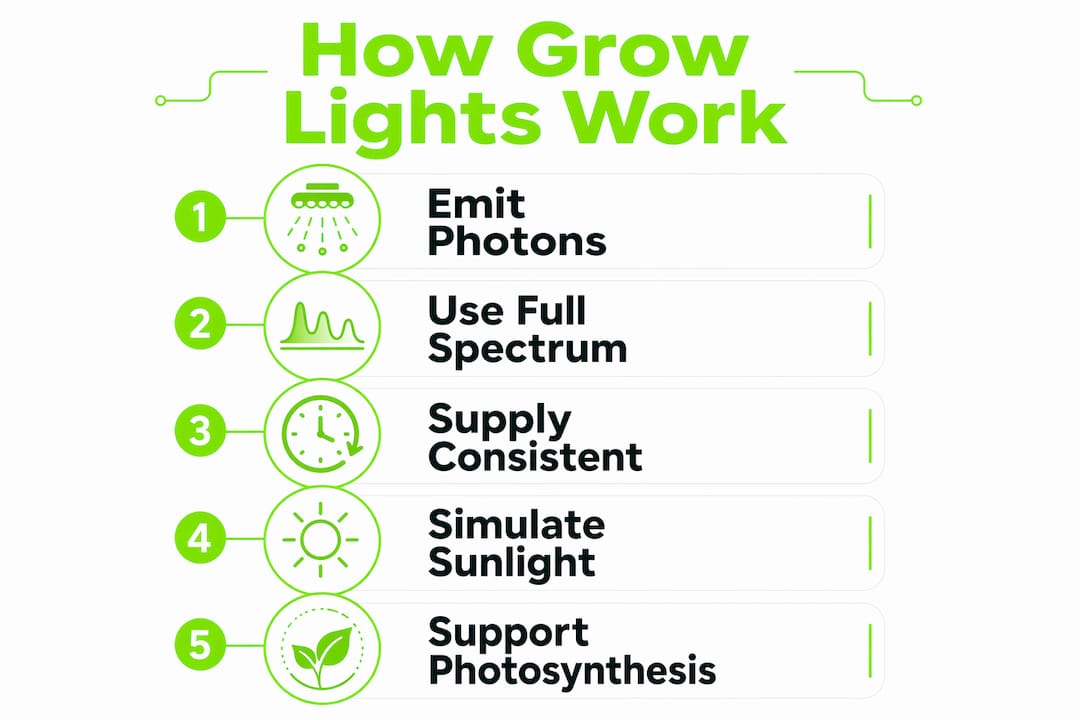
A windowsill grow light is defined as any compact LED or fluorescent fixture mounted close to plants on a windowsill to supplement natural light. The industry standard term is “supplemental grow light,” though hobbyists commonly call them windowsill grow lights because of where they are placed. The core function is photon delivery: plants need photons to drive photosynthesis, and a grow light ensures they receive enough regardless of the season, weather, or compass direction your window faces.
Full-spectrum LEDs produce wavelengths across the red and blue PAR (photosynthetically active radiation) range. These wavelengths are the ones plants actually use for root development, leaf growth, and vibrant coloring. A standard incandescent bulb does not cover this range effectively. LED technology is now the modern standard for windowsill gardening because it is energy efficient, long lasting, and produces very little heat.
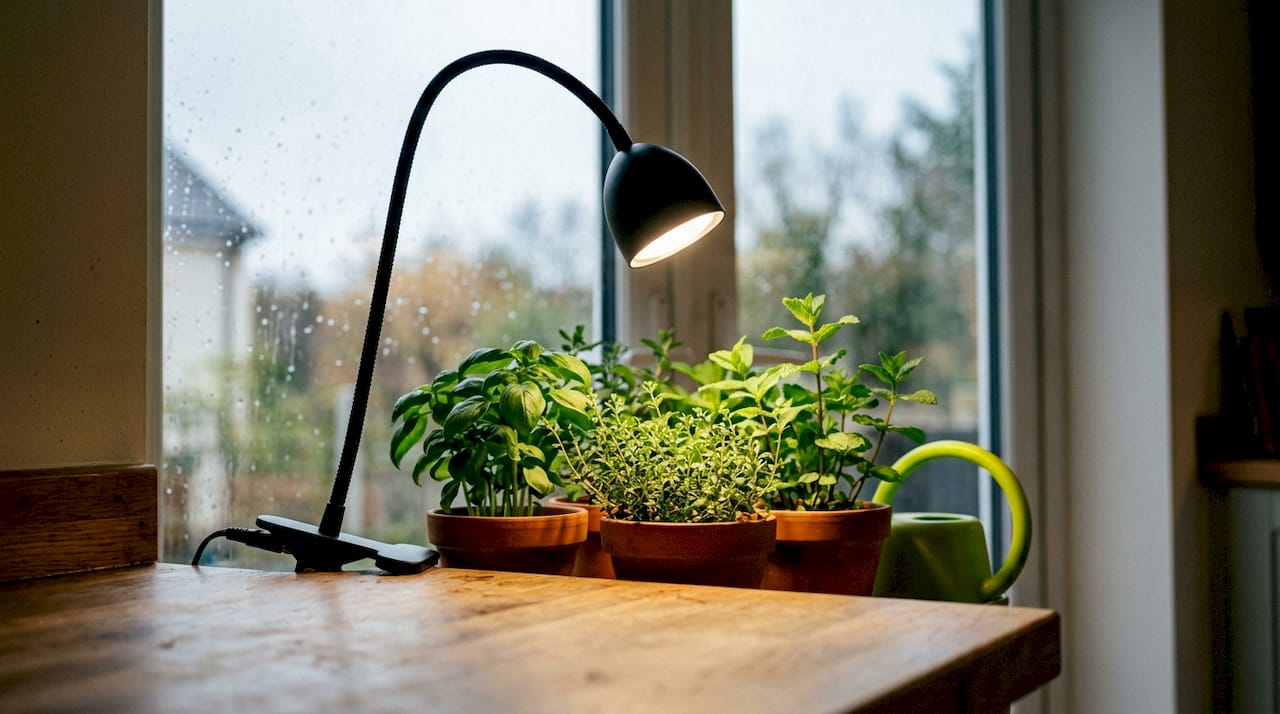
The light consistency argument is the most compelling reason to use a grow light. Natural sunlight through a window shifts with cloud cover, season, and time of day. A grow light on a timer delivers the same intensity at the same time every day. That consistency is what separates stocky, healthy seedlings from the pale, stretched plants most hobbyists have seen on a windowsill in january.
Grow lights work by emitting photons in the wavelengths plants absorb most efficiently. Full-spectrum LEDs simulate sunlight by covering both the blue range (400–500 nm), which drives vegetative growth, and the red range (600–700 nm), which supports flowering and fruiting. Together, these spectra promote strong roots, dense leaves, and healthy color.
Placement distance is not optional. The inverse square law explains why: light intensity drops sharply as distance increases. A light placed 12 inches away delivers a fraction of the photons that the same light delivers at 2–3 inches. For windowsill setups, this means positioning the fixture just above the plant canopy, not across the room.
Here is what a well-functioning windowsill grow light setup delivers:
Pro Tip: Pair your grow light with a simple plug-in mechanical timer. Set it for 14 hours on and 10 hours off. You will never forget to turn it on or off, and your plants will thank you with noticeably steadier growth.
The energy efficiency of LEDs also matters for hobbyists. A typical windowsill LED grow light draws between 10 and 30 watts. Running it for 14 hours a day adds only a small amount to your electricity bill. That low operating cost makes daily use practical for any home grower.
A full-spectrum white LED with an adjustable gooseneck and built-in timer is the most recommended format for windowsill gardens. Prices typically range from $30 to $150, making this one of the most accessible categories in indoor gardening equipment. The format you choose depends on how many plants you are growing and how much space you have.
Clip-on gooseneck LED lights are the most popular choice for single pots or small clusters. They clamp to a shelf or windowsill edge and bend to any angle. They are easy to reposition as plants grow taller.
LED bar lights work well for longer windowsills with a row of herbs or seedling trays. They mount horizontally above the plants and cover a wider footprint than a single clip-on unit.
Small panel lights deliver higher intensity over a defined area. They suit hobbyists growing light-hungry plants like tomato seedlings or peppers on a wider sill.
| Format | Best for | Key feature | Price range |
|---|---|---|---|
| Clip-on gooseneck LED | Single pots, small clusters | Flexible positioning | $15–$50 |
| LED bar light | Herb rows, seedling trays | Wide coverage | $30–$80 |
| Small panel light | High-light plants, wider sills | Higher intensity | $50–$150 |
When comparing features, prioritize these:
Understanding LED efficiency for home grows helps you compare wattage claims accurately. A 20-watt full-spectrum LED often outperforms a 40-watt narrow-spectrum fixture for general plant health.
Herbs, leafy greens, and succulents are the three plant categories that respond best to windowsill grow lights. Basil, mint, parsley, and cilantro all thrive under supplemental LED light and produce more flavorful leaves when they receive consistent, overhead illumination. Lettuce and spinach are equally responsive, growing faster and staying compact rather than bolting.
Plants exposed only to natural window light often become leggy and weak, a condition called etiolation. Etiolation happens when a plant stretches toward a light source it cannot fully reach. Supplemental grow lights placed directly above the canopy eliminate this problem by providing consistent overhead light rather than angled window light.
Positioning matters as much as the light itself. Follow these guidelines:
Pro Tip: If your basil starts stretching and the stems look thin, move the light 1–2 inches closer before increasing the daily hours. Distance is almost always the first variable to fix.
Succulents deserve a special mention. They need more light than most windowsills provide, especially in north-facing rooms. A small clip-on LED running 12–14 hours daily keeps them compact and prevents the stretched, floppy growth that signals light deprivation.
Setup success comes down to four variables: distance, duration, consistency, and airflow. Get these right and your plants will grow visibly faster within two weeks.
Set the light at 2–3 inches above the canopy. This is the single most important placement decision. The inverse square law means even a few extra inches of distance cuts the light reaching your plants significantly.
Use a mechanical plug-in timer. Manual timing leads to inconsistent light duration and weaker plants. A $10 outlet timer eliminates this problem entirely. Set it for 14 hours on and 10 hours off as a starting point.
Combine the grow light with natural window light, not replace it. Think of your plant’s daily light intake as a bucket you are filling. Natural light fills part of it. The grow light fills the rest. A consistent light schedule that combines both sources produces the most stable growth.
Clean your windows and light surfaces regularly. Dust on a light panel or grime on a window can reduce light transmission noticeably. A quick wipe every two weeks keeps output at full strength.
Add a small oscillating fan if you are growing seedlings. Airflow strengthens stems by simulating outdoor wind. It also prevents the humid, stagnant conditions that invite mold on seedling trays.
Observe your plants weekly and adjust. Leaning toward the window, pale stems, or stretched internodes all signal that the light needs to move closer or run longer. Plants tell you what they need if you watch them.
Seasonal adjustment is also necessary for year-round growers. In december and january, natural light through a window drops sharply. Increase your timer by 1–2 hours during these months and check that the light height still matches your plant’s canopy as growth continues.
A windowsill grow light is the most practical tool for giving indoor plants the consistent, full-spectrum light they need to grow strong, compact, and productive year-round.
| Point | Details |
|---|---|
| Windows are not enough | Windows filter up to 30% of sunlight, making supplemental light necessary for healthy plant growth. |
| Distance is critical | Place the grow light 2–3 inches above the canopy; the inverse square law makes every inch count. |
| Timers prevent weak plants | A plug-in timer set for 14 hours daily eliminates the inconsistency that causes leggy, pale growth. |
| Full-spectrum LEDs are the standard | Red and blue PAR wavelengths drive photosynthesis, root development, and strong leaf production. |
| Herbs and greens respond best | Basil, lettuce, mint, and succulents show the clearest improvement under supplemental LED light. |
The most common mistake I see hobbyist growers make is placing the light too far away. They buy a decent LED, set it up on the windowsill, and then position it 8 or 10 inches above their herbs because it “looks right.” Two weeks later, they wonder why their basil is tall, pale, and falling over. The light was fine. The distance was wrong.
The second mistake is skipping the timer. I understand the impulse. You think you will remember to turn it on in the morning and off before bed. You will not. Not consistently. And inconsistency is exactly what causes the uneven growth that makes windowsill gardening feel like it is not working.
What I find genuinely exciting about modern LED grow lights is how accessible they have become. A full-spectrum clip-on LED with a built-in timer costs less than a decent houseplant these days. The technology has improved to the point where a $40 fixture can keep a row of herbs producing all winter. That was not true even five years ago.
My honest advice: start with one clip-on LED over your most light-hungry plant. Watch it for two weeks. Adjust the height if you see stretching. Add an hour to the timer if growth slows in winter. The feedback loop between observation and adjustment is what makes windowsill gardening with grow lights genuinely rewarding. You are not just placing a light and hoping. You are learning what your specific plants need.
— Scott
LED Grow Lights Depot carries a range of full-spectrum LED grow lights built for exactly the kind of close-range, consistent lighting that windowsill plants need. Their lineup includes fixtures with adjustable mounting, energy-efficient LED technology, and the light output quality that home growers rely on for year-round results.

The NextLight 150h LED Grow Light is a strong option for hobbyists who want full-spectrum coverage with efficient energy use. For growers working with longer windowsills or seedling trays, the Toggled 2 ft. LED Grow Light delivers ultra-high output across a wider footprint. LED Grow Lights Depot holds a 4.8 out of 5 customer satisfaction rating from more than 5,800 reviews, which reflects the quality and reliability their home growers consistently report. Browse the full LED grow lights catalog to find the right fit for your windowsill setup.
A windowsill grow light supplements natural sunlight to give indoor plants the consistent, full-spectrum light they need for healthy growth. It is especially useful in low-light rooms, north-facing windows, or during winter months when daylight hours are short.
Place the light 2–3 inches above the plant canopy for best results. The inverse square law means light intensity drops sharply at greater distances, so keeping the fixture close is the single most effective way to improve plant growth.
Most indoor plants need 14–16 hours of light per day when relying on supplemental grow lighting. Use a plug-in timer to automate the schedule and give plants a consistent dark period for respiration.
Herbs like basil, mint, and parsley, leafy greens like lettuce and spinach, and succulents all respond well to supplemental LED light on a windowsill. These plants show faster, more compact growth compared to window light alone.
A typical windowsill LED grow light draws 10–30 watts. Running it for 14 hours daily adds a minimal amount to your electricity bill, making LED the most cost-effective technology for home windowsill gardening.
0 of 3 items selected


Leave a comment