
Free Shipping in the USA on nearly all items!
Limited phone hours during the Holidays! Call us: 888-611-9305
Free Shipping in the USA on nearly ALL items! Limited phone hours during the Holidays!

Compact grow tent size comparisons are the fastest way to match your available floor space with the right plant count, light coverage, and environmental control. The standard footprints run from 2x2 feet up to 5x5 feet, and each step up changes more than just square footage. It changes how many plants you can run, what lights you need, and how hard the environment is to manage. Ledgrowlightsdepot carries tents and LED grow lights across every size in this range, rated 4.8 out of 5 from more than 5,800 growers who needed exactly this kind of guidance.
The 2x2 and 2x4 are the entry level of compact indoor growing, and they suit growers with tight space or a single-plant goal. A 2x2 tent fits 1–2 small plants and works well for seedlings, herbs, or personal crops where floor space is at a premium. The 2x4 tent is the more practical choice for most beginners, supporting 2–4 plants across roughly 8 square feet. It fits inside a closet, slides into a spare corner, and accepts 200–400W LED equivalents without overheating the space.
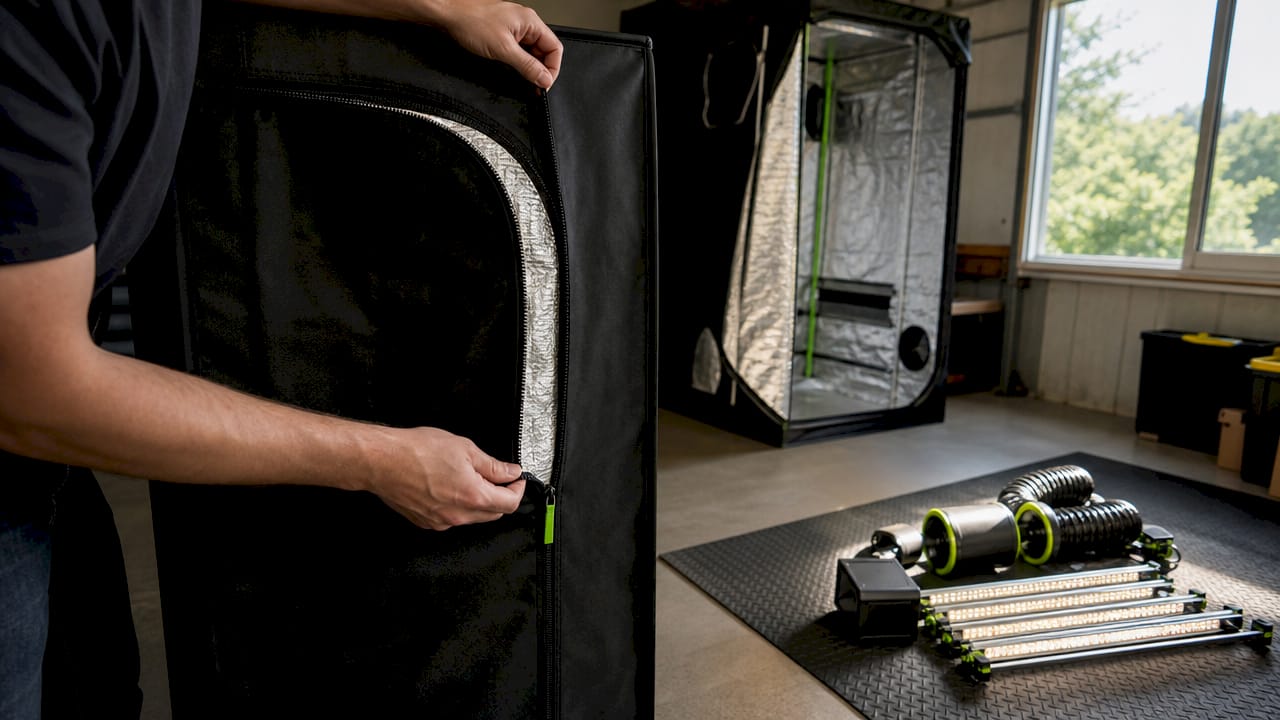
The biggest challenge with these sizes is environmental control. Smaller tents are less forgiving of temperature and humidity swings because the air volume inside is low. A single hot light or a blocked vent can spike conditions fast. That means you need to monitor more closely and react faster than you would in a larger tent.
Key setup points for 2x2 and 2x4 tents:
Pro Tip: Mount your inline fan and carbon filter outside the tent on a shelf or bracket. This frees up the entire interior for your plants and makes temperature management noticeably easier.
The 3x3 tent is the first size where growing starts to feel comfortable rather than cramped. Its 9 square feet of canopy space supports 2–4 plants under a single light setup, and the square shape makes light distribution even across the whole canopy. Many growers prefer it for small spare rooms or hobby setups where a 2x4 feels too narrow and a 4x4 feels too large.
A 300W to 400W LED is the standard recommendation for a 3x3. That wattage delivers enough intensity for flowering without creating excessive heat in a space this size. The NextLight 150h is a well-matched option for this footprint, offering a balanced spectrum and energy efficiency that suits the tighter air volume.
The 3x3 also opens up training techniques that are difficult in smaller tents. Low-stress training (LST), screen of green (SCROG), and basic topping all work well here because you have enough horizontal space to spread the canopy without plants crowding each other. That extra working room is the real reason many growers step up from a 2x4 to a 3x3 rather than jumping straight to a 4x4.
The 4x4 tent is the most popular size for serious personal cultivation, and the numbers explain why. Its 16 square feet of floor space supports 4–6 full-cycle plants under a single 600–720W LED fixture. That combination of plant count and light coverage hits a sweet spot that smaller tents cannot reach and larger tents do not need.
The 4x4 provides 78% more canopy area than a 3x3 and doubles the area of a 2x4. That extra space matters for more than just plant count. It gives you room to move inside the tent, adjust training nets, and work on plants without disturbing neighbors. The larger air volume also makes the environment more forgiving. Temperature and humidity shift more slowly, which means you have more time to correct problems before they stress your plants.
| Tent size | Area (sq ft) | Plants supported | Recommended LED wattage |
|---|---|---|---|
| 2x2 | 4 | 1–2 | 100–200W |
| 2x4 | 8 | 2–4 | 200–400W |
| 3x3 | 9 | 2–4 | 300–400W |
| 4x4 | 16 | 4–6 | 600–720W |
| 5x5 | 25 | 5–9+ | 600–1000W |
Canvas thickness matters more in a 4x4 than in smaller tents because you are investing in a longer-term setup. Higher canvas thickness like 1680D and strong frame construction improve light blockage and durability. The Spider Farmer 4x4 tent is a well-regarded option at this size, with specs that match the demands of a full-cycle hobby grow.
Pro Tip: Run a 4-inch or 6-inch inline fan with a speed controller in your 4x4. A 4x4 needs 170–240 CFM of airflow, and a speed controller lets you dial back fan noise during lights-off without sacrificing air exchange.
The 5x5 tent sits at the upper end of what most growers call compact, and it is the right choice when you want more canopy without moving into a full commercial setup. Its 25 square feet supports 5–9 or more plants depending on your training method, and it accepts LED fixtures up to 1,000W equivalency. That output level puts it in range for serious hobbyists and small-scale growers who want meaningful yields from a single tent.
The trade-offs are real. A 5x5 requires 400 or more CFM of ventilation capacity, which means a larger inline fan, a bigger carbon filter, and more ducting. The initial investment in lighting also climbs. A high-output LED sized for 25 square feet costs more than a 4x4 fixture, and the electricity draw is higher.
Key considerations for a 5x5 setup:
The Spider Farmer 5x5 tent is a practical option at this footprint, with construction specs that hold up to the weight of larger LED fixtures and ventilation hardware.
Tent size sets the floor plan, but lighting and ventilation determine whether your plants actually thrive. Every size has a specific wattage range and airflow requirement, and getting either one wrong limits your results regardless of how good your tent is.
Lighting works on a watts-per-square-foot basis. A general target for LED grow lights is 30–50 watts of actual draw per square foot of canopy. A 4x4 tent with 16 square feet needs 480–800 actual watts. The ION 720W LED fits this range well and delivers the spectrum balance needed for full-cycle grows in a 4x4 or 5x5.
Ventilation sizing follows a different formula. The goal is to exchange the full air volume of the tent at least once per minute. A 4x4 tent that is 6.5 feet tall holds roughly 104 cubic feet of air, so a fan rated at 170–240 CFM handles it with room to spare. Smaller tents need less CFM but require more precise control because the air volume is so low that conditions shift quickly.
| Tent size | Ventilation needed | Notes |
|---|---|---|
| 2x2.5 | 80–120 CFM | External fan placement recommended |
| 3x3 | 120–160 CFM | Speed controller advised |
| 4x4 | 170–240 CFM | 6-inch inline fan standard |
| 5x5 | 400+ CFM | Larger filter required |
Additional equipment checklist by tent size:
For LED light selection matched to compact tent sizes, the fixture’s actual draw wattage and beam angle matter more than the marketing wattage claim.
The right compact grow tent size is the one that fits your actual floor space first and your plant ambition second.
| Point | Details |
|---|---|
| 2x4 is the best beginner entry point | It supports 2–4 plants, fits closets, and accepts 200–400W LED fixtures. |
| 3x3 suits intermediate growers | Nine square feet opens up SCROG and LST training without the cost of a 4x4. |
| 4x4 is the hobbyist sweet spot | Sixteen square feet supports 4–6 plants and a 600–720W LED under one setup. |
| 5x5 demands more equipment | Twenty-five square feet requires 400+ CFM ventilation and a high-output LED fixture. |
| Small tents need tighter control | Low air volume means temperature and humidity shift faster, requiring active monitoring. |
The most common mistake I see is growers buying a tent based on how many plants they want rather than how much space they actually have. A 4x4 sounds great until it is sitting in a room where you can barely open the door. Then every maintenance task becomes a frustration, and environmental control suffers because you cannot work efficiently inside.
My honest recommendation is to start one size smaller than you think you need. A 3x3 teaches you everything about climate management, training, and light placement without the complexity of a larger system. Once you understand how your environment behaves, stepping up to a 4x4 feels natural rather than overwhelming.
The 4x4 is where most serious hobby growers land and stay. It is large enough to run meaningful plant counts, forgiving enough that small mistakes do not immediately become plant stress, and compatible with a wide range of LED fixtures and ventilation hardware. I have seen growers run the same 4x4 setup for years without needing to change anything except their nutrients and training approach.
One thing most beginner guides skip: underestimating equipment footprint inside the tent is a real problem. A 2x2 tent with an inline fan and carbon filter sitting on the floor leaves almost no room for plants. Route that equipment outside the tent from day one. It costs nothing extra and makes every other part of the grow easier.
Invest in quality canvas early. A tent with 1680D fabric and solid frame joints will outlast three budget tents. The light blockage alone is worth the price difference.
— Scott
Choosing the right tent size is only half the equation. The light you pair with it determines your actual yield.
Ledgrowlightsdepot carries grow tents from 2x2 through 5x5, paired with LED grow lights matched to each footprint. Every product in the catalog is backed by a 4.8 out of 5 customer rating from more than 5,800 growers. Whether you are setting up a first 3x3 or upgrading to a high-output 5x5, the team at Ledgrowlightsdepot can point you to the right light for your tent size and plant goals. Browse the full grow lights and tents catalog to find the setup that fits your space and your ambition.
The 2x4 tent is the most practical starting point for most beginners, supporting 2–4 plants with 8 square feet of space and fitting easily inside a closet or small room.
A 4x4 tent comfortably supports 4–6 full-cycle plants under a single 600–720W LED fixture, making it the most popular hobbyist size for personal cultivation.
Yes. Smaller tents have lower air volume, so temperature and humidity shift faster. A 2x2.5 tent needs 80–120 CFM of airflow and more frequent monitoring than larger sizes.
A 4x4 provides 78% more canopy area than a 3x3, supports more plants, and is more forgiving of environmental fluctuations due to its larger air volume.
Practitioners recommend routing the exhaust fan and carbon filter outside a 2x2 tent. Keeping them inside leaves almost no usable floor space once plants reach full size.
0 of 3 items selected


Comments
Leave a comment